
Forest Fairies: Why So Many Cultures Believe Something Magical Lives in the Woods
Cultures with no contact with each other, separated by oceans and thousands of years, kept arriving at the same basic idea. Something small, something magical, lives in the forest. It watches. It has rules. Break them, and you’ll regret it. That pattern shows up almost everywhere humans have ever lived near trees, which raises a genuinely interesting question. What are the actual odds that many completely unconnected cultures all independently imagined the exact same kind of thing?
Japan’s Trees Talk Back, Literally
In Japanese folklore, kodama are spirits believed to inhabit especially old or unusual trees. Shrines across the country still wrap sacred rope, called shimenawa, around specific ancient trunks, marking them as protected. Cut down a kodama’s tree, tradition holds, and misfortune follows. Treat one with respect, and it can bring real blessings instead.
Here’s the detail that makes this particular belief genuinely fascinating. In Japanese, the word kodama means both “tree spirit” and “echo.” The connection isn’t accidental. The belief holds that the sound bouncing back at you in a quiet forest is literally the spirit of the woods responding when you call out. This wasn’t just a spooky story, either. It shaped real forestry practices too, encouraging the protection of Japan’s oldest trees. That was happening for centuries before anyone had a formal word for conservation.
A Spirit Missing His Thumbs
In Belize, Creole folklore describes Tata Duende, sometimes called El Dueño del Monte, the owner of the mountain. He’s considered a genuine protector of animals and the jungle itself. He’s also missing his thumbs. Tradition holds that if you encounter him in the forest, you’d better hide your own thumbs in your fist. Otherwise, he’ll break them off. He’s memorable enough that he’s actually appeared on an official Belizean postage stamp.
Across the rest of Latin America, similar figures show up under the name duende, a gnome-like spirit. Regional variations exist across Spain, Portugal, and Latin America alike, each with its own specific character. In many of these traditions, duendes specifically guide lost travelers back home. They act less like villains, and more like reluctant, easily offended guardians of the wilderness.
A Belief That Crossed an Ocean Along With Enslaved People
In West Africa, the Fon people of Benin tell stories about the Aziza, small forest spirits who teach humans real skills, hand out protective charms, and watch over the natural world. That belief didn’t stay in West Africa. It crossed the Atlantic with enslaved people during the slave trade. It took root in the Caribbean and other parts of the Americas. Once there, it blended with Indigenous and European fairy traditions already present, forming entirely new hybrid folklore.
That’s worth sitting with. This isn’t just a story that happened to repeat itself in different places. In at least this case, it’s the same belief, carried by real people through real displacement. It adapted itself to survive in an entirely new environment, the same way the people carrying it had to.
Sacred Groves the Priests Were Afraid to Enter
Celtic tradition held certain forest groves, called nemeton, as fully sacred ground. No tree could be cut there. No blood could be spilled. The Roman writer Lucan described one such grove near Marseille as so heavy with presence that even the priests avoided entering at midday. That hour, tradition held, was when the spirit inside was at its most powerful.
Greek mythology gave the same basic idea a different shape, with dryads bound to individual trees. Medieval Europe carved a leafy, staring face called the Green Man into cathedral stonework, an image that still shows up in garden decorations today, centuries later.
An Island Legend That Might Be an Actual Memory
Hawaiian tradition tells of the Menehune, small, mischievous, generally harmless beings who supposedly still live in remote valleys and forests. They’re associated with impressive cliff-diving and, according to legend, magic arrows capable of inspiring love.
Researchers genuinely debate what’s actually behind this one. Some think the Menehune legend preserves a real folk memory. Small-statured people, this theory goes, may have lived in Hawaii before Polynesian settlers ever arrived. Others treat it as purely symbolic, a story representing the mysterious forces that shape a landscape rather than an actual historical population. Nobody’s fully settled the question either way.
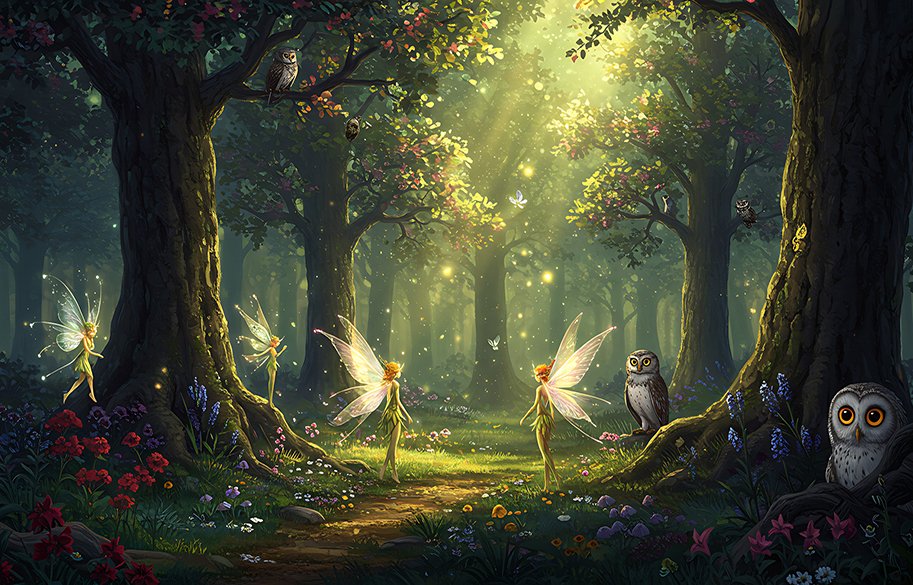
A Forest King Who Changes His Own Height
Russian folklore describes the Leshy, often called the king of all woodland spirits. Unlike most figures on this list, the Leshy isn’t fixed to any single size. Stories describe him shrinking to blend in with the undergrowth. Other times, he grows taller than the trees themselves, depending on his mood. He’s said to genuinely enjoy leading travelers astray. Sometimes it’s pure mischief. Sometimes it’s an actual punishment for treating the forest carelessly.
Many Indigenous traditions across North America include comparable figures too, guardian spirits tied to specific forests, mountains, or hunting grounds. Each one carries its own particular customs, warnings, and relationship to the people who share that land. These traditions vary enormously by nation and region, and they remain living, practiced belief systems today, not just historical curiosities collected in an old book somewhere.
Maybe It Was Never About Superstition at All
People who spent real time in forests, for work, for survival, for generations, noticed real things. Old trees creak differently than young ones. Animals go quiet right before a storm arrives. Certain clearings genuinely feel different from the ground around them, for reasons that don’t always have an obvious explanation. You can lose your sense of direction in a forest you know perfectly well, seemingly for no reason at all.
None of that requires magic to explain. Turning those real, repeated, hard-to-fully-explain observations into structured belief gave people something useful. It came complete with rules, warnings, and consequences. It gave them a reason to actually respect the wilderness they depended on, long before anyone had invented the concept of conservation.
Every one of these traditions grew up in near-total isolation from the others. Japan never spoke to Belize. Benin never spoke to Hawaii. And yet they all landed on some version of the same idea. Something small, something aware, lives out there among the trees, and it’s watching how you behave.
Recent Podcast Episodes

Recent Adventures


Subscribe Today!
Subscribe
Your Ad Here!

Other Adventures You May Like
Viking Misconceptions That Still Won’t Go Away, According to People Who Study Vikings
The Imperial Regalia of Japan: The Three Sacred Treasures No Emperor Has Ever Actually Seen
