
How the Berlin Wall Was Built (and Why People Still Find Pieces of It Today)
Imagine waking up one morning and realizing your entire city was split in two—overnight. Not by a river or a mountain, but by an actual wall of concrete, barbed wire, and armed guards. For almost three decades, the Berlin Wall didn’t just divide a city. It symbolized a world split in half during the Cold War. It tore apart families, crushed dreams, and became a symbol of how politics could become deeply, painfully personal.
But what’s wild is that even though the Wall came down over 30 years ago, you can still find pieces of it scattered across the globe. From museums to gardens to someone’s random living room shelf, chunks of the Berlin Wall are everywhere. So how did this wall even get built? And why are people still obsessed with keeping little pieces of it? Let’s find out how the Berlin wall was built.
How Berlin Was Divided Before the Wall Even Existed
To understand the Berlin Wall, you’ve got to go back to the messy aftermath of World War II. When the war ended in 1945, Germany was a wreck. The Allies—America, the Soviet Union, Britain, and France—split the country into four zones, each controlled by one of them. Berlin, even though it was smack dab in the Soviet zone, got divided too.
At first, things were just tense. The U.S. and its allies were rebuilding their zones, turning West Germany into a capitalist democracy. The Soviets, on the other hand, were setting up a communist regime in East Germany. By the 1950s, it was obvious: East and West Germany weren’t just two sides of a coin; they were two completely different worlds.
West Berlin became this thriving, almost rebellious little island of freedom surrounded by communist East Germany. It had better jobs, cooler fashion, more food on the shelves—you name it. East Germans, especially the young and ambitious, noticed. And they started leaving.
Between 1949 and 1961, nearly 3 million East Germans fled to the West, often through Berlin. For East Germany, this was a disaster. It wasn’t just about numbers—losing that many workers, teachers, and doctors made them look weak. The East German government decided enough was enough.
The Night the Wall Went Up
In August 1961, East Germany made its move. On the night of August 12, as most Berliners were sound asleep, soldiers and workers quietly began unrolling barbed wire and setting up barriers along the border. By the time people woke up on August 13, Berlin was split. Families who lived just blocks apart found themselves on opposite sides. Workers who commuted across town suddenly had no job to go to.
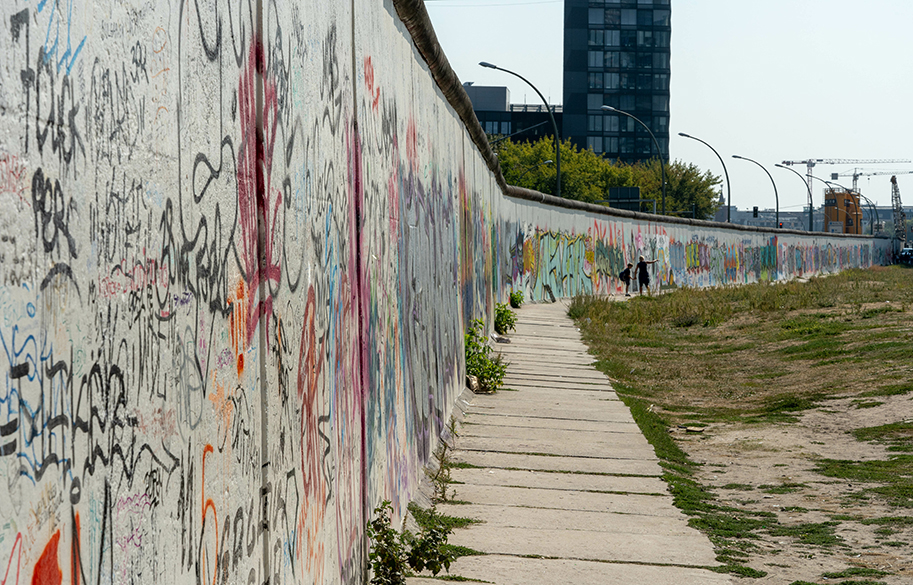
The barbed wire was just the beginning. Over the next few months, East Germany replaced it with a massive concrete wall, nearly 12 feet high in some places. Guard towers sprang up every few hundred yards, manned by soldiers with orders to shoot anyone who tried to cross. But wait—it wasn’t just one wall. It was actually two, with a terrifying stretch of land in between known as the “death strip.” This no-man’s-land was filled with trip wires, spikes, and bright floodlights. Anyone caught in it was pretty much doomed.
Living in the Shadow of the Wall
Life on either side of the Wall couldn’t have been more different. In West Berlin, people were free to come and go as they pleased. The city became a hub of culture, art, and politics, even hosting famous concerts like the one where David Bowie performed just feet from the Wall.
On the East side, it was a different story. The government, backed by the Soviet Union, ran a strict surveillance state. The Stasi, East Germany’s secret police, had eyes and ears everywhere. People lived in constant fear of being reported for even the smallest act of defiance.
But the Wall couldn’t stop everything. Over the years, hundreds of people still managed to escape. Some dug tunnels, others flew in homemade hot air balloons, and a few even drove through checkpoints at full speed. Not everyone made it, though. At least 140 people were killed trying to cross the Wall, their stories adding to the Wall’s grim reputation.
How It All Fell Apart
By the late 1980s, cracks—both literal and metaphorical—were starting to show. The Soviet Union was struggling, and its leader, Mikhail Gorbachev, was introducing reforms that encouraged more openness and freedom. These ideas inspired protests across Eastern Europe, including East Germany.
In the fall of 1989, massive demonstrations erupted in East Berlin. People were done with being trapped and controlled. Under pressure, the East German government decided to ease travel restrictions. But here’s the thing: they totally botched the announcement.
On November 9, 1989, a government official accidentally told reporters that the border was open “immediately.” Thousands of people rushed to the Wall, overwhelming the guards. With no clear orders, the guards eventually just stepped aside.
The images of Berliners climbing the Wall, hugging strangers, and hammering away at the concrete are unforgettable. The Wall didn’t just fall; it crumbled under the weight of freedom and human resilience.
Why You Still See Pieces of the Wall Today
After the Wall fell, Berliners were eager to get rid of it. It was a painful symbol of everything they’d been through. But instead of just demolishing the whole thing, people started chipping away at it—literally.
Chunks of the Wall were sold, gifted, or just taken home as keepsakes. Some of the bigger sections ended up in museums or public spaces around the world. You can find pieces in Washington, D.C., Los Angeles, and even South Korea. And then there are the smaller fragments. These are the pieces people keep on their desks or in their pockets, reminders of what Berlin—and the world—overcame.
Recent Podcast Episodes

Recent Adventures


Subscribe Today!
Subscribe
Your Ad Here!

Other Adventures You May Like

This Experiment Has Been Running Since 1927 and Has Dripped Just Nine Times

Everyone in York County Knows the Crawford Road Ghost Bride Story
