
Iceland’s Weird Side: Why This Volcanic Island Belongs on Every Adventurer’s List
Most people think of Iceland as a place you go to see the Northern Lights, soak in a geothermal pool, and take photographs that make your Instagram followers mildly envious. That’s all true, and none of it is a bad reason to go. But Iceland has a stranger, darker, more genuinely unusual underbelly that most visitors walk right past – and it’s that side of the country that makes it genuinely fascinating rather than just photogenic. Once you start looking for it, it’s everywhere.
For adventurous travellers who move fast and don’t need six months of planning to commit to a trip, Iceland works surprisingly well for last minute travel deals – flights from the US East Coast are around five to six hours, Reykjavik has accommodation across every budget, and unlike most long-haul destinations, Iceland’s best experiences don’t evaporate if you haven’t booked them three months in advance. The country rewards spontaneity in a way that feels almost deliberate.

The Island That Shouldn’t Exist
Iceland sits directly on the Mid-Atlantic Ridge, the boundary where the North American and Eurasian tectonic plates are slowly pulling apart. What this means in practice is that the island is geologically alive in a way that almost nowhere else on earth is. New land is still being created here. Lava fields that look ancient are, in geological terms, practically fresh. The black sand deserts of the interior – the Highlands – resemble a lunar landscape so convincingly that NASA used them to train Apollo astronauts before the moon landings. That’s not a travel brochure line. That’s just what the place looks like.
For travellers drawn to destinations that feel genuinely otherworldly rather than just pretty, Iceland vacation packages put you in the middle of a landscape that challenges everything you expect a country to look like. Reykjavik is charming and compact, but it’s the interior – the lava fields, the glaciers, the steaming geothermal valleys – where Iceland stops being a destination and starts being an experience that’s genuinely hard to categorise.
The Hidden People Problem
Here’s what most travel guides mention briefly and then move past: a significant percentage of Icelanders genuinely believe in the Huldufólk – Hidden People, an elfin race said to inhabit rocks, hillsides, and certain unremarkable-looking boulders scattered across the country. This isn’t a quaint rural superstition confined to remote villages. Surveys consistently find that the majority of Icelanders either believe in them or refuse to rule them out entirely.
Road construction projects have been rerouted around specific rocks because workers refused to disturb them. A 2004 highway project near Reykjavik was altered specifically to protect a boulder believed to be inhabited. The Icelandic government has, on multiple occasions, consulted self-described elf communicators before approving construction in sensitive areas. This is not ancient history – it’s ongoing, matter-of-fact, and completely serious.
For anyone drawn to the intersection of folklore, landscape, and belief – which is a significant part of what this site explores – Iceland is extraordinary. The Huldufólk aren’t a footnote to Icelandic culture. They’re woven quietly and persistently into it, in a way that makes you reconsider what we actually mean when we talk about the rational and the supernatural coexisting in the same space.
Geothermal Weirdness
The ground in Iceland is warm in places. You can stand on a hillside in the middle of winter and feel heat rising through the earth beneath your feet. Geothermal vents hiss across the landscape. The hot springs that make Iceland famous for bathing culture are the same geological forces that power roughly 90 percent of the country’s heating – the earth itself is the infrastructure, which is either deeply practical or slightly unnerving depending on your perspective.
Geysir – the hot spring that gave all geysers their name – sits in the Haukadalur valley and has been erupting periodically for centuries. Its neighbour Strokkur erupts every few minutes, launching boiling water up to 40 metres into the air with a regularity that feels almost theatrical. Standing next to it as it builds and releases is one of those experiences that photographs simply don’t capture – the sound, the heat, the sulphur smell, and the slightly unsettled feeling that the earth is doing something it wasn’t asked to do.

The Darkness and What It Does
Iceland in winter means almost no daylight – around four hours in December. The rest is long, blue, star-dense darkness that does something quietly disorienting to your perception of time and routine. Travellers who seek this out specifically describe it as freeing in a strange way, like the usual rules about when to sleep, when to eat, and when to be productive have been temporarily lifted.
It’s also the best window for Northern Lights visibility. The Aurora Borealis over Iceland’s dark interior – away from Reykjavik’s light pollution, out on the lava plains – is the kind of thing that silences entire groups of people. No one talks. Everyone just watches. For a destination that consistently sits at the boundary between the scientific and the spiritual, it’s hard to think of a more fitting final image.
And if you want to understand just how far Iceland’s unusual experiences actually extend, the Inside the Volcano experience at Þríhnúkagígur – descending by cable car into an actual dormant magma chamber – is already covered here in detail. It’s one of those experiences that belongs in the category of things that shouldn’t be possible but somehow are. Which is really Iceland in miniature.
Recent Podcast Episodes


Recent Adventures

Subscribe Today!
Subscribe
Your Ad Here!

Other Adventures You May Like
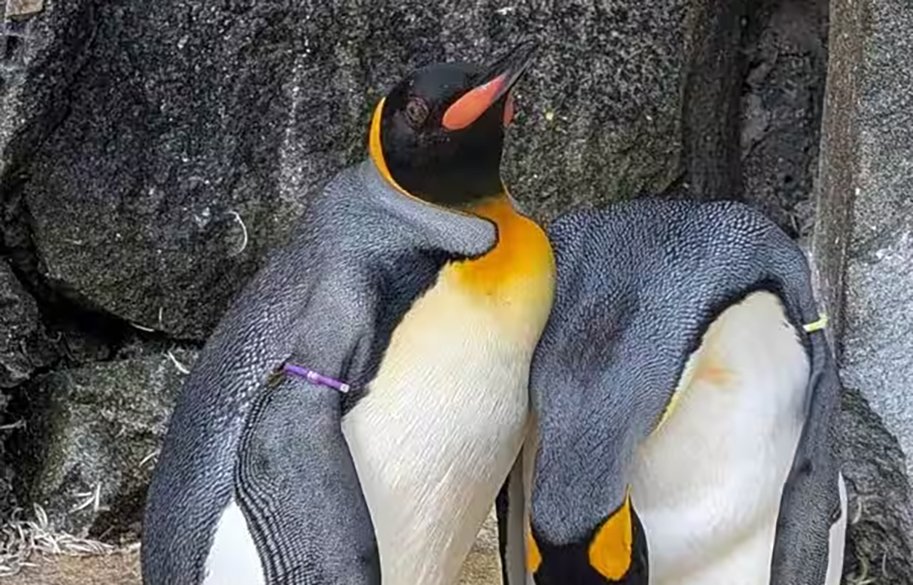
Nils Olav, the Penguin the Norwegian Army Keeps Promoting

A Guide to Caravan Sales in NSW for First-Time Buyers
