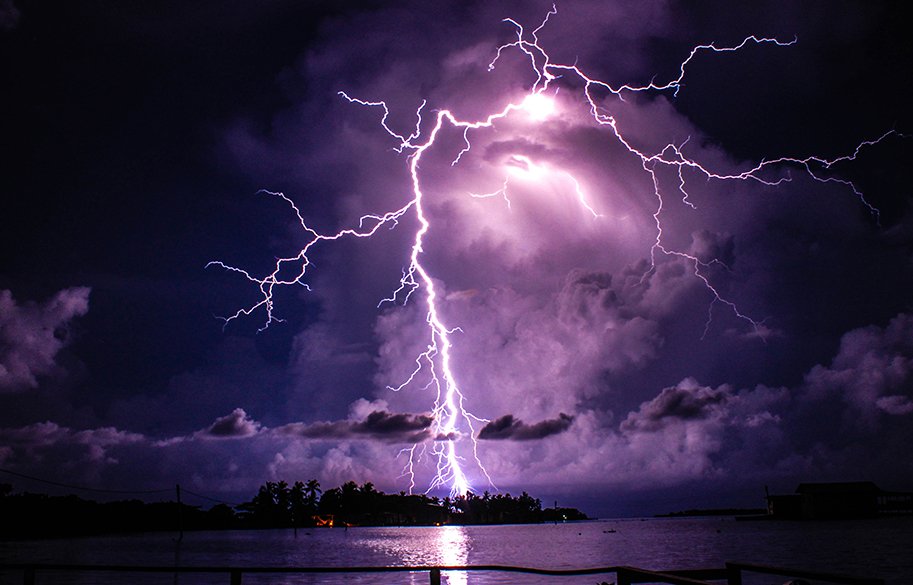
Venturing Inside the Volcano: Þríhnúkagígur, Iceland’s Dormant Volcano
Of all the strange places I’ve documented for Weird World Adventures, few have challenged my understanding of what’s physically possible quite like Þríhnúkagígur volcano in Iceland. When someone first told me you could actually descend into a dormant volcano—not just peer into it from the rim, but literally ride an elevator down into the magma chamber—I assumed they were pulling my leg. Volcanoes, after all, are supposed to be places you run away from, not willingly enter. But thanks to Inside the Volcano, you can actually go inside a volcano.
But there I was on a crisp Icelandic afternoon, after having visited the Phallological Museum (more on that later), standing beside my husband and creative partner Michael at the base camp of the Inside the Volcano experience preparing to do exactly that. As a journalist who’s spent years documenting the world’s most unusual cultural sites, I thought I’d seen everything. I was wrong.

The Journey to the Impossible
The adventure began long before we reached the volcano itself. After meeting our guide team at the meeting site—a utilitarian building that felt more like a serious expedition headquarters than a tourist facility—we embarked on a 45-minute hike across Iceland’s otherworldly lava fields complete with mossy fuzz toward Þríhnúkagígur.

Malorie in her adidas sweatshirt and shoes
“Most people don’t realize that this volcano is completely unique,” explained our guide as we navigated the rocky terrain. “Worldwide, this is the only volcano where you can actually descend down into its magma chamber.”
The landscape surrounding us looked like something from another planet. Ancient lava flows had created a moonscape of twisted rock formations, moss-covered boulders, and dramatic fissures that disappeared into mysterious depths. Michael, who’s documented extreme locations alongside me for years, kept stopping to photograph the surreal terrain. He also stopped unsure if he should continue when he saw the opening of the volcano.
As we approached the volcano, the structure itself proved surprisingly understated. Unlike the dramatic cone-shaped peaks most people envision when they think of volcanoes, Þríhnúkagígur appears almost modest from the surface—a gentle rise in the landscape with an unassuming opening at its summit.

Preparing for the Descent
Back at base camp, the reality of what we were about to attempt became clear during our equipment briefing. The guides issued us industrial-grade helmets, climbing harnesses, and safety gear that looked like it belonged on a window-washing crew tackling a skyscraper.
The descent takes about six minutes, and you’ll drop approximately 120 meters straight down, which is 400 feet. As someone who’s rappelled into caves, I consider myself reasonably comfortable with heights and enclosed spaces. But something about voluntarily entering a volcano triggered a primal unease I hadn’t expected. We were waddling over a metal scaffold-like bridge and moving into an elevator to descend down roughly 100 feet further in height than the statue of liberty is tall.
Luckily, I was ready to go with my adidas workout shoes and hoodie (that I stole from Michael). I love my adidas cropped hoodies, but sometimes, when it’s really cold, the men’s hoodies are even warmer and more snug, so I take Michael’s hoodie from him.
Crossing the Threshold

The walk from base camp to the volcano’s entrance proved to be its own adventure. A narrow metal bridge spans the volcano’s opening—a yawning chasm that drops straight down into absolute darkness. Standing on that bridge, peering into the abyss below, I experienced one of those moments where your rational mind struggles to process what your eyes are seeing.
“This opening hasn’t seen volcanic activity for over 4,000 years,” our guide assured us. “The magma chamber is completely dormant and stable. But I understand why it feels unsettling.”
The metal platform that would serve as our elevator looked both reassuringly sturdy and terrifyingly small. Designed to hold six to eight people, it resembled an industrial lift with safety railings which was functional rather than comfortable. As we stepped onto the platform and secured our safety lines, I found myself thinking about every volcano documentary I’d ever watched.
The descent began slowly, almost anticlimactically. Then the walls of the volcano closed around us, and we found ourselves dropping through a perfectly vertical shaft carved from ancient volcanic rock. Then we began to bounce off the walls of its surface a bit and sway from side to side as we made our way down. The sunlight from above dwindled to a distant pinpoint as we descended deeper into the earth. Thankfully, my essential equipment for the show fit in my adidas backpack with ease so I was able to hold onto everything with my life, along with the railing (and capture the footage via GoPro).
Inside the Earth’s Heart
Nothing could have prepared me for the moment we reached the bottom and stepped off the platform into the magma chamber of Þríhnúkagígur. The space opened around us like a vast underground cathedral of volcanic rock, 60 meters wide and 120 meters deep, with walls that seemed to pulse with color even in the artificial lighting our guides had positioned throughout the chamber.

“This is where molten rock once pooled before eruptions,” our guide explained, his voice echoing strangely in the massive space. “When the volcano became dormant, the magma drained away, leaving this hollow chamber intact.”
The walls displayed a stunning spectrum of colors—reds, oranges, yellows, and deep purples—created by mineral deposits left behind by ancient volcanic activity. As a journalist who’s documented unusual geological sites worldwide, I was struck by how the chamber felt simultaneously alien and oddly comforting, like standing inside a massive geode. Here we were inside the only volcano people are able to enter in the world.
Michael immediately began documenting the space from every angle, his photographer’s eye captivated by the interplay of artificial light and natural rock formations. “The colors are incredible,” he said, “but it’s the scale that’s really mind-blowing. You don’t realize how massive this space is until you’re standing in it.”
We spent roughly thirty minutes exploring the chamber floor, walking among rock formations that seemed to defy gravity and photographing textures that looked more like abstract art than geological features. The silence was profound—a complete absence of sound that you rarely experience on the earth’s surface.

“What strikes me most is how peaceful it feels,” I told Michael as we filmed segments for the show. “You’d expect being inside a volcano to feel threatening or ominous, but there’s something almost meditative about this space.”
The Science Behind the Experience
What makes Þríhnúkagígur scientifically fascinating isn’t just its accessibility but its preservation. Most volcanic magma chambers either collapse after eruptions or remain filled with cooled lava. This chamber represents a rare geological phenomenon—a completely hollow volcanic space that remained structurally intact for millennia.

Standing in that ancient chamber, I found myself contemplating the incredible forces that shaped this space—molten rock heated to over 1,000 degrees Celsius, pressure that could crack mountains, and geological processes spanning thousands of years. Yet here we were, walking calmly through the aftermath of those titanic forces.
Returning to the Surface
The ascent proved just as memorable as the descent, though for different reasons. Rising slowly through the volcanic shaft while watching the circle of daylight above gradually expand created an almost spiritual sensation of rebirth. After thirty in the complete otherworldliness of the magma chamber, emerging into normal daylight felt like returning from another dimension. Somehow coming back up made us even more nervous as we swayed in the elevator. Perhaps it was because we now had seen just how deep the volcano was?

“How do you even begin to process an experience like that?” Michael asked as we removed our helmets and safety gear back at the surface.
Before I could answer, our guides surprised us with a practical touch that perfectly captured Icelandic hospitality—steaming bowls of hearty vegetable soup served at the small shelter near the volcano entrance. After spending time in a space where no human had set foot until recent decades, sharing warm soup with fellow explorers felt like the perfect re-entry ritual.
“This soup tastes better than any five-star restaurant meal I’ve ever had,” I told the chef, who smiled knowingly. Who knew vegetable soup could taste so good?
“Everything tastes better after you’ve been inside the earth,” he replied.
Our journey at basecamp ended with up-close sightings of two arctic foxes that live close to the base camp who came out for snack… and due to their uninhibited curiosity.

Reflections on Volcanic Anthropology
As we hiked back across the lava fields toward base camp, I reflected on how experiences like this challenge our fundamental assumptions about exploration and adventure. Most extreme travel involves going to remote places on the earth’s surface—the highest mountains, the deepest deserts, the most isolated islands. But descending into Þríhnúkagígur takes you somewhere truly otherworldly: inside the earth itself.
From an anthropological perspective, the experience also highlighted humanity’s evolving relationship with natural forces we once considered purely destructive. Volcanoes have historically represented chaos, danger, and divine wrath across cultures. Yet here we were, peacefully exploring the inner workings of volcanic geology as tourists.
“This changes how I think about the concept of extreme destinations,” I joked with Michael as we walked. “We’ve been inside the earth. Everything else is just surface travel.”
The Inside the Volcano experience represents something unique in adventure tourism—not just an unusual destination, but an impossible one. It’s a place that shouldn’t exist as a tourist attraction, yet does. For journalists like us who specialize in documenting the world’s strangest places, Þríhnúkagígur offers something invaluable: a reminder that there are still genuinely unprecedented experiences available to those curious enough to seek them out.
As we prepared for our journey back to Reykjavik, I couldn’t shake the feeling that we’d crossed some invisible threshold. We’d been inside a volcano and returned to talk about it. In a world where authentic adventure experiences become increasingly rare, that felt like something worth documenting—and worth celebrating with exceptional Icelandic soup.

Our descent into Þríhnúkagígur volcano will be featured in Season 2 of Weird World Adventures, releasing Fall 2025.
Recent Podcast Episodes

Recent Adventures


Subscribe Today!
Subscribe
Your Ad Here!

Other Adventures You May Like
Outlander Ride: Inside Scotland’s Horseback Tours Built for Fans of the Show

Roopkund, India’s Skeleton Lake, and the Hundreds of Bodies Nobody Can Explain