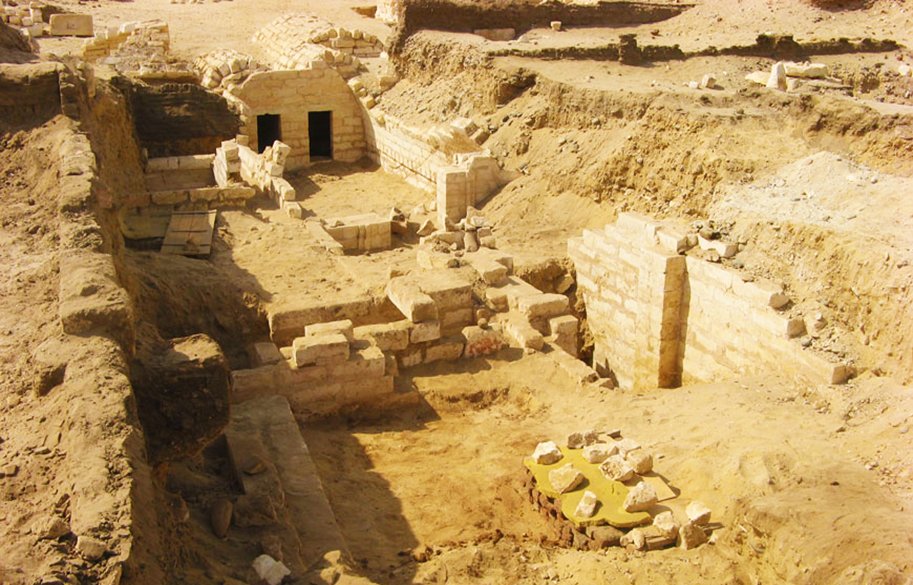
The Etruscans: The Civilization That Taught Rome Everything and Then Rome Erased Almost All Trace of Them
Almost everything people associate with the Roman Republic and Empire, the toga, the fasces carried by officials, the arch, the practice of reading omens in animal entrails, gladiatorial combat, even the alphabet Latin was written in, came from somewhere else first. Specifically, it came from the Etruscans, a civilization that dominated central Italy for centuries. This was before Rome existed as anything more than a scattering of villages.
Rome didn’t invent most of what made it Rome. It inherited it, absorbed it, and then largely stopped mentioning where it came from. The Etruscans didn’t get destroyed in some dramatic final battle you’d recognize from a history book. They got quietly written out of their own story, right around the time the people writing history were their conquerors.
Who They Actually Were
The Etruscans built their civilization in Etruria, the region covering most of modern Tuscany and parts of Umbria and Lazio. They flourished roughly from the 9th century BCE onward. Importantly, they weren’t a single unified kingdom but a loose confederation of twelve major city-states, each independently governed, sometimes cooperating and sometimes competing. These city-states were joined more by shared culture and religion than centralized political authority.
They were remarkably skilled at exactly the things that build lasting wealth: metalworking, agriculture, and Mediterranean trade. Notably, Etruria sat on substantial mineral deposits. Etruscan merchants moved goods across the Mediterranean, trading with Greeks and Phoenicians. Eventually, they also traded with the small Latin settlements to their south. This included the early village that would eventually become Rome.
Their art still genuinely startles people who see it for the first time. Etruscan tomb paintings are vivid, stylized, and often strikingly casual about pleasure. For example, banquet scenes show couples reclining together eating and drinking, dancers, musicians, wine games. Compared to their neighbors, Etruscan culture also gave women a noticeably more visible and equal social role. In fact, later Roman writers occasionally found this scandalous enough to comment on directly.
The Language Nobody Can Fully Read
Here’s the part that’s kept linguists busy for over two centuries. We can actually read Etruscan letter by letter, since they borrowed their alphabet from Greek settlers in Italy. Those Greek settlers had gotten it from the Phoenicians. Pronouncing Etruscan words isn’t the mystery. Understanding what most of them mean is.
Etruscan doesn’t belong to the Indo-European language family, the enormous group that includes Latin, Greek, Sanskrit, and nearly every European language spoken today. Remarkably, it sits almost entirely alone linguistically, connected only distantly to a couple of other extinct, poorly understood languages once spoken in the Aegean and Alpine regions. Most surviving Etruscan texts are short: tomb inscriptions, names, brief dedications. The longer texts that might have actually unlocked the grammar and vocabulary in full were mostly lost. Furthermore, unlike the Greeks and Romans, the Etruscans left behind no epic poems, no annals, and no lengthy historical narratives that survived for later scholars to work with.
A major genetic study published in 2021 finally settled part of the mystery, though not the language question itself. Researchers found that Etruscans were genetically nearly identical to their Latin-speaking neighbors; both descended from the same Bronze Age migrations out of the Pontic-Caspian steppe. The population wasn’t foreign. Interestingly, the language somehow was. As one researcher on the study put it, normally when a new dominant language arrives, it wipes out what came before. However, here, for reasons still not fully understood, the older non-Indo-European language held on for centuries. It was never replaced.
Everything Rome Quietly Borrowed
The list of things Rome took directly from Etruscan civilization is long enough that it starts to feel less like influence and more like inheritance. For instance, the fasces, the bundle of rods with an axe that became the literal symbol of Roman state authority and later gave fascism its name, was originally an Etruscan symbol of power. Similarly, the toga, the curule chair Roman magistrates sat in, and the practice of holding public games including gladiatorial combat all trace back to Etruscan custom.
Roman religious practice absorbed entire Etruscan systems wholesale, particularly haruspicy, the practice of reading omens in the livers and entrails of sacrificed animals. Roman priests continued performing this ritual using specifically Etruscan techniques for centuries after Etruscan civilization itself had faded. Even Roman temple architecture followed Etruscan models directly. Furthermore, even the Latin alphabet came down through Etruscan hands. The Etruscans had adapted it from Greek before passing it along to Rome.
According to Roman tradition itself, several of Rome’s own early kings were ethnically Etruscan. For example, the last king of Rome before it became a republic, Tarquin the Superb, expelled in 509 BCE, carried an unmistakably Etruscan name. Rome’s founding myth and its actual political formation were tangled up with Etruscan influence from the very beginning. This happened not as a footnote but as part of the origin story.

How the Conquest Actually Happened
Unlike the population, which mostly stayed put and got absorbed rather than eliminated, Etruscan political independence ended slowly, city by city, over centuries of warfare. Rome destroyed the powerful Etruscan city of Veii in 396 BCE after a long siege. This was an early and decisive blow. Individual Etruscan cities fell one after another over the following century. They were worn down partly by superior Roman military organization and partly by the fact that the twelve Etruscan city-states never achieved the kind of unified political command that could have coordinated effective resistance against an increasingly organized Roman state.
The fighting wasn’t gentle. Roman conquest of Etruscan territory came with mass enslavement of the defeated, destruction of cities, and the founding of Roman colonies directly on top of former Etruscan land, populated with veteran soldiers. When several Etruscan cities backed the losing side in a Roman civil war during the early 1st century BCE, the dictator Sulla responded by devastating them again in 83 and 82 BCE. This was a final, brutal punctuation mark on centuries of Etruscan political existence.
Assimilation, Not Extinction
Despite all of this, the Etruscans were never wiped out as a people. What happened instead was quieter and, in some ways, more thorough. As Etruscan territory became Roman territory, the population gradually adopted Latin, Roman law, and Roman civic identity. By roughly 100 BCE, the Etruscan language had effectively died out as a spoken tongue. However, it survived only in the specialized, ritual context of priests who continued performing Etruscan-style religious ceremonies without necessarily understanding much of the underlying language anymore.
Crucially, the Etruscans themselves don’t seem to have resisted this cultural dissolution especially hard. Once absorbed into Roman civilization, they largely stopped asserting a separate identity and blended into the wider Roman population. They did this instead of maintaining a distinct minority culture the way some conquered peoples elsewhere in the empire did. This is part of why they vanished from popular memory so completely. There was no dramatic final stand, no exiled remnant population keeping a separate identity alive for later historians to document. Instead, there was just a slow merger, followed by centuries of Roman writers describing their own civilization’s achievements. They did this without much interest in crediting the people who’d handed most of it to them first.
Recent Podcast Episodes

Recent Adventures


Subscribe Today!
Subscribe
Your Ad Here!

Other Adventures You May Like

Tell Fara: The Flood Layer Just Found Beneath Iraq’s Oldest Known Ruins
Minanbé: The Untouched Maya City Hidden So Well Archaeologists Had to Machete Through Miles of Jungle to Find It