
The European Destinations That Get Better the Longer You Stay
Some places give you everything in the first day. Others take their time revealing themselves — and those tend to be the ones worth going back to, or simply never leaving in the first place. Let’s talk about the European destinations that get better the longer you stay.
The Austrian Alps
Austria is a country that resists the quick visit. The obvious things — the architecture, the food, the mountain scenery — are apparent from the first morning, but the quality that makes people return year after year takes longer to surface. It lives in the particular rhythm of an alpine valley, in the way a small town organises itself around the seasons, in the relationship between the landscape and the people who have lived in it for generations. None of that is visible from a car window or a two-night stay.
The Austrian Alps reward the traveller who commits to a week or more in a single area rather than covering ground. A base in Tyrol or Salzburgerland, with days spent moving through the surrounding terrain on foot, produces a cumulative familiarity with the landscape that changes how you see it entirely by the end of the week. The trails connect in ways that only become apparent once you have walked several of them, the rifugi and hütten start to feel like known places rather than points on a map, and the mountains above lose their initial grandeur and acquire something more interesting — a specific character, a set of moods, a particular quality at different times of day. Dedicated hiking tours in Austria are well suited to this kind of deep familiarity, combining guided routes with carefully chosen bases that allow the landscape to reveal itself at the pace it requires.

“Austria doesn’t show you everything at once. It makes you stay long enough to earn it, and what you earn is considerable.”
The Basque Country
The Basque Country sits across the French-Spanish border in a way that makes it genuinely difficult to place — it is neither fully French nor fully Spanish, and its culture, language, and food are distinct enough from both that arriving there for the first time produces a pleasant disorientation. San Sebastián gets most of the international attention, and deservedly so, but the city rewards extended stays in ways that a weekend cannot access. The pintxos bars that look identical from the outside turn out to have completely different personalities once you have been to enough of them. The surrounding coast and countryside, largely bypassed by visitors who come specifically for the food, is quietly spectacular.
A week in the Basque Country spent eating, walking the coastal paths, and driving into the interior to find the villages that appear on no itinerary produces a different understanding of the place than even the most efficient two-day visit. It is a destination that reveals its depth slowly and generously to anyone willing to stay long enough to receive it.
Lisbon
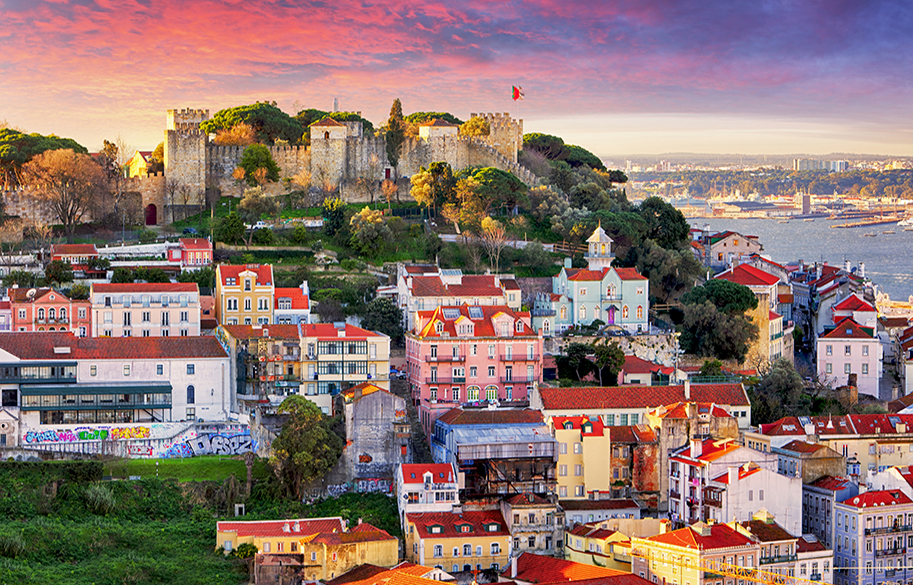
Lisbon is one of the most immediately appealing cities in Europe — the light, the hills, the tiles, the particular melancholy of the fado that drifts out of certain bars late at night. It also has a surface layer of tourism that has thickened considerably over the past decade and that takes a few days to see past. The Lisbon that exists underneath that layer — the neighbourhoods that haven’t been discovered yet, the restaurants that don’t have English menus, the miradouros that appear on no list — requires time and a willingness to walk without a destination in mind.
Visitors who stay for a week rather than a long weekend consistently report a different experience of the city. By the fourth or fifth day the novelty has settled and something more comfortable takes its place — a sense of belonging to a neighbourhood, of being recognised at a particular café, of knowing which streets to take and which to avoid. That quality of familiarity is what transforms a city visit from tourism into something closer to living, and Lisbon is unusually good at producing it.
The Scottish Highlands
The Scottish Highlands suffer from a particular problem: they look extraordinary from a distance and reveal their real character only on foot and in poor weather, which is not what most visitors arrive expecting. The landscape that appears from a car window is undeniably dramatic, but it is also oddly two-dimensional — a series of views rather than a place with depth and texture. Walking into it, even for half a day, transforms the experience entirely. The scale becomes real, the details accumulate, and the particular quality of highland light — shifting constantly, never quite the same twice — becomes something you find yourself paying close attention to rather than simply photographing. A week is the minimum. Two is considerably better.
Recent Podcast Episodes


Recent Adventures


Subscribe Today!
Subscribe
Your Ad Here!

Other Adventures You May Like
The Coolest, Weirdest Things to Actually Go See in Portugal
The Winter War: How Finland Held Off the Soviet Invasion Everyone Expected to Lose Fast
