The Persepolis Tablets: The Ancient Archive That Quietly Rewrote What We Know About Persia
Nobody who wrote these records expected anyone to read them again. They were payroll documents. Receipts. Travel authorizations. The most boring paperwork imaginable, kept by an empire’s accountants. And yet this exact archive ended up quietly correcting centuries of assumptions about the Persian Empire, mostly because everything else we thought we knew came from Persia’s greatest rivals.
Buried by the Same Disaster That Destroyed the City
In 1933, archaeologists from the University of Chicago’s Oriental Institute, led by Ernst Herzfeld, found tens of thousands of clay tablets. They were stuffed into two small rooms inside the fortification wall at Persepolis, the ceremonial capital of the Achaemenid Persian Empire. Herzfeld estimated the total haul at around 30,000 inscribed fragments.
Here’s the genuinely strange part. Alexander the Great burned Persepolis to the ground in 330 BC. That same destruction likely caused part of the fortification wall to collapse. The collapse buried the archive, and in doing so, protected it for more than two thousand years. The fire that ended the city is probably the exact reason this archive survived long enough for anyone to find it at all.
Payroll Records From an Empire That Ran on Paperwork
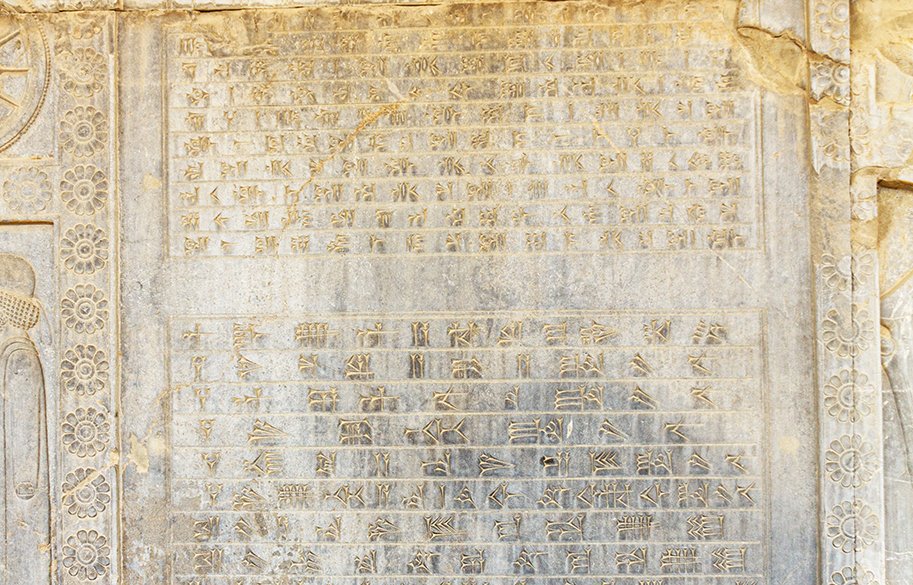
The tablets document roughly fifty years of continuous administrative activity, spanning the reigns of Darius I through Artaxerxes I. Most are written in Elamite cuneiform. Others turn up in Aramaic. A handful, surprisingly, are in Old Persian. Historians long assumed that script was reserved for grand monumental inscriptions, not everyday bookkeeping. That single detail quietly upended an old assumption about how Persian officials actually used their own written language.
What the records actually describe is almost aggressively mundane. Grain rations. Wine and beer distributed as wages. Travel permits for officials moving between provinces. Orders for silver payments to treasury officials. None of it reads like propaganda, because none of it was ever meant to be read by anyone outside the bureaucracy that produced it.
Nobody actually read most of these tablets for decades. American scholar Richard Hallock began translating and publishing the archive in 1969, working through roughly 2,000 tablets before his death. A team at the Oriental Institute, led by Matthew Stolper, has continued that work since 2002. They’re slowly working through tens of thousands more fragments most of us will never personally see.
An Empire the Greeks Called Barbaric Kept Better Records Than the Greeks Gave It Credit For
For centuries, most of what people knew about Persia came filtered through ancient Greek writers. Those writers had every reason to portray their longtime rivals unfavorably. One old assumption held that Persian rulers were basically barbarians, civilized only by the more sophisticated peoples they’d conquered. The Fortification Tablets tell a very different story. They describe a literate, organized bureaucracy tracking commodities, wages, and logistics across an empire that stretched from Egypt to India.
The tablets are just as revealing about Persian women specifically. Greek sources were openly hostile on this subject, routinely describing Persian women as manipulative figures who took advantage of weak kings. The actual administrative records paint a strikingly different picture. Men and women appear in identical professions, receiving identical pay. Some women held real supervisory authority. They carried a title, arashshara, meaning something close to great chief, and oversaw groups of male and female workers alike. Pregnant women and new mothers sometimes received wages higher than their male coworkers, seemingly as a deliberate gesture of appreciation.
There’s no evidence of slavery in this labor system at all. Workers were paid, in rations of grain, wine, beer, and livestock, for real work.
Recent Podcast Episodes

Recent Adventures


Subscribe Today!
Subscribe
Your Ad Here!

Other Adventures You May Like
Émilie du Châtelet: The Physicist Who Translated Newton and Never Got the Credit

The Winter War: How Finland Held Off the Soviet Invasion Everyone Expected to Lose Fast