The Raft That Rewrote History: Honoring the Kon-Tiki and the Man Who Brought a Piece of It Home
There are moments at the Explorers Club events where history stops being something you read about and becomes something you can hold. Last month, I had one of those moments. At the Explorers Club Annual Dinner, I bid on — and won — a small fragment of the Kon-Tiki. The actual Kon-Tiki. A piece of the most audacious raft ever built.
I’ve been riding that vicarious high ever since, so let’s talk about why this matters and why the story of the Kon-Tiki is one of the greatest modern adventure tales ever told… And I would be remiss if I didn’t mention that I solely know about the Kon-Tiki because of Curb Your Enthusiasm, not, in fact, because of my exploration background. I know about the famous raft all thanks to Larry David, and the story is “preetttttyy, preeeetttttyyyy, prettttttyyy good”…. cue the Curb Your Enthusiasm music.

A Theory That Everyone Said Was Impossible
In 1947, a Norwegian explorer named Thor Heyerdahl had a theory that the academic world largely found absurd. He believed that ancient Polynesia had been settled not from Asia, as conventional wisdom held, but from South America. His evidence was cultural and botanical — similarities in mythology, agriculture, and artifacts between Incan civilizations and the peoples of the Pacific islands. The sweet potato, domesticated in South America, had somehow made its way to Polynesia long before European contact. How? Heyerdahl had a theory: by raft.
The problem was that no one believed ancient peoples could have survived that crossing. The Pacific Ocean is the largest body of water on Earth. Between Peru and the Polynesian islands lies roughly 4,300 miles of open ocean — no land, no landmarks, no rescue. Scholars argued that balsa wood rafts were too primitive, too unstable, too dangerous for such a voyage. Heyerdahl’s response was essentially: fine, I’ll prove it myself.
Six Men, One Raft, 101 Days
On April 28, 1947, Heyerdahl and a crew of five other men — four Norwegians and one Swede — set sail from Callao, Peru, aboard a raft they had built using only the materials and methods available to ancient South American peoples. No metal fasteners. No synthetic rope. Nine balsa wood logs lashed together with hemp, topped with a bamboo deck, a single mast, and a sail. They named her Kon-Tiki, after the Incan sun god and legendary leader said to have sailed west into the Pacific centuries before (also known as Viracocha).
They had no engine. Navigation depended on the stars, ocean currents, and trade winds. The crew carried basic scientific instruments and enough food and water to survive — supplemented, they hoped, by fishing. And fish they did. Flying fish regularly launched themselves onto the deck. One whale shark, the largest fish in the ocean, spent an extended period circling the raft in a manner that was, by all accounts, deeply unsettling.
For 101 days, Kon-Tiki drifted and sailed west. The crew kept detailed scientific logs, recorded ocean data, and somehow maintained their sanity on a craft measuring just 45 feet long and 18 feet wide. On August 7, 1947, they made landfall at the Raroia atoll in the Tuamotu Islands, French Polynesia.
They had crossed the Pacific Ocean on a balsa wood raft.
The Aftermath: Fame, Film, and a Legacy That Endures
The world went wild. Heyerdahl wrote a book about the voyage, Kon-Tiki: Across the Pacific by Raft, that became an international bestseller, eventually translated into over 70 languages. (I will read and review this book soon, as it’s sitting in my library next to my piece of rope from the raft.) A documentary film shot during the expedition won the Academy Award for Best Documentary Feature in 1951. (Well, I had no idea about this, but I know what my next movie night pick is!) The raft itself was brought back to Norway, where it is now housed in its own dedicated museum in Oslo, the Kon-Tiki Museum, alongside the artifacts collected during the voyage.
The expedition sparked genuine scientific debate about Polynesian origins that continues to this day. Modern genetic research has actually revealed a fascinating complexity: while the primary ancestry of Polynesian peoples does trace back to Asia, there is genetic evidence of ancient South American contact, suggesting that somewhere in the deep past, these two worlds did reach across the Pacific and touch each other. The closest DNA match points point to connections of civilizations in present-day Columbia and Ecuador. Heyerdahl wasn’t entirely right, but he wasn’t entirely wrong either. The ocean was not the barrier scholars assumed. People found a way.

That’s one of the most incredible parts to me. The Kon-Tiki voyage wasn’t just a feat of seamanship, it was an act of radical imagination. Heyerdahl looked at 4,300 miles of open ocean and asked: what if someone already did this? And then he asked an even better question: what if I could find out? As someone who has a deep respect for the scientific method, I greatly admire that Heyerdahl put his life on the line to test his theory. It doesn’t get more committed than that.
A Piece of History, Personally
So when I won that fragment at the Explorers Club dinner, I didn’t take it lightly… and my wallet didn’t either. We spend our days together researching the intersections of mythology and medicine, ancient belief systems and modern science, the stories human beings tell about themselves across centuries. The Kon-Tiki sits squarely in that tradition, a story about the audacity of curiosity, about what happens when someone refuses to accept “impossible” as a final answer. So, thank you, Larry David, for introducing me to the Kon-Tiki and piquing my interest for this legendary piece of history.
If you liked this article, be sure to check out our podcast on the Kon-Tiki HERE!
Recent Podcast Episodes

Recent Adventures

Subscribe Today!
Subscribe
Your Ad Here!

Other Adventures You May Like
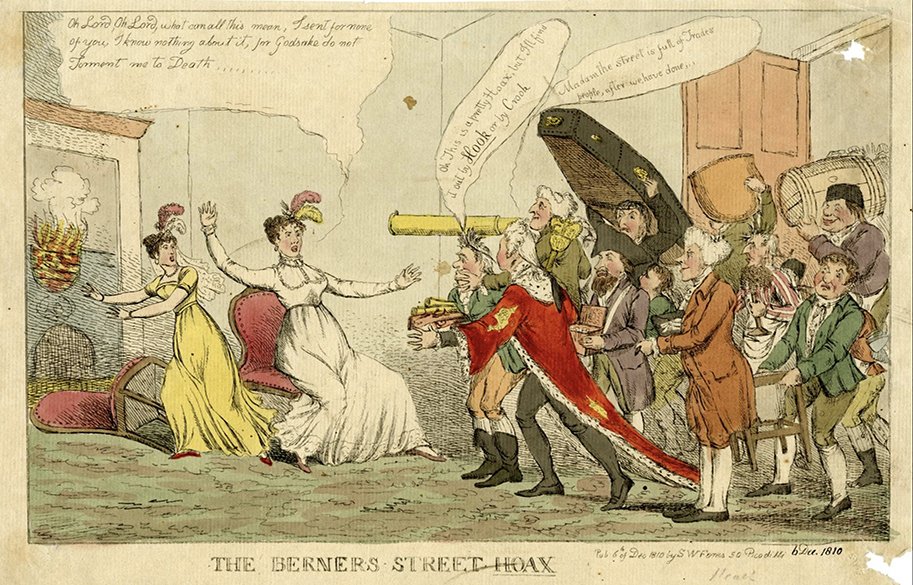
The Berners Street Hoax Buried One London Address in Unwanted Deliveries
Nils Olav, the Penguin the Norwegian Army Keeps Promoting