
The Real Monsters of the Odyssey, and What They Might Have Actually Been
I finally saw The Odyssey this week, and honestly, the monsters are what stuck with me most. Not because they’re scary, exactly, but because a few of them kept nagging at me afterward. Homer didn’t just pull these things out of thin air. Some of them, it turns out, might trace back to actual places, actual animals, even actual medical conditions. So I went down a rabbit hole. Here’s what I found.
The Cyclops Might Have Just Been an Old Skull
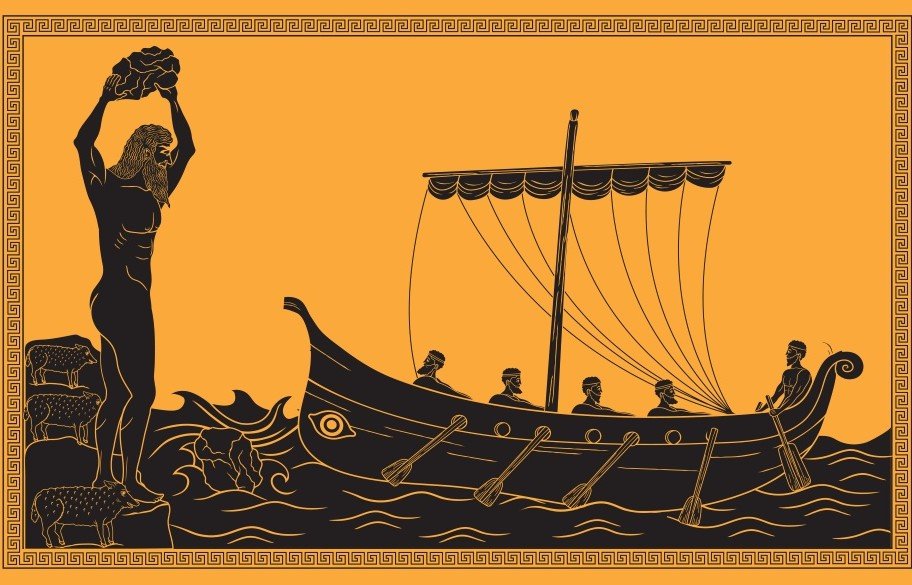
Polyphemus is the one everyone remembers, the giant who traps Odysseus in his cave. There are two theories about where he came from, and I like them both for different reasons.
The first is about fossils. Historian Adrienne Mayor has argued that ancient people probably came across the skulls of an extinct elephant relative called the deinothere. Those skulls have one big hole in the middle of the face, where the trunk went. If you’ve never seen an elephant skull before, that’s going to look like an eye socket. A giant one. Right in the middle of the forehead. I get it.
The second theory is weirder, and it’s the one that actually got me. Cyclopia is a real condition. It shows up in humans, and also in sheep, goats, and cattle. Sometimes it’s triggered when a pregnant animal eats the wrong plant. Around the time Homer was writing, something like 53 human cases were being born worldwide every year. Shepherds, out with their flocks constantly, may have actually seen this happen. That’s not folklore anymore. That’s someone’s terrible day at work, turned into a myth over a few centuries.
The Strait That’s Actually Trying to Kill You
Scylla and Charybdis, the monster and the whirlpool Odysseus has to pick between, aren’t invented either. They’re the Strait of Messina, a real, narrow channel between Sicily and mainland Italy, and it’s genuinely dangerous. Real whirlpools, real currents, real shipwrecks going back thousands of years. There’s still a massive sea cliff there that lines up with where Scylla was supposed to live. The movie leans into this too. Charybdis barely gets a face. It’s mostly just water, doing what water there actually does.
Sirens Used to Be Birds, Not Mermaids
This one I did not expect. We picture the Sirens as beautiful women luring sailors to their doom. The ancient Greeks pictured something closer to a bird-woman hybrid, wings and all, offering forbidden knowledge instead of good looks. Somewhere along the way, Christianity got involved and reshaped them into something prettier and less strange. I honestly think the original version is better. Weirder monsters make better warnings.
Giants That Might Just Be Statues
Then there are the Laestrygonians, the cannibal giants Odysseus barely escapes. One theory ties them to a set of enormous Bronze Age stone statues on Sardinia. Picture stumbling across towering stone figures with no idea who built them or why. You’d probably assume giants used to live there too.
The One Detail I Actually Loved
Here’s what struck me most, though. The movie barely bothers with the monsters’ sad backstories. In the original myths, Scylla used to be a nymph before Circe, out of pure jealousy, turned her into a monster. Charybdis was literally Poseidon’s daughter before Zeus punished her. The film skips almost all of that. It treats these things less like characters with grudges and more like weather. A disaster you have to get through, not a person you wronged.
Recent Podcast Episodes

Recent Adventures


Subscribe Today!
Subscribe
Your Ad Here!

Other Adventures You May Like
Viking Misconceptions That Still Won’t Go Away, According to People Who Study Vikings
The Imperial Regalia of Japan: The Three Sacred Treasures No Emperor Has Ever Actually Seen
