
Catatumbo Lightning: The Venezuelan Storm That Strikes the Same Spot 300 Nights a Year
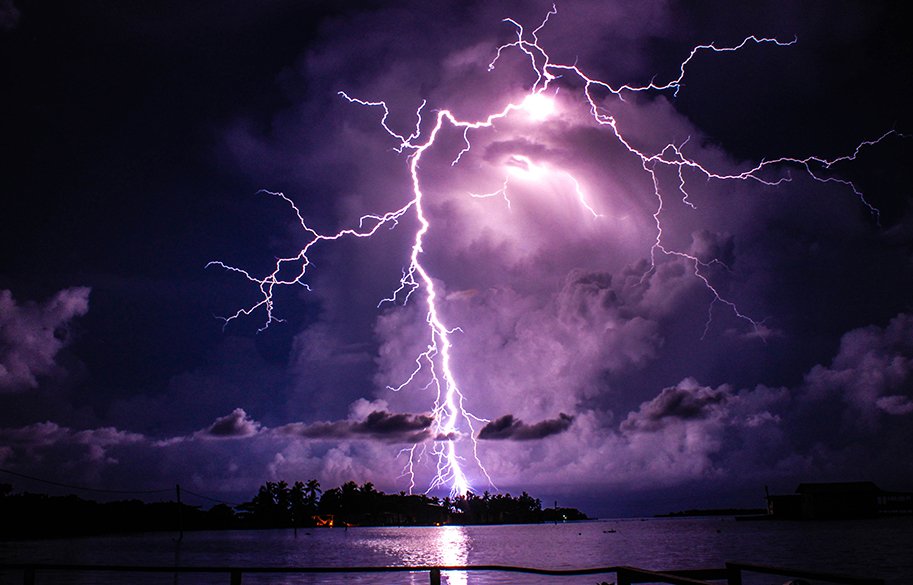
Most storms move. They roll through, dump their rain, and drift off by morning. One storm in Venezuela skipped that memo. It parks over the exact same patch of water almost every night, year after year, and lights up the sky like a strobe. Locals call it Catatumbo Lightning. NASA satellite data crowned it the most lightning-struck place on Earth.
A Storm That Shows Up Like Clockwork
The lightning gathers where the Catatumbo River empties into Lake Maracaibo, in northwestern Venezuela. It fires up roughly an hour after sunset on most nights. It can keep flashing for up to nine straight hours.
The numbers get genuinely absurd. Researchers have clocked up to 28 flashes per minute during peak activity. Multiply that across a full night, and the region racks up well over a million lightning strikes a year in one small stretch of lake. NOAA physicist Ángel Muñoz has studied the phenomenon closely. He described the light as so continuous you can see everything around you, like someone left a light on. Locals have their own nickname for the river. They call it the river of fire.
Mountains and Warm Air Built the Perfect Machine
Scientists understand the basic mechanics fairly well. Mountains box in Lake Maracaibo on three sides. Only its northern edge opens out, toward the Gulf of Venezuela. Warm, humid trade winds blow in off the Caribbean. They slam directly into cool air spilling down from the Andes.
That collision forces warm air upward fast. It condenses into towering storm clouds. The whole setup generates an electric field strong enough to fire lightning almost nonstop. The same basic mechanism drives ordinary thunderstorms everywhere on Earth. Lake Maracaibo just happens to sit exactly where every ingredient lines up, night after night, for months at a time.
What actually stumps researchers is the consistency. Broader climate patterns play a role too, things like shifting wind belts and El Niño sea temperatures. Scientists can explain why this basin produces so much lightning. They’re still working out why the show refuses to quit. A quarter of Venezuela’s population lives inside this lightning zone, which puts the storm’s power into perspective. Muñoz has pointed out that the electrical energy released here in a single year could power every lightbulb across Latin America.
The Lightning Has Actually Changed History
This isn’t just a tourist spectacle. Sailors have used the glow as a navigation beacon for centuries. You can spot it from up to 25 miles out at sea. That earned it a second nickname, the Maracaibo Beacon.
It’s done more than guide ships home. In 1595, the flashes lit up English privateer Sir Francis Drake’s ships during a surprise night attack on Maracaibo. Spanish defenders spotted the glow and responded in time. Centuries later, in 1823, the same lightning reportedly helped Venezuelan forces spot Spanish ships during a decisive independence war battle. A weather pattern tied to one exact location turned into an accidental military advantage, twice, centuries apart.
It Nearly Went Dark for Real
The storm hasn’t always cooperated. A serious drought hit the region between January and April of 2010. The lightning stopped almost entirely for months. Real fear spread that Catatumbo Lightning might be gone for good. It came back once the rains returned.
Venezuelan environmentalist Erik Quiroga fell in love with the storm as a nine-year-old, after his family moved to the lakeshore. He spent two decades afterward lobbying for real international recognition. His efforts paid off in 2015. Guinness World Records officially named Lake Maracaibo the place with the highest concentration of lightning strikes on the planet, at roughly 250 flashes per square kilometer every year.
Recent Podcast Episodes

Recent Adventures



Subscribe Today!
Subscribe
Your Ad Here!

Other Adventures You May Like

The Berners Street Hoax Buried One London Address in Unwanted Deliveries

Nils Olav, the Penguin the Norwegian Army Keeps Promoting
