
10 Good Luck Symbols from Different Cultures
It’s amusing how, despite our reliance on science and hard work, humans remain hilariously superstitious. Whether you’re a software engineer or a professional athlete, a black cat crossing your path or spilling salt can make you momentarily question your luck. For centuries, we’ve held onto the idea of “luck” as a way to navigate a chaotic world. However, its meaning varies. What’s deemed a bad omen in one culture may be a lucky charm in another.
So, here are ten symbols of good fortune from around the globe that people use to influence their fate.
The Maneki-neko (Japan)
You’ve seen this cat. It’s in the window of almost every ramen shop and sushi bar from Tokyo to New York. The “Beckoning Cat” usually has one paw raised in a waving motion.
There’s a legend that a weary traveler (sometimes a wealthy feudal lord) was standing under a tree to avoid a storm. He saw a cat beckoning him into a nearby temple. He followed the cat, and a second later, lightning struck the tree where he had been standing. Now, the cat is a staple for inviting wealth and safety. If the right paw is up, it’s for money, and the left paw is for customers.
The Nazar or “Evil Eye” (Turkey and Greece)

This is that striking blue, eye-shaped glass amulet you see everywhere in the Mediterranean. Unlike most charms that “pull in” good luck, the Nazar is a defensive “firewall.”
The belief is that “The Evil Eye,” a look of extreme envy or even unintended admiration, can actually cause you physical harm or bad luck. The Nazar acts as a mirror, catching the malicious glare and reflecting it back before it can mess up your day. It’s the original “don’t look at me like that” energy.
The Hamsa (Middle East and North Africa)
The Hamsa is a palm-shaped symbol, often with an eye in the center, and it’s one of those rare symbols that bridges cultures. Specifically, it appears in both Jewish and Muslim traditions.
It represents the “Hand of God.” Depending on who you ask, it’s either the Hand of Fatima or the Hand of Miriam. Whether the hand is facing up or down, it’s meant to bring the wearer “Abhaya”—an ancient concept of fearlessness—while providing a protective shield against the “Evil Eye” we mentioned earlier. It’s basically the ultimate “protective palm.”
The Scarab (Ancient Egypt)
To most of us, a dung beetle doesn’t scream “good luck,” but to the Ancient Egyptians, the Scarab was the ultimate symbol of the sun and rebirth.

They watched the beetles roll balls of dung across the sand and saw a parallel to the sun god Khepri rolling the sun across the sky every day. It represented the idea that out of the “waste” of the earth, new life and light could be born. Additionally, they carved them out of lapis lazuli and stone, wearing them as amulets to ensure they’d make it safely into the afterlife.
The Cornicello (Italy)
If you see an Italian wearing a small, red, horn-shaped charm (often mistaken for a chili pepper), that’s a Cornicello. It’s actually modeled after a bull’s horn, which in ancient times was a symbol of fertility, strength, and virility. In places like Naples, you’ll see them hanging from car mirrors or worn on gold chains. The rule is that you aren’t supposed to buy one for yourself—it only works if it’s given to you as a gift.
The Dreamcatcher (Ojibwe/Native American)
While these have been heavily commercialized, the original purpose of the Dreamcatcher is quite beautiful. Originating with the Ojibwe people, the “spider web” design was meant to “filter” the air. The belief is that the night is full of dreams, both good and bad. The bad dreams get tangled in the web and evaporate with the first light of day. However, the good dreams know the way through the center hole and slide down the feathers to the sleeper.
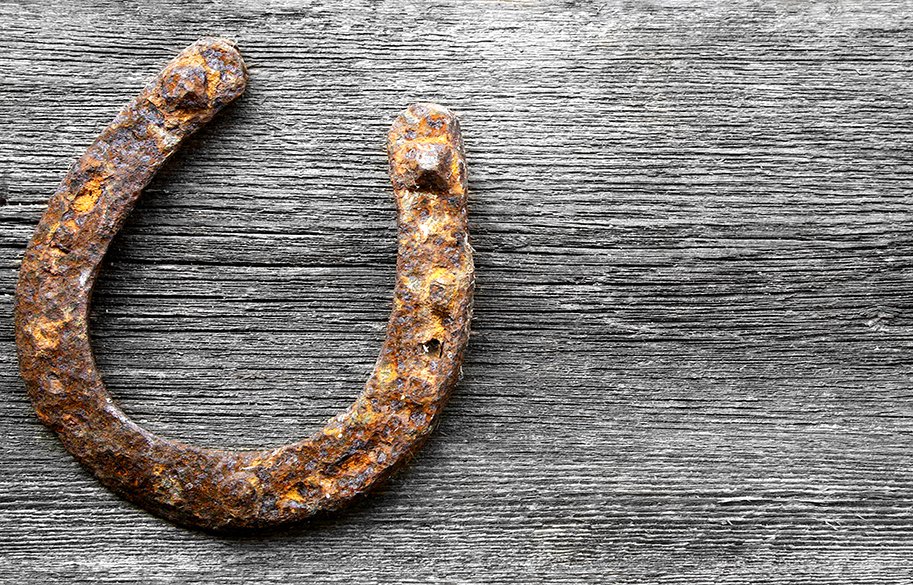
The Horseshoe (Western Culture)
Why do we hang a U-shaped piece of iron over a door? It’s a mix of legend and metallurgy. Iron was historically thought to ward off “fairies” and evil spirits who couldn’t stand the touch of the metal.
The most famous story involves Saint Dunstan, a blacksmith who supposedly shod the Devil’s hoof with a horseshoe and only agreed to take it off if the Devil promised never to enter a house with a horseshoe over the door. Just remember: point the ends up like a bowl so the luck doesn’t “pour out.”
The Jin Chan or “Money Toad” (China)
If the Maneki-neko is the “inviter” of luck, the Jin Chan is the “attractor” of wealth. It’s a three-legged bullfrog with red eyes, usually sitting on a pile of traditional Chinese coins.
According to Feng Shui, this “Money Toad” helps attract and protect wealth. You’ll often find them with a coin in their mouth. The placement is key: you never face it toward the door, or the toad will “carry the money out” of the house. Instead, you face it inward, so it’s bringing the “loot” into your living room.
The Dala Horse (Sweden)
This brightly painted wooden horse from the Dalarna province started as a toy for children in the 1700s. It was carved by woodcutters during long, dark winter nights.
Over time, it became a national symbol of strength, courage, and faithfulness. It’s a reminder of the horse’s role as a vital partner for survival in the harsh Swedish wilderness. Today, having a Dala horse in your home is a nod to a sturdy, hardworking “good luck” that isn’t about winning the lottery. Instead, it’s about being resilient enough to get through the winter.
The Ladybug (Global/European)
In many cultures, if a ladybug lands on you, you’re supposed to stay still and count the spots—that’s how many months of good luck you have coming.
The “luck” here is actually rooted in agriculture. Farmers loved ladybugs because they ate aphids and other pests that destroyed crops. They were seen as a “gift from the heavens” (in German, they are called Marienkäfer or “Mary’s beetles”). If a ladybug was in your garden, your food was safe, which, for most of human history, was the best luck you could possibly have.
Recent Podcast Episodes

Recent Adventures



Subscribe Today!
Subscribe
Your Ad Here!

Other Adventures You May Like

The Berners Street Hoax Buried One London Address in Unwanted Deliveries

Nils Olav, the Penguin the Norwegian Army Keeps Promoting
