Bronze Age Mines Just Found in Spain May Solve a Scandinavian Metal Mystery
Scientists have known for years that something didn’t quite add up. Bronze artifacts pulled from Scandinavian graves and hoards kept testing as if their metal came from somewhere in southwestern Spain, thousands of miles from anywhere copper or tin naturally occurs in that region. Nobody could point to the actual mines, though. The metal had a fingerprint. It just didn’t have an address. But this year, archaeologists finally found one.
Six Mines Nobody Had Ever Registered
In February 2026, a team from the University of Gothenburg’s Maritime Encounters program spent a week surveying an area near Cabeza del Buey, in the Extremadura region of Spain. Professor Johan Ling led the group. They worked alongside researchers from Spain’s University of Seville and the Provincial Archaeological Museum of Badajoz. By the end of the survey, they had identified six previously unregistered Bronze Age mines.
These weren’t small, casual digging spots either. The sites ranged from modest extraction areas to genuinely substantial mining operations. One mine near Cabeza del Buey featured a long, organized trench cut into the rock, roughly 230 feet long and 10 feet wide. Someone clearly built it for sustained copper extraction, not a one-off dig. Another of the newly documented sites stretched across an area of roughly 650 by 165 feet. That scale suggests coordinated, large-scale work, not just a handful of people scratching at a rock face.
The Tools Left Their Own Kind of Proof
Inside one of the smaller mines, archaeologists found something that made the whole picture feel suddenly less abstract. Roughly 80 grooved stone hammers and axes sat there, left behind after workers used them to crush and process copper- and lead-bearing ore. Real tools, worn down through real repeated use, sitting exactly where the people using them had left them thousands of years ago.
The mines themselves held veins of copper, lead, and silver. Those three metals powered Bronze Age economies and the long-distance trade networks built around them. All three had already turned up, chemically, inside artifacts unearthed a continent away in Scandinavia.
Connecting a Fingerprint to an Actual Address
Researchers had already used lead isotope analysis and chemical testing on Scandinavian Bronze Age artifacts. That work traced much of their metal back to southwestern Spain. That evidence was solid, but it was also frustratingly general. It could confirm a broad region. It couldn’t point to a specific mine, or prove that mine ever actually existed.
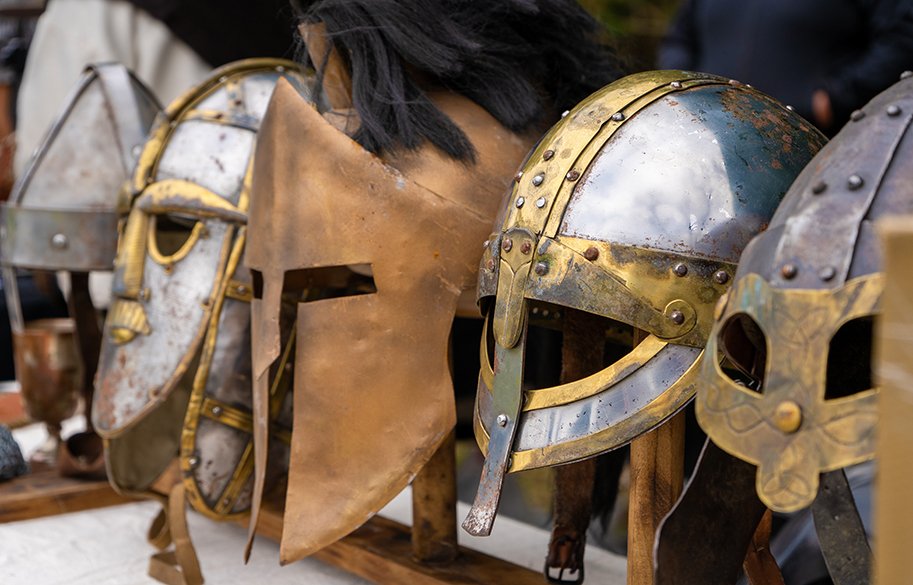
These newly identified sites are the first real candidates for exactly that missing piece. Ling put the discovery’s significance simply. Mines identified over just the past decade are reshaping how connected Bronze Age Europe actually was, three thousand years before anyone had a word for globalization. That includes roughly 20 new mines his own team alone has documented, just between 2024 and 2026.
And according to Ling, this is still just the beginning. He estimates as many as 150 additional prehistoric mines may still sit undocumented across this same region of Spain, alongside neighboring Andalusia. Spain wasn’t even the only source feeding this ancient network, either. Separate research has traced a copper-mining operation in Wales, active around the same period, that sent metal as far as France, the Netherlands, Germany, Denmark, and Sweden. Bronze Age Europe, it turns out, ran on a supply chain far larger and more coordinated than anyone assumed even a decade ago.
A Trade Route Three Thousand Years in the Making
What this points to is a genuinely staggering ancient supply chain. Workers dug metal out of hillsides in southwestern Spain and processed it by hand with stone tools. Somehow, it made its way overland and by sea all the way to Scandinavia. There, someone reshaped it into the bronze objects archaeologists are still finding buried in graves today.
Nobody in the Bronze Age wrote this transaction down. The proof survived instead in the metal itself, carried across thousands of miles and thousands of years. It sat there quietly, waiting for someone with the right lab equipment to finally trace it back home.
Recent Podcast Episodes

Recent Adventures
Subscribe Today!
Subscribe
Your Ad Here!

Other Adventures You May Like
The Berners Street Hoax Buried One London Address in Unwanted Deliveries
Nils Olav, the Penguin the Norwegian Army Keeps Promoting