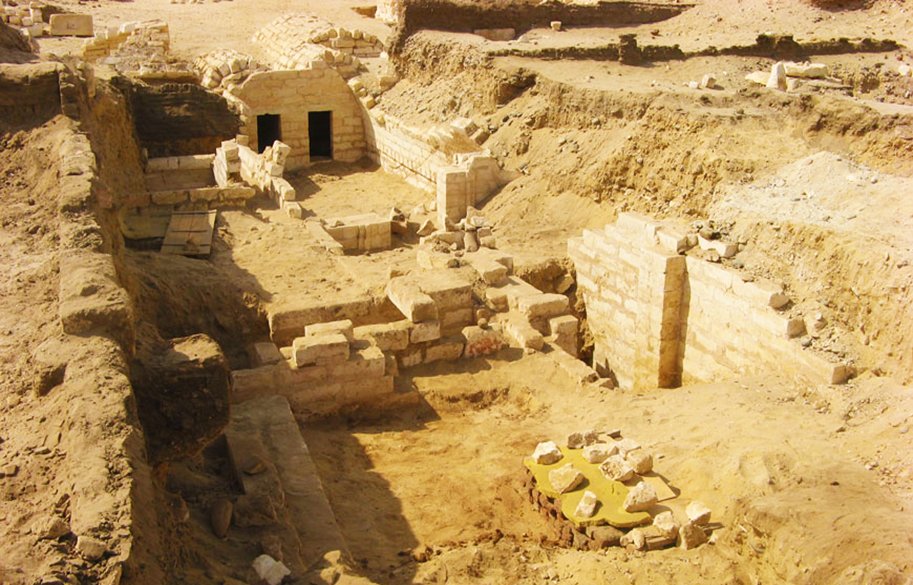
Built To Last: Some of the Oldest Buildings on Earth, and the Reason Why They’re Still There
Everything in 2026 feels like it was designed with an expiration date. But if you look back, there are structures that have been standing since before we even had a codified word for “architecture.” They weren’t built with power tools, CAD software, or reinforced steel. They were built with gravity, obsession, and a version of “sustainability” that puts our modern green-washing to absolute shame. These buildings didn’t just survive… they refused to move. They are some of the oldest buildings on Earth.
To understand why a pile of stones in Scotland is still intact while a modern concrete bridge from the 1970s is already crumbling into the sea, you have to look at the transition from Building for the Now to Building for the Forever.
Göbekli Tepe

If you want to talk about “Old,” you have to start in Southeastern Turkey. Göbekli Tepe is roughly 11,500 years old. To put that in perspective, this place was already ancient when the Pyramids were being built. It’s twice as old as Stonehenge. This was a ritual center built by hunter-gatherers who, according to our traditional history books, shouldn’t have been able to organize a bake sale, let alone carve 20-ton limestone pillars.
The reason it’s still there isn’t just because the limestone was high-quality or the craftsmanship was elite. It’s because the people who built it eventually buried it. For reasons we still don’t fully understand—perhaps a change in religion or a need to protect the sacred—they backfilled the entire site with dirt and limestone rubble, effectively “vacuum-sealing” it for nearly 10,000 years. It’s the ultimate architectural paradox: the building survived because it was intentionally removed from the world.
Knap of Howar
Up on the edge of the Orkney Islands in Scotland, there’s a farmstead called the Knap of Howar. It’s the oldest preserved stone house in Northern Europe, dating back to 3700 BCE. When you walk through it, you aren’t looking at a “ruin”; you’re looking at a home. There are stone cupboards, stone beds, and stone partitions that are still exactly where a Neolithic farmer left them.
The secret to its survival is Dry Stone Construction. There’s no mortar. No glue. No cement to fail over time. The stones are simply “knitted” together, stacked so perfectly that gravity does 100% of the work. Because there’s no mortar to crack, freeze, or wash away in the brutal Scottish rain, the building is “live.” When the earth shifts or the Atlantic winds howl, the stones just… settle into each other. It’s a lesson in “soft” strength. Sometimes, the thing that lasts isn’t the thing that is most rigid, but the thing that knows how to shift without breaking.
The Megalithic Temples of Malta
Malta has these massive, clover-leaf-shaped temples like Ġgantija that were built around 3600 BCE. Local legend says a giantess built them in a single day while carrying her baby, which, if you’ve ever tried to build a career while raising kids, feels like the most relatable “working mom” energy in human history.
The engineering reason they are still standing is a brilliant Double-Wall System. The builders created an outer shell of hard coralline limestone and an inner wall of softer, more carvable globigerina limestone, then filled the massive gap between them with thousands of tons of rubble and earth. This created a massive, shock-absorbing barrier. These buildings aren’t just sitting on the earth; they are “weighted” into it. They don’t fight the landscape. Instead, they use their own sheer mass to become a permanent part of the island’s geology.
The Pantheon
Then there’s the Pantheon in Rome. Completed around 125 CE, it still holds the record for the largest unreinforced concrete dome in the world. 2,000 years of earthquakes, fires, and lightning strikes, and there isn’t a single piece of rebar in sight.
Scientists at MIT finally figured out the secret in the last couple of years: Hot Mixing. The Romans used quicklime and volcanic ash to make their concrete. This created “lime clasts”—tiny white chunks that we used to think were a sign of lazy mixing. In reality, they are the building’s “immune system.” When a tiny crack forms and water gets in, it reacts with these lime chunks to create a calcium-rich solution that flows into the crack and hardens. The building literally heals its own wounds.

Our modern concrete fails because the steel rebar inside it inevitably rusts and expands, blowing the building apart from the inside. The Roman version succeeds because it was designed to fix itself. If you’re curious about this, we actually have a whole article covering this topic.
Why We Stopped Building for the “Long Game”
So, why don’t we build self-healing houses in 2026? Of course, it mostly comes down to money. The Romans and the Neolithic builders weren’t working on a quarterly fiscal cycle or a 30-year mortgage. They were building for the Gods, for the Ancestors, or for the sheer survival of their lineage. Time was their most abundant resource.
We’ve traded “Longevity” for “Efficiency.” We use materials like drywall, cheap timber, and synthetic siding because they are fast, light, and profitable for the developer. We’ve become a “disposable” culture, even in our infrastructure. There’s something deeply humbling (and a little depressing) about standing in a 5,000-year-old house and realizing that the person who laid those stones expected them to be there forever.
Recent Podcast Episodes

Recent Adventures


Subscribe Today!
Subscribe
Your Ad Here!

Other Adventures You May Like

Tell Fara: The Flood Layer Just Found Beneath Iraq’s Oldest Known Ruins
Minanbé: The Untouched Maya City Hidden So Well Archaeologists Had to Machete Through Miles of Jungle to Find It