Charles Waterton: The Eccentric Naturalist Who Rode a Crocodile Like a Horse and Invented the Nature Reserve
In 1820, on a riverbank in what is now Guyana, an English gentleman named Charles Waterton jumped onto the back of a live caiman crocodile, gripped its front legs like reins, and rode it to exhaustion. He later explained his technique came from foxhound riding lessons under Lord Darlington back in Yorkshire. He was 38 years old, traveling largely alone through South American rainforest. This was, by his own account, a fairly ordinary Tuesday.
Waterton punched a snake unconscious with his bare fist during the same period of his life. He also built the world’s first nature reserve. Additionally, he taught taxidermy to the man who later taught Charles Darwin. He spent his final decades fighting a pollution lawsuit against a soap factory. Most naturalists get remembered for one of these things. Waterton somehow did all of them.
The Boy Who Was Made Rat-Catcher
Waterton was born in 1782 at Walton Hall near Wakefield, Yorkshire, into an old Catholic family. His family had lost most of its land and status after the Reformation. As a Catholic, he could not hold public office, receive an army commission, or attend an English university. All doors were closed to him from birth regardless of talent.
He was educated at Stonyhurst College, a Jesuit school, where his energy proved difficult to contain. Teachers once caught him climbing the school’s front towers and ordered him to climb back down exactly the way he had gone up. Rather than continue fighting his restlessness, the school gave him official jobs suited to it. He became, in his own words, the school’s rat-catcher, fox-taker, and vermin-killer. He cheerfully used a crossbow to cull the local fox population so thoroughly that his classmates had free fur hats for winter.
In 1804, at 22, he traveled to British Guiana to manage his uncle’s estate near Georgetown. It changed the direction of his entire life.
Four Journeys Into the Rainforest
Between 1812 and 1824, Waterton made four expeditions into the South American interior, traveling largely alone, at one point walking barefoot into Brazil during the rainy season. He collected birds, snakes, and mammals. Furthermore, he studied local wildlife with an intensity that startled the professional naturalists of his era. He generally treated mortal danger as an acceptable cost of doing business.
The crocodile ride is the most famous incident, but hardly isolated. He once grabbed a large snake by the tail to capture it alive. The snake took a bite from its swinging head. He responded by punching it unconscious, which he described afterward as delivering “a Yorkshire punch on the jaw.” When it revived, still coiled around him, he reportedly chased his terrified native guides. While doing this, he wore ten feet of live snake as an accessory. He treated the entire episode as a fantastic joke.
His account of these travels, published in 1825 as Wanderings in South America, became a bestseller and a direct inspiration to a young Charles Darwin and Alfred Russel Wallace. Established scientists of the period were less impressed. Waterton described them dismissively as “closet-naturalists,” and at least one contemporary, the ornithologist William Swainson, accused him of dressing fact up as fiction. Waterton was, by most later assessments, sincere and largely truthful. He was also constitutionally incapable of describing his own life without it sounding unbelievable.

The Taxidermy and the Slave Who Taught Darwin
Waterton developed his own method of taxidermy, using mercuric chloride to preserve skins in a way that kept them flexible and hollow rather than stiffly stuffed, producing specimens with a natural, lifelike posture that impressed even his critics. He was also, by every account, a man with a genuinely strange sense of humor. He used his taxidermy skills to make satirical jokes at the expense of prominent Protestant clergymen of his day. He dressed reptile specimens as famous religious figures in a piece he titled “The English Reformation Zoologically Demonstrated.”
His most famous creation, a taxidermied Red Howler monkey skin reshaped to resemble a hairy human face, he called “The Nondescript” and used as the frontispiece of his book, hoping it would showcase his skill. Instead, it mostly confirmed everyone’s suspicion that the Squire was a harmless eccentric. It still survives today in the Wakefield Museum.
While managing his uncle’s estate, Waterton taught his taxidermy methods to John Edmonstone, an enslaved man on the plantation. Edmonstone was later freed and moved to Edinburgh to practice taxidermy professionally. There, years later, he taught a teenage Charles Darwin the same techniques Waterton had passed down. The chain runs directly from an eccentric English squire riding crocodiles in a Guyanese river to the man who would eventually write On the Origin of Species.
The Wall That Became the World’s First Nature Reserve
In the 1820s, Waterton returned permanently to Walton Hall and turned his attention toward something genuinely ahead of its time. He built a nine-foot-high wall stretching roughly three miles around his estate, at a cost of £10,000. This enclosed the entire park as a protected sanctuary for wildlife.
He banned hunting inside the walls, with the sole exceptions of fox and badger, which he still permitted to be culled. Then, he nursed old trees that most landowners of the era would have felled for timber. He also planted holly hedges and ivy specifically to encourage nesting birds. In addition, he worked to lure waterfowl back to the lake surrounding his hall. He also invented the modern bird nesting box, a piece of conservation equipment still in wide use today in more or less its original form.

This was, by most historical accounts, the world’s first dedicated wildlife and nature reserve, predating the more widely credited American conservation movement by decades. Waterton opened the grounds to the local public, on the explicit condition that visitors respect that the birds and animals inside had, in his words, security of tenure.
The Soap Factory Fight
Waterton’s later years were consumed by an entirely different kind of battle. A soap works had been built adjacent to his estate under a gentleman’s agreement not to manufacture the harshest raw chemicals on site, keeping the worst pollution away from his sanctuary. When the factory’s owner died in 1840, his business partner abandoned the agreement as demand grew. He built a new chimney that released sulphuric acid fumes directly over Waterton’s land.
The pollution damaged his trees and contaminated the lake he had spent decades protecting. Waterton fought a prolonged legal battle against the factory. Therefore, he became one of the earliest documented individuals to take formal legal action specifically over industrial pollution. This occurred decades before environmental law existed as a recognized legal category.
Waterton married Anne Edmonstone in 1829, when he was 47 and she was 17, the granddaughter of an Arawak woman from Guyana. She died shortly after giving birth to their son, at just 18 years old. Waterton reportedly slept on the floor with a block of wood as a pillow for the rest of his life afterward, a self-imposed penance for her soul.
Recent Podcast Episodes

Recent Adventures


Subscribe Today!
Subscribe
Your Ad Here!

Other Adventures You May Like

Tell Fara: The Flood Layer Just Found Beneath Iraq’s Oldest Known Ruins
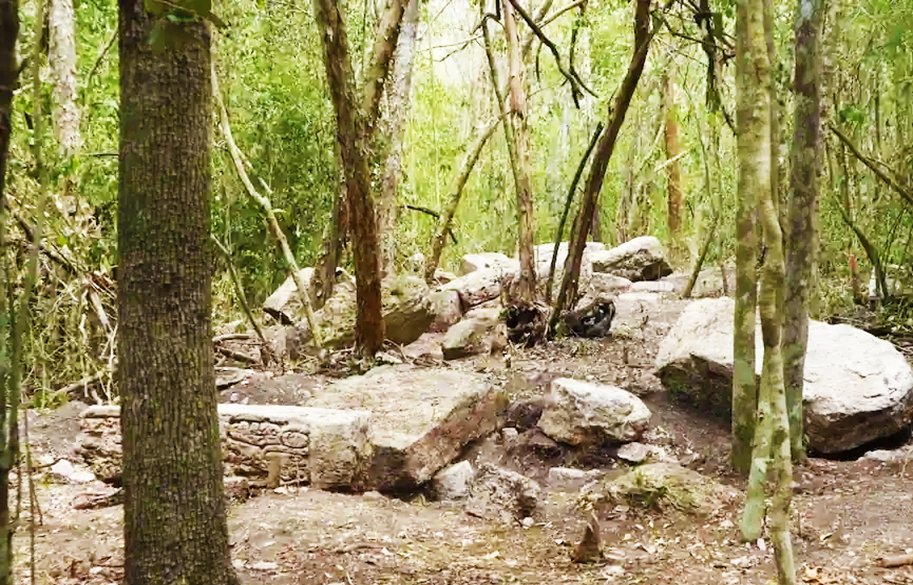
Minanbé: The Untouched Maya City Hidden So Well Archaeologists Had to Machete Through Miles of Jungle to Find It