
Drapetomania: The Fake Disease Doctors Invented to Pathologize Black Freedom
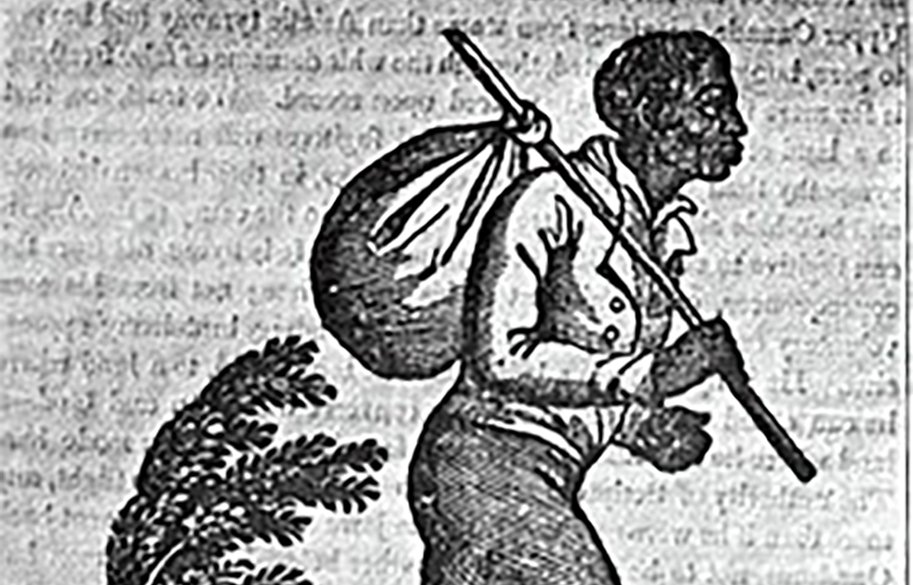
In May 1851, a physician named Samuel A. Cartwright published a paper in the New Orleans Medical and Surgical Journal claiming to have discovered a new disease. He called it drapetomania, drawing from the Greek words for “runaway slave” and “madness.” The Louisiana Medical Association heard the paper. A respected scholarly journal published it. Editors reprinted it widely across the antebellum South. Its core argument was blunt: enslaved Black people who tried to escape were mentally ill. The desire for freedom was a symptom. Running away was a diagnostic criterion.
This was not fringe material. Cartwright held a professorship at what is now Tulane University. He had published over eighty medical papers. By the standards of his time and place, colleagues considered him a credible scientist. What he produced was one of the most vicious acts of intellectual corruption in American medical history.
The Paper Itself
Cartwright’s full report carried the title “Report On The Diseases and Physical Peculiarities Of The Negro Race.” Drapetomania was only one of two new conditions he announced. The second was dysaesthesia aethiopica — a disease affecting both mind and body. He described it as characterized by sluggishness and what he called “hebetude of the intellect.” Overseers simply called it rascality. Cartwright called it pathology.
The logic underlying both diagnoses was circular — almost elegant if it weren’t so evil. His premise held that slavery was a natural and beneficial condition for Black people, divinely ordained, he argued, citing scripture. From that premise, any enslaved person who was dissatisfied must be suffering from some malfunction. A rational person in a good situation would not want to leave it. Resistance wasn’t evidence that slavery was intolerable. It was evidence that the resisting person was sick.
Cartwright described the warning signs of imminent flight: a slave who became “sulky and dissatisfied without cause” was showing early symptoms. His treatment for mild cases was to “whip the devil out of them.” For serious cases, he suggested amputation of the toes to prevent running. Masters should also avoid treating enslaved people as equals. Being “too familiar” triggered the disease, he argued, by disrupting the hierarchical relationship that kept enslaved people mentally stable.
Read slowly, the paper is almost impossible to process. A doctor, writing in a medical journal, recommended mutilation as treatment for the desire to be free.
How It Functioned
Drapetomania was useful because it moved the conversation from the political to the clinical. Slavery’s critics argued from morality and human rights. Cartwright answered from medicine. He wasn’t defending a brutal economic system — he was diagnosing a public health problem. If freedom was a symptom of disease rather than a rational response to oppression, the entire moral argument against slavery could be reframed. Enslaved people weren’t resisting injustice. They were experiencing episodes.
This is what historians mean when they talk about science being weaponized. The content of drapetomania was obviously fabricated. No biological basis existed. No clinical evidence supported it. Cartwright proposed no mechanism beyond circular reasoning rooted in white supremacist assumptions. But the form was scientific. It appeared in a journal, used Greek terminology, and carried the name of an author with institutional credentials. Medicine carried enormous authority at the time. That form did real work. It gave slaveholders a framework that translated their interests into the language of care and necessity.
Cartwright also made sure his findings reached beyond medical circles. The most inflammatory sections appeared in DeBow’s Review, one of the most widely read publications in the antebellum South. His ideas reached plantation owners, politicians, and ordinary white Southerners. Many would never read a medical journal. They were happy to learn that science confirmed what they already believed.
What Northern Critics Said
Drapetomania was not universally accepted. Several Northern newspapers mocked it openly. The Buffalo Medical Journal called it an embarrassment to the profession. Many contemporaries found the idea absurd — that Black people had a mental disease causing them to seek freedom. Which, of course, they were right to think.
Ridicule from the North didn’t dislodge it from its usefulness in the South. It circulated through the 1850s as part of the broader pro-slavery intellectual apparatus. Cartwright continued publishing and lecturing. During the Civil War, he served as a physician in the Confederate Army. He also became an outspoken critic of germ theory — fitting, since his career seems to have been organized around refusing to accept things that contradicted his prior commitments.
The Longer Pattern
Drapetomania didn’t come from nowhere, and it didn’t end cleanly when slavery did. It was part of a long tradition of using medical authority to pathologize African American bodies, behaviors, and minds. That tradition preceded Cartwright and continued well after him. This kind of institutional harm has a long history, as explored in our look at the weird world of Victorian asylums and moral treatment.
Cartwright falsely claimed that Black people had smaller brains, differently structured respiratory systems, and distinct skeletal anatomy. These claims circulated through American medicine for generations. Some persisted in medical education into the 20th century. Studies have documented that medical students and residents still hold false beliefs about biological differences between Black and white patients. These beliefs affect pain management and treatment decisions in clinical settings right now.
The pattern also appears clearly in psychiatry. In the 1960s and 1970s, psychiatrists applied schizophrenia diagnoses at dramatically higher rates to Black men who were vocal about civil rights. Psychiatrist Jonathan Metzl documented this phenomenon in his book The Protest Psychosis. The diagnostic criteria for schizophrenia quietly expanded to include “hostile” and “aggressive” behavior. In practice, that expansion pathologized political anger. The mechanism differed from drapetomania. The logic was recognizable.
Homosexuality remained in the Diagnostic and Statistical Manual of Mental Disorders until 1973. Sustained activist pressure forced the American Psychiatric Association to reckon with the facts. It had classified a human identity as a disorder without any actual clinical basis. When historians and activists argued against that classification, they frequently cited drapetomania as the clearest prior example. Medicine had diagnosed as disease something simply inconvenient to the existing social order. This pattern of pseudoscience mirrors cases like The Monster Study, where researchers caused lasting psychological harm in the name of science.
Recent Podcast Episodes

Recent Adventures



Subscribe Today!
Subscribe
Your Ad Here!

Other Adventures You May Like

The Berners Street Hoax Buried One London Address in Unwanted Deliveries

Nils Olav, the Penguin the Norwegian Army Keeps Promoting
