
Gorilla Trekking: A Thoughtful Approach to One of Africa’s Most Powerful Wildlife Encounters
Gorilla trekking occupies a rare space in the world of travel. It’s often described as one of Africa’s most emotional wildlife experiences, not because of the drama you’ll see, but because of how carefully it’s protected. The whole thing is built around respect: for the forest, for the animals, and for the people who guard both.
This isn’t a “show.” It’s an invitation, tightly managed, gently offered.
Why the Rules Exist
Mountain gorillas live high in the misty forests of Uganda, Rwanda, and the Democratic Republic of Congo. These habitats are delicate, and so are the gorillas themselves. Even a common cold can put them at risk, which is why trekkers follow strict guidelines.
Permits are limited. Visitor groups are small. Time with each gorilla family lasts exactly one hour, and even then, you keep a respectful distance. Rangers and trackers lead every step, making sure nothing disturbs the animals or their routines.
It’s tempting to see the rules as barriers, but in reality, they’re what make the experience possible. Without them, there’d likely be no gorillas left to visit.
How It Unfolds
Every trek starts the same way, a morning briefing, a sense of nervous excitement, maybe a glance toward the hills that already look impossibly far. Guides assign groups based on recent gorilla movements, and trackers go ahead early, reading signs most of us would miss: a trampled leaf, a nest from the night before, a branch stripped clean.
The hike can be quick or punishingly long. You might climb for hours through mud and rain, or you might find the family within half an hour. There are never guarantees. The forest sets the terms, and that’s part of its power.
Conservation at the Core
It’s easy to forget, while standing quietly in the presence of a gorilla family, how much work goes into keeping these animals safe. The permit fee, expensive by design, funds patrols, veterinary care, and research. It also helps pay and train the locals who act as guides, rangers, and porters.
That partnership between community and conservation is the reason gorilla populations have slowly grown. When the people who live near the forest benefit from protecting it, everyone wins.
The Encounter Itself
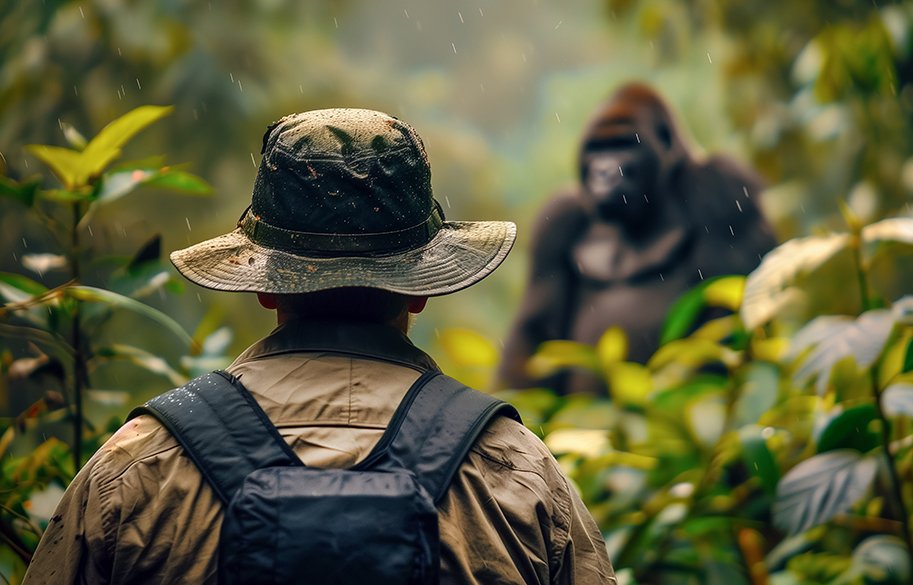
When you finally see them, it’s hard to describe the feeling. The forest seems to hold its breath. Gorillas move slowly through the undergrowth, unfazed by the handful of people crouched nearby. They eat, stretch, groom each other, utterly indifferent to our awe.
There’s no performance, no sense that you’re owed anything. The clock ticks quickly, and before you know it, the rangers give the signal to leave. The brevity makes the encounter sharper, almost sacred. Those few minutes define the whole idea of coexistence: proximity without interference.
Preparing for the Trek
This isn’t luxury travel. It’s muddy, unpredictable, and sometimes tough on the lungs and legs. But that’s also the point, it asks you to earn it. The more open you are to discomfort and uncertainty, the more meaningful it becomes.
Knowing the conservation story, why the costs are high, why time is short, adds context. What you’re paying for isn’t privilege; it’s protection.
The Bigger Picture
In a world where travel often takes more than it gives, gorilla trekking stands apart. It shows what’s possible when care outweighs convenience. If done responsibly, it benefits everyone, the animals, the forest, the communities that depend on it, and the travellers willing to slow down long enough to understand their role in it.
Handled with respect, it’s not just a once-in-a-lifetime encounter. It’s a quiet lesson in how we should approach the wild, with humility first.
Recent Podcast Episodes

Recent Adventures



Subscribe Today!
Subscribe
Your Ad Here!

Other Adventures You May Like

Nils Olav, the Penguin the Norwegian Army Keeps Promoting

A Guide to Caravan Sales in NSW for First-Time Buyers
