
Hashima Island, Japan’s Abandoned Concrete City in the Sea
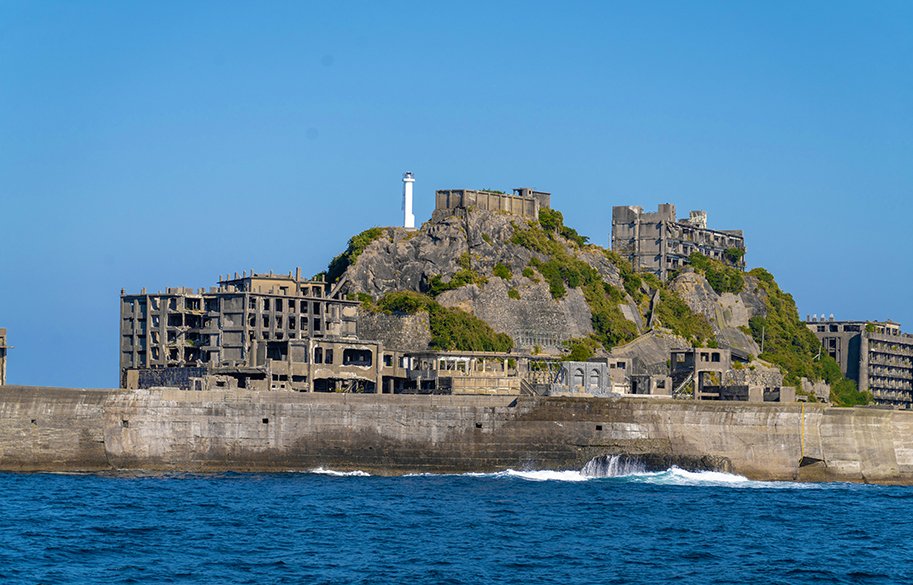
From the water, Hashima Island looks like a battleship. That’s not a metaphor. A seawall, packed apartment towers, and a jagged concrete skyline just do that to a tiny island when you see it from a boat. Locals call it Gunkanjima, “Battleship Island,” and the nickname stuck harder than the real name ever did. What’s stranger than the shape is what happened here. For a while, this speck of rock crammed in more people than almost anywhere else on Earth. Then, almost overnight, everyone just left.

A Coal Mine That Turned Into a Vertical City
Mitsubishi bought Hashima in 1890, after realizing there was coal sitting under the seabed nearby. For the next eight decades, the company kept digging, tunneling further out beneath the ocean floor. The island itself only covers 6.3 hectares, so to actually house the workers, Mitsubishi built up instead of out. In 1916, they put up Japan’s first reinforced concrete apartment building. It stood seven stories tall, built specifically to survive the typhoons that hit the area. It’s still considered the oldest building of its kind in the country.
By 1959, the island held 5,259 people. On a rock that small, that works out to roughly 83,500 people per square kilometer. That’s nearly seven times the density of central Paris today. Somehow it functioned as a real, complete town anyway. There was a school. A hospital. A cinema. A pachinko parlor. Even a brothel. All of it packed onto an island you could walk across in a few minutes.
Life There Was Genuinely Brutal for a Lot of People
It’s worth being honest about what this place actually was, not just how it looks in photos now. Miners worked tunnels stretching as much as 1,000 meters below the seabed. They dealt with near 95 percent humidity, thick coal dust, and heat well over 86 degrees Fahrenheit. During World War II, Mitsubishi brought in somewhere between 800 and 1,300 forced Korean and Chinese laborers. Survivor accounts describe beatings and starvation on top of the mining itself. Estimates of how many died there range from around 140 to well over a thousand, depending on the source. Mitsubishi didn’t formally apologize for using forced wartime labor, company-wide, until 2015.
Then the Coal Ran Out, and So Did Everyone Else
Japan’s energy needs shifted hard toward petroleum through the 1960s and 70s. Hashima’s coal, even what remained, stopped being worth digging out. Mitsubishi shut the mine down on January 15, 1974. By April, the island had completely emptied. People left behind televisions, shoes, cookware, whatever didn’t fit in their bags. None of it ever got picked back up. For the next 35 years, nobody set foot there at all. Buildings crumbled on their own schedule. Plants that had never grown on the “island without green” pushed up through the concrete once nobody was left to stop them.
Nagasaki finally opened Hashima to tourists in April 2009. It’s been a strange kind of attraction ever since. Part industrial ruin, part cautionary tale, part genuinely eerie photo opportunity. Google eventually mapped restricted sections of it for Street View. The place even inspired the villain’s lair in the James Bond film Skyfall, which tells you a lot about the vibe it gives off now.
Recent Podcast Episodes

Recent Adventures



Subscribe Today!
Subscribe
Your Ad Here!

Other Adventures You May Like

The Berners Street Hoax Buried One London Address in Unwanted Deliveries

Nils Olav, the Penguin the Norwegian Army Keeps Promoting
