How The Capuchin Crypt in Rome Became a Baroque Shrine to Mortality
Tucked beneath a quiet church just a few blocks off Rome’s bustling Via Veneto lies one of the strangest and most unsettling spaces in the city — and that’s saying something. I’m talking about the Capuchin Crypt, a 17th-century underground chamber lined (and I do mean lined) with the bones of thousands of monks. Skulls, femurs, scapulae. Entire walls built solely from bones.
If you’re imagining something gruesome, you’re not wrong. But it’s also oddly serene. Because this is a deeply intentional space, built by monks not to scare anyone, but to remind visitors of a single, inescapable truth: you will die.
So… whose bones are we talking about?
The bones belong to over 3,700 Capuchin friars, members of a Catholic religious order known for their commitment to poverty, simplicity, and humility. (And yes, the word “cappuccino” does trace back to them — it’s a reference to their brown robes.)
Sometime in the 1600s, when the Capuchins relocated to the Church of Santa Maria della Concezione, they brought the remains of deceased friars with them. A lot of remains. And instead of burying them in a traditional ossuary, they decided to do something different. They began arranging the bones into the walls and ceilings of six small crypts. And then they just… kept going.
No one really knows which friar started the tradition, or why they leaned so heavily into this kind of Baroque death metal meets Franciscan humility aesthetic. But once they began, the idea took root. Over time, new bones were added as older friars passed on.
What it actually looks like
Each of the crypt’s rooms is dedicated to a different body part: there’s the Crypt of Skulls, the Crypt of Pelvises, and the Crypt of Leg and Thigh Bones, among others. It sounds excessive, but it’s also strangely meticulous.

You’ll see chandeliers made entirely of vertebrae. Crosses built from finger bones. An hourglass made of shoulder blades. In one room, a robed skeleton lies in repose surrounded by winged skeleton cherubs, reminding you that yes, you are still in Rome and yes, someone thought this was a good idea.
One question remains… why? Well, these were just monks following the logic of their faith. In the 17th century, death wasn’t abstract. It was everywhere — plagues, famines, wars, bad wine. The Capuchins believed that by contemplating death, you could live more humbly and spiritually. And in typical Roman fashion, they didn’t do it halfway.
Visiting today
The crypt is open to the public and easy to visit if you’re already in Rome. You’ll enter through the Museo dei Cappuccini, which gives a surprisingly thoughtful introduction to Capuchin history, theology, and the role of death in Christian thought. It’s not sensationalized. If anything, it’s overly respectful. Photos inside the crypt are no longer allowed, which is probably for the best. But trust me when I tell you that you’ll remember it, anyway.
Recent Podcast Episodes

Recent Adventures

Subscribe Today!
Subscribe
Your Ad Here!

Other Adventures You May Like
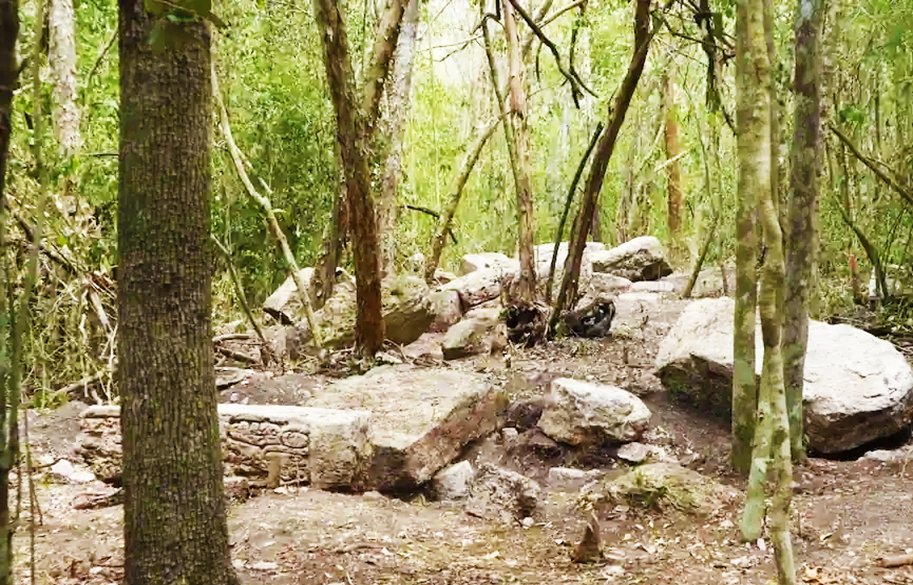
Minanbé: The Untouched Maya City Hidden So Well Archaeologists Had to Machete Through Miles of Jungle to Find It
The Iliad in the Mummy Wrappings: What a 1,600-Year-Old Fragment of Homer Was Doing Inside an Egyptian Burial