How to Bury a Vampire (According to 18th Century Villagers)
If you lived in a small Eastern European village in the early 1700s, chances are you believed in vampires. Not the sexy kind. Not even the bat kind. No. The kind that used to be your neighbor. Vampires weren’t foreign monsters. They were local. They were inconvenient. And worst of all, they were familiar.
Maybe you buried them yourself, maybe you went to their funeral, or maybe they owed you a goat. And then the cows started dying, your uncle developed a mysterious cough, or someone swore they saw a dead man standing in the orchard at dusk. You’d know what it meant. You wouldn’t want to say it, but you’d think it. It’s a vampire.

Being Dead Wasn’t Always the End
This is one of those things that’s hard to fully grasp until you sit with it a while: people used to be afraid of the dead getting back up. The line between life and death was blurrier back then. People saw death constantly — children, parents, neighbors. They knew how a body should decay. And when it didn’t, that wasn’t seen as a beautiful mystery. It was terrifying.
So, who would be called a vampire? Basically… anyone. It didn’t take much. People who died suddenly. or people who were disliked. People who looked suspicious in their coffins or people who coughed up blood before dying (thank you, tuberculosis).
And once the word was out, there was no going back. The community might try prayers or rituals first, but if things kept getting worse — if people were still getting sick, if dreams turned darker, if the animals refused to go near the cemetery — then the vampire had to be dealt with. Properly. Which is where things get interesting.
The Vampire Burial (Not Your Average Funeral)
We think of funerals as gentle and respectful. 18th century vampire burials were… not that.
If the village suspected someone of being a vampire, they would dig them up. This wasn’t a casual affair. Everyone would show up. The priest. The gravedigger. The guy who’d always secretly hated the deceased. The terrified family members, probably clutching garlic and crossing themselves.
They’d open the coffin and examine the body. They weren’t looking for bite marks. They were looking for freshness. If the corpse still looked pink, if there was blood around the mouth, if the skin wasn’t collapsing fast enough — that was enough. And then the real burial began.
So How Do You Actually Bury a Vampire?
There was no single method. Every region had its own rituals. Some were based in religion, others in pure desperation. But most had one goal: make sure the vampire never gets up again.
One method was the wooden stake — not to kill them (again, already dead), but to pin them down. Some went for the heart, others the stomach. In some areas, the preferred technique was to hammer the stake through the mouth. A very clear “no biting allowed” message.
If you had the means (and the guts), you might decapitate the corpse. Sometimes the head was placed between the feet, and sometimes it was buried separately. But in some cases, it was just… tossed.

There were also gentler, weirder methods. In Romania, people would scatter millet or poppy seeds inside the coffin. Vampires, allegedly, couldn’t resist counting them — one by one — which meant they’d stay too busy to come bother anyone. Honestly, respect.
In Bulgaria, they preferred red-hot iron. In parts of Poland, corpses were buried face-down, or with sickles pressed to their necks. Some graves had stones stacked on top, or nails driven into the coffin lid. In a few cases, the feet were cut off, just to be extra sure.
When all else failed — or if the panic had truly set in — the body was burned. Sometimes only the heart, sometimes the whole thing, sometimes the ashes were scattered in a river. Finally, at that point, everyone could finally breathe again.
Recent Podcast Episodes

Recent Adventures


Subscribe Today!
Subscribe
Your Ad Here!

Other Adventures You May Like

Tell Fara: The Flood Layer Just Found Beneath Iraq’s Oldest Known Ruins
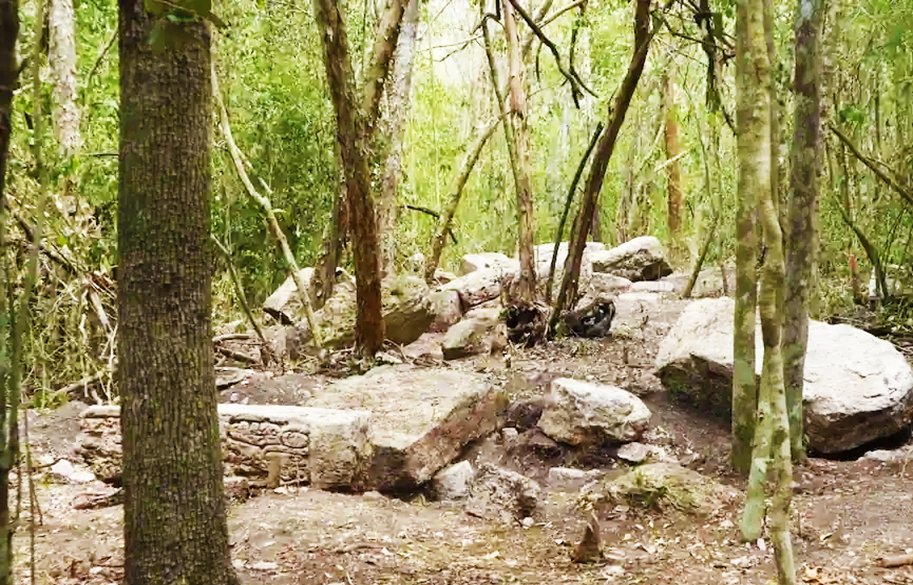
Minanbé: The Untouched Maya City Hidden So Well Archaeologists Had to Machete Through Miles of Jungle to Find It