
Kitty Genovese and the “38 Witnesses” Story That Turned Out to Be Wrong
For fifty years, one number defined an entire generation’s understanding of human indifference. Thirty-eight. That’s how many people supposedly watched a young woman get killed outside her Queens apartment. Supposedly, none of them did anything at all. The number appeared on the front page of the New York Times. It got taught in psychology textbooks. It shaped laws. Even launched an entire field of research. And it was wrong.
What Actually Happened
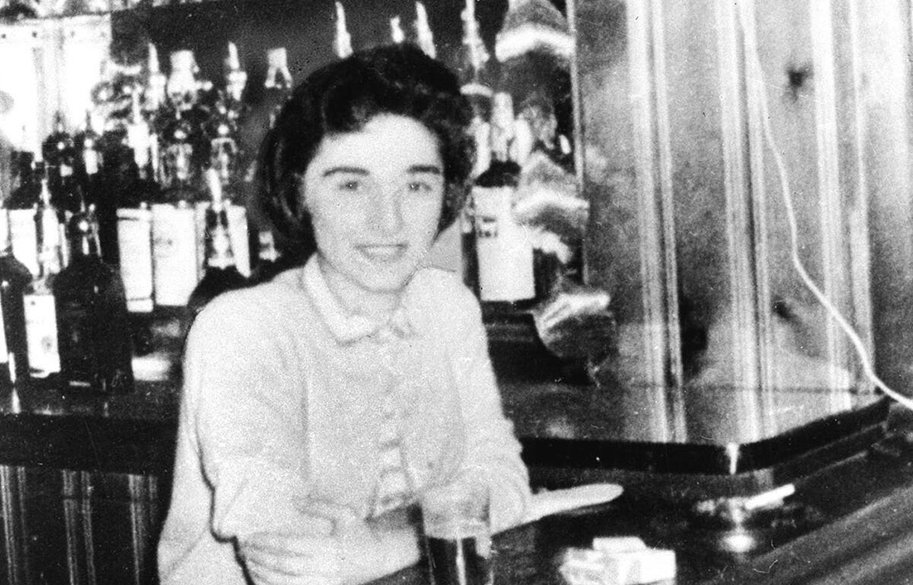
Catherine Susan Genovese, known to everyone as Kitty, was 28 years old. In the early hours of March 13, 1964, a man named Winston Moseley attacked and killed her. It happened near her apartment building in the Kew Gardens neighborhood of Queens. Police arrested Moseley shortly afterward. He confessed to killing Genovese, along with two other women. A court sentenced him to death, then reduced that to life imprisonment. He died in prison in 2016 at the age of 81. Those facts have never been in dispute. Everything that came afterward is where things went sideways.
A Number That Came From a Lunch Conversation
Two weeks after the murder, the Times ran an article on March 27, 1964. The headline read “37 Who Saw Murder Didn’t Call the Police.” Reporter Martin Gansberg wrote it. It described 38 respectable, law-abiding citizens. They had watched or heard the attack unfold over roughly half an hour, and had not lifted a finger.
Here’s where that number actually came from. Times city editor A.M. Rosenthal had a conversation with New York City Police Commissioner Michael J. Murphy. Murphy mentioned the figure. Rosenthal took it and ran with it. Nobody verified it before publication. Not the count, not what those people had supposedly seen, not how long any of it lasted. A police commissioner said a number over a meal, and that number went to print as established fact.
The story landed hard. It became a national parable about urban coldness, about modern society losing its capacity for basic decency. Rosenthal expanded it into a book later that same year, titled Thirty-Eight Witnesses.
What the Evidence Actually Showed
The problems with the story start with the number itself and get worse from there. Charles Skoller, the Queens assistant district attorney who worked the case, later put it plainly. Investigators found roughly half a dozen witnesses who saw anything usable, not 38.
More importantly, nobody saw the whole thing. Not one person watched a murder unfold from a window and chose to do nothing. The attack happened in stages, in different locations, partly out of view. One witness reported seeing Genovese and Moseley standing close together and described them as not appearing to fight at all.
Then there’s the detail that genuinely undercuts the entire “apathy” framing. A neighbor shouted at Moseley during the first attack. That shout worked. Moseley abandoned the attack and left. He returned later. The fatal assault happened inside a building entryway, out of sight from the apartments overlooking the street.
So the story of neighbors passively watching a murder for thirty minutes was not just exaggerated. The sequence it described didn’t happen. There’s also a practical detail modern readers forget. The 911 system didn’t exist in 1964. Calling the police meant knowing which precinct to reach and dialing it directly, which was neither obvious nor fast.
The Science That Grew Out of a Flawed Story
The article’s influence on psychology was enormous and immediate. Researchers John Darley and Bibb Latané used the case as their launching point. They studied what became known as the bystander effect, sometimes called Genovese syndrome.
The core idea is simple. People become less likely to help someone in trouble as the number of other people present increases. Two mechanisms drive it. Diffusion of responsibility means each person assumes somebody else will handle it. Pluralistic ignorance means people look around, see nobody reacting, and conclude the situation must not be an emergency.
Here’s the part worth being precise about. The bystander effect is real. Decades of controlled experiments support it, and it did not depend on the Genovese case being accurate. But the case became the story everyone told about it, and that had consequences. A 2007 paper in American Psychologist made this point directly. Rachel Manning, Mark Levine, and Alan Collins argued the myth had actually skewed the research field. By treating Genovese as the definitive example, psychologists spent decades studying why groups fail to help. They spent comparatively little time studying when groups do help.
The Story Changed Real Laws
Whatever its accuracy, the article’s practical effects were substantial and lasting. States across the country began passing Good Samaritan laws. Those protect people from legal liability when they step in to help someone in an emergency. The reasoning was straightforward enough. If fear of getting involved was stopping people from helping, then remove the legal risk.
The case also fed directly into the push for a unified emergency number. The 911 system arrived in the United States in 1968, four years after Genovese’s death. The difficulty of summoning help that night became part of the argument for building it. So a piece of flawed reporting produced genuinely useful reforms. That’s an awkward thing to sit with. The story was wrong, and the response to it made emergency help easier to reach.
Fifty Years of Slow Correction
The unraveling took a long time. In 2004, journalist Jim Rasenberger published a piece in the Times itself questioning the original reporting. The 2007 American Psychologist paper pushed further. Author Kevin Cook later wrote a full book examining how the story took shape. The most personal correction came from Genovese’s own family. Her younger brother, Bill Genovese, had been deeply affected by the story of neighbors doing nothing. Determined not to be that kind of person, he volunteered for Vietnam. He lost both his legs in combat.
Decades later, Bill spent years re-investigating his sister’s death. That effort became the 2015 documentary The Witness, directed by James Solomon. The film tracks his attempt to find out what actually happened. He interviews surviving neighbors and confronts the gap between the reporting and the reality.
Finally, in 2016, prompted by Moseley’s death, the New York Times acknowledged the problem in print. The paper called its original reporting flawed. The attack had certainly happened, it noted, and some neighbors did ignore cries for help. But the portrayal of 38 fully aware and unresponsive witnesses was erroneous. The article had grossly exaggerated both the number of witnesses and what they had actually perceived. None of them, the paper conceded, saw the attack in its entirety. That correction arrived 52 years after the original story.
Recent Podcast Episodes

Recent Adventures



Subscribe Today!
Subscribe
Your Ad Here!

Other Adventures You May Like

The Berners Street Hoax Buried One London Address in Unwanted Deliveries

Nils Olav, the Penguin the Norwegian Army Keeps Promoting
