
Movile Cave: The Romanian Cave Sealed Off for 5 Million Years With Poison Air and Creatures Found Nowhere Else on Earth
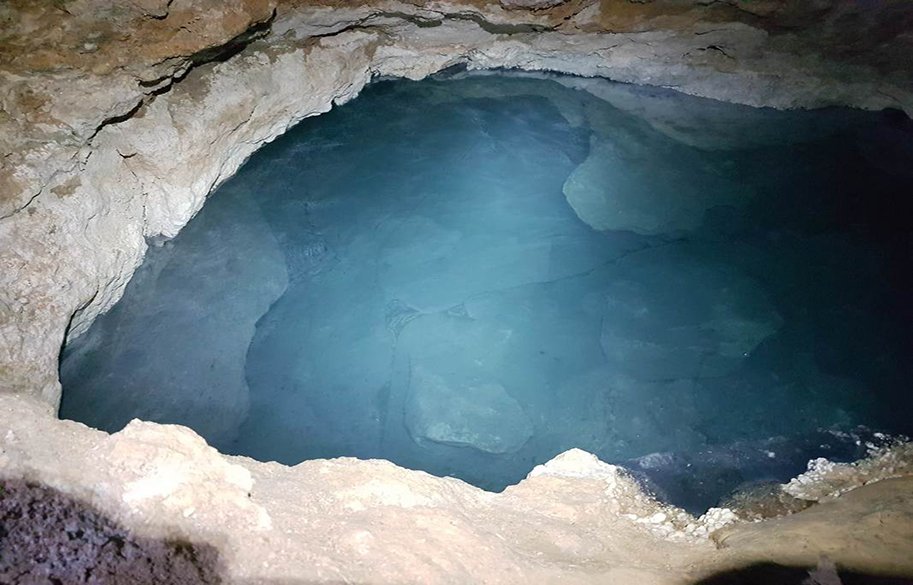
In 1986, workers scouting a site near Mangalia, Romania for a nuclear power plant drilled an exploratory borehole and found something considerably more interesting than good foundation ground. Geologist Cristian Lascu descended into the opening and found himself in a maze of tunnels buried under 60 feet of clay and limestone, sealed off so completely from the surface that nothing had gotten in or out for roughly 5.5 million years.
The air inside was toxic. Oxygen levels sat between 7 and 10 percent, less than half of what you breathe outside. Carbon dioxide ran up to 100 times higher than surface levels. Hydrogen sulfide, the gas responsible for the smell of rotten eggs and capable of causing respiratory failure in high doses, saturated the atmosphere along with methane and ammonia. Lascu expected a dead cave. What he found was thriving.
Life That Runs on Poison Instead of Sunlight
Every ecosystem you have ever encountered on the surface of the Earth ultimately runs on sunlight. Plants and algae photosynthesize, converting light into energy, and everything else in the food chain eats something that eventually traces back to that conversion. Movile Cave has never seen sunlight in 5.5 million years. Its food chain runs on something else entirely: chemosynthesis.
Bacteria coat the cave walls and float in a thick foam mat across the surface of the underground lake. These microbes oxidize hydrogen sulfide, methane, and ammonia, the same toxic compounds that make the air unbreathable, and convert them into organic material other organisms can use. It is the base of the entire food web. Small invertebrates eat the bacteria. Larger predators, spiders, leeches, water scorpions, centipedes, eat the small invertebrates. Every calorie in Movile Cave traces back to chemistry rather than light.
The bacteria even shape the physical cave. Oxidizing hydrogen sulfide produces sulfuric acid, which slowly dissolves the limestone walls, gradually enlarging the tunnel system and releasing more carbon dioxide as it does. The cave is, in a sense, digesting itself, very slowly, using the same chemical process that feeds everything living inside it.
What Lives There
Researchers have identified around 50 species of invertebrate in Movile Cave, and roughly 35 of them exist nowhere else on the planet. Spiders, pseudoscorpions, woodlice, water scorpions, leeches, snails, and a centipede species discovered in 2020 and nicknamed the king of the cave, at over two inches long the largest predator found there so far, with saw-like serrations on its rear legs to help it grapple prey.
Cut off from light for millions of years, most of these creatures have lost their eyes entirely. Many have lost pigmentation too, turning pale, translucent, or ghostly white. Several species have evolved unusually long limbs and antennae, compensating for blindness by feeling their way through total darkness. One species of cave snail has been isolated in the system for slightly more than 2 million years, arriving separately from the older residents whose lineage stretches back the full 5.5 million.
Access to the cave requires a 66-foot rope descent followed by crawling through tight limestone passages and swimming through submerged channels to reach the central caverns. Researchers can typically only tolerate 5 to 6 hours inside per visit before the air quality and humidity become too much.
Recent Podcast Episodes

Recent Adventures



Subscribe Today!
Subscribe
Your Ad Here!

Other Adventures You May Like

The Berners Street Hoax Buried One London Address in Unwanted Deliveries

Nils Olav, the Penguin the Norwegian Army Keeps Promoting
