
Palmyra Atoll: The US Wildlife Refuge So Remote It Has Its Own Unsolved Murder Case
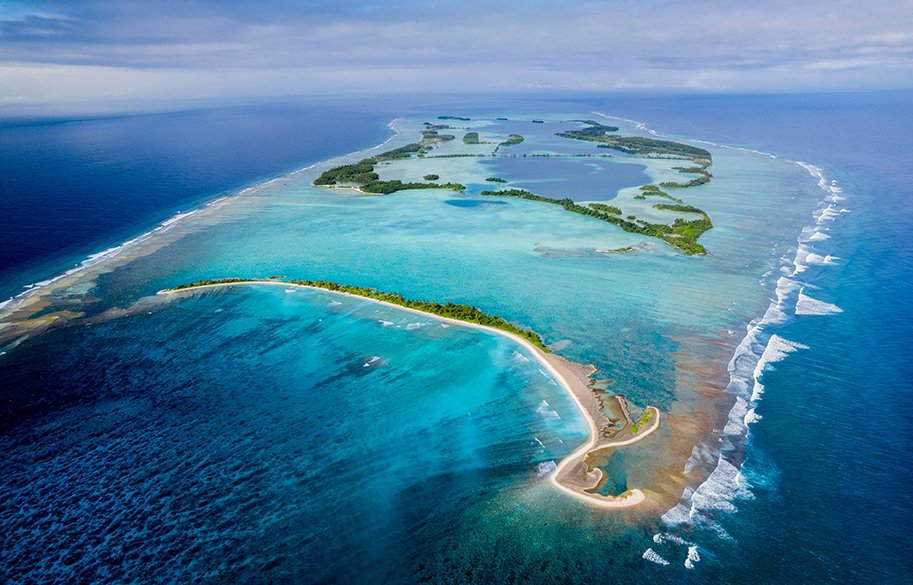
About 1,000 miles south of Hawaii, closer to the equator than to any inhabited shore, sits a coral atoll that belongs to the United States. It has never had a permanent civilian population. Palmyra Atoll covers less than five square miles of land and hosts a rotating handful of federal scientists and refuge staff. Today it functions as one of the most pristine marine wilderness areas left on Earth. It is home to reef sharks, over a million nesting seabirds, and the world’s largest population of coconut crabs. It’s also the site of a real double murder from 1974 that ended in a conviction, a bestselling true crime book, and one body that has never been found.
A Piece of America Nobody Lives On
Palmyra came under American control following the annexation of Hawaii in 1898. Various parties, including the Kingdom of Hawaii itself, had claimed and contested it for decades before that. For much of the 20th century a single Hawaii family privately owned it. Even as the US government used parts of it during World War II, the family remained owners.
Today Palmyra operates as a National Wildlife Refuge. The US Fish and Wildlife Service and The Nature Conservancy jointly manage it. Staffing typically runs between four and twenty people at any given time, all there temporarily for research or refuge management. Nobody calls it home in any permanent sense. Getting there requires a private charter flight or boat, since no commercial travel option exists.
Two Boats, Two Very Different Reasons for Being There
In the summer of 1974, a San Diego couple named Malcolm “Mac” Graham and his wife Eleanor “Muff” Graham sailed their 38-foot ketch, the Sea Wind, out to Palmyra. They were experienced, well-provisioned sailors in their forties. They planned to spend up to two years exploring the remote Pacific in comfortable isolation.
But, they weren’t alone when they arrived. Buck Walker, an ex-convict facing drug charges back in Hawaii, and his girlfriend had already lived on the atoll for weeks aboard a barely seaworthy boat called the Iola. Their original plan involved growing marijuana on the island to support themselves. However, it hadn’t worked out. Their supplies were nearly gone. They’d resorted to chopping down coconut palms just to eat, and their boat had no reliable way of getting them back to civilization. The Grahams, by contrast, had a fully stocked, genuinely seaworthy yacht.
What Happened, and What Never Got Fully Answered
At some point that summer, the Grahams vanished. Walker and his girlfriend eventually sailed into Hawaii aboard the Sea Wind, the Grahams’ own boat, claiming they’d purchased it. Investigators grew suspicious almost immediately, and an abandoned life raft helped trigger a formal inquiry. It took seven more years to find any physical evidence. In 1981, a sailor passing through Palmyra spotted a metal container partially exposed on the beach. Inside were the dismembered, partially burned remains of a woman, later identified as Muff Graham.
A jury tried and convicted Buck Walker of her murder. A separate jury tried and acquitted his girlfriend. Nobody has ever recovered Mac Graham’s body, and the exact circumstances of his death remain officially unresolved in a way his wife’s case is not. The case became the basis for the 1991 bestselling true crime book And the Sea Will Tell. Prosecutor Vincent Bugliosi and journalist Bruce Henderson wrote it together. Television later adapted it as well.
Recent Podcast Episodes

Recent Adventures



Subscribe Today!
Subscribe
Your Ad Here!

Other Adventures You May Like

Nils Olav, the Penguin the Norwegian Army Keeps Promoting

A Guide to Caravan Sales in NSW for First-Time Buyers
