The Amphipod Superfamily Nobody Knew Existed Until This Year
Imagine already knowing bears exist. You know cats exist too, the whole family of them, lions down to house cats. Then, one day, someone hands you a photo of an animal that doesn’t fit anywhere you’d expect. Not a bear. Not a cat. Something else entirely, related to both in some distant way, but different enough that scientists have to invent an entirely new category just to describe it. That’s roughly what just happened at the bottom of the Pacific Ocean, except with tiny shrimp-like crustaceans instead of dogs.
A Contested Patch of Seafloor
The discovery came out of the Clarion-Clipperton Zone, a stretch of deep ocean floor between Hawaii and Mexico covering roughly 2.3 million square miles. It’s a genuinely strange place right now, caught between two identities at once. This is one of the least explored ecosystems on the planet. It’s also one of the most fought-over, since the seafloor there holds polymetallic nodules companies want to mine for electric vehicle batteries. Nobody has even named more than 90 percent of the species living there.
In 2024, a team of 16 specialists gathered in Poland for a week-long taxonomy workshop at the University of Łódź. Researchers Anna Jażdżewska and Tammy Horton organized the event, bringing together mostly early-career scientists, most of them women. Their job was to sit down with specimens collected from the CCZ and figure out exactly what they were looking at.
Twenty-Four New Species, and One Genuine Shock
The team formally described 24 new species of amphipods, small, shrimp-like crustaceans mostly under half an inch long. Researchers had collected them from depths between roughly 13,000 and 18,000 feet. The findings appeared in the journal ZooKeys in March 2026.
Most of those 24 species slotted into families scientists already knew about. One did not. Researchers found a creature so structurally different from anything on record that it fit nowhere on the existing family tree of life. It needed an entire new superfamily, which they named Mirabestioidea, and a new family within it, Mirabestiidae, built specifically to hold it.
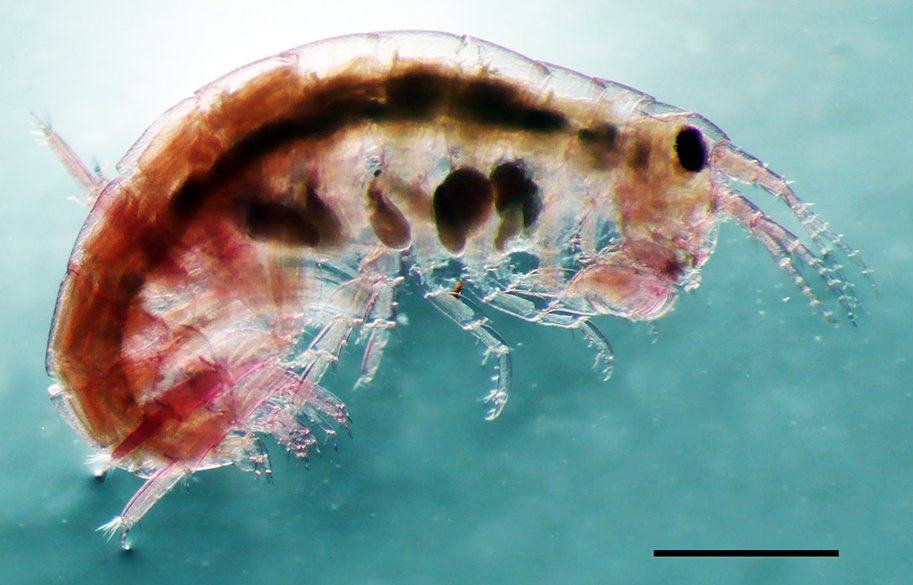
Tammy Horton, one of the study’s co-leads, put the scale of that discovery in terms anyone could understand. Imagine already knowing carnivorous mammals exist, she said, already knowing about bears, already knowing about the whole family of cats. Finding a new superfamily is like suddenly discovering dogs exist too. It’s a rank of classification well above species or even genus. It almost never happens, even in a place as unexplored as the deep sea.
A Species Named for Someone Who’d Been Waiting Her Turn
Somewhere among the newly described animals sits a small personal detail. Horton named one of the new species, Mirabestia maisie, after her own daughter Maisie. Maisie had apparently been waiting a while to join her siblings, who already had species named after them. It’s a small thing. But it’s a nice reminder that taxonomy, for all its Latin and its rigid classification ranks, still comes down to actual people who name things after their own kids when the moment feels right.
This research fed directly into a larger international effort. The International Seabed Authority is pushing to document deep-sea life in the CCZ before mining potentially moves from small-scale exploration to full industrial extraction. Scientists are racing to understand what actually lives down there while there’s still time to know before anything changes it.
Recent Podcast Episodes

Recent Adventures


Subscribe Today!
Subscribe
Your Ad Here!

Other Adventures You May Like

The Berners Street Hoax Buried One London Address in Unwanted Deliveries
Nils Olav, the Penguin the Norwegian Army Keeps Promoting