
The History of Anesthesia: How Surgery Went From Fully Awake to Fully Painless in About 70 Years
Before 1846, surgery meant staying fully conscious through it. Assistants held patients down. Speed was the surgeon’s greatest virtue, since a faster amputation meant less time screaming and less blood lost. Patients got, at most, a swig of alcohol or a dose of opium beforehand. Then, within about seventy years, the entire experience flipped completely. It happened because a handful of people took enormous personal risks, made genuine breakthroughs, and then tore each other apart fighting over the credit.
A Party Drug Nobody Connected to Surgery for Decades
Joseph Priestley discovered nitrous oxide in 1772. Chemist Humphry Davy gave it the nickname laughing gas and, in the early 1800s, actually suggested it might work for painless surgery. Almost nobody acted on the idea for decades.
Instead, nitrous oxide and ether became recreational novelties for decades. Young people threw so-called ether frolics and laughing gas parties, packing into rented halls purely to inhale the gases for their disinhibited, giddy high. At one of these parties, a friend of dentist Horace Wells got so intoxicated he injured his knee on stage. He bled without seeming to notice any pain at all, right up until the gas wore off. Wells watched this happen and made the connection almost immediately. If a gas could block pain that thoroughly, it might work in a dentist’s chair too.
The Public Failure That Nearly Ended the Idea
Wells tested his theory on himself first, volunteering to inhale nitrous oxide during his own tooth extraction in December 1844. It worked. Encouraged, he arranged a public demonstration at Massachusetts General Hospital in January 1845, with the help of prominent surgeon John Collins Warren.
It went badly wrong. Someone removed the gas bag too early. The patient cried out mid-procedure, in front of a room full of watching students. The crowd jeered, calling the whole thing a humbug. Wells left Hartford humiliated, and his life unraveled from there. He grew increasingly troubled in the years that followed. He died young, just a few years after that failed demonstration, his contribution to medicine still largely unrecognized at the time.
The Dentist Who Actually Made It Work
William Morton had briefly partnered with Wells before their business relationship ended. He kept searching for a better answer. Professor Charles Jackson’s chemistry lectures taught him how sulfuric ether could render a person unconscious. In the summer of 1846, Morton began experimenting on himself and on his own pets, testing ether fumes directly. He eventually built a reliable inhaler: a simple glass flask fitted with a wooden mouthpiece that let him control exactly how much a patient breathed in.
On October 16, 1846, Morton got his chance to prove it in public. At Massachusetts General Hospital, he administered ether to a patient named Edward Gilbert Abbott. Surgeon John Collins Warren performed the operation. He was the same man who had presided over Wells’s disaster a year earlier. He painlessly removed a tumor from Abbott’s neck while the room watched in total silence. When it was over, Warren reportedly turned to the assembled physicians and said five words that instantly became famous: “This is no humbug.”
News of what became known as Ether Day spread fast, reaching the international medical community within weeks. Physicians immediately began repeating the operation with similar success. A doctor present that day suggested the name for what had just happened: anesthesia.
A Discovery That Turned Ugly Almost Immediately
Morton, sensing an opportunity, tried to patent his ether preparation under the trade name Letheon. He hoped to profit from a discovery that other physicians felt belonged to medicine as a whole. That decision poisoned what should have been a moment of shared triumph.
As word of the achievement spread and Congress considered awarding Morton a substantial sum of money, other claimants stepped forward. Wells argued his own earlier work deserved recognition. Crawford Long, a Georgia physician, revealed something surprising. Between 1842 and 1846, he had personally performed at least eight operations using sulfuric ether on human patients, years before Morton ever touched the substance. He had simply never bothered publishing his results, a costly hesitation that let history remember someone else as the discoverer. Charles Jackson, Morton’s own former chemistry professor, insisted he deserved credit too. He claimed he had personally suggested ether to Morton in the first place. The dispute dragged on for years and was never cleanly resolved. Multiple lives connected to one of medicine’s genuine breakthroughs ended up consumed by the fight over who actually owned it.
Painless Didn’t Mean Safe Yet
Chloroform arrived soon after ether. Scottish obstetrician James Young Simpson introduced it, beginning to administer it to women during childbirth around 1847. It quickly became a popular alternative for both surgery and dentistry, generally easier to administer than ether. It also carried its own risks, including a higher chance of triggering dangerous heart rhythms, a tradeoff doctors of the era were only beginning to understand.
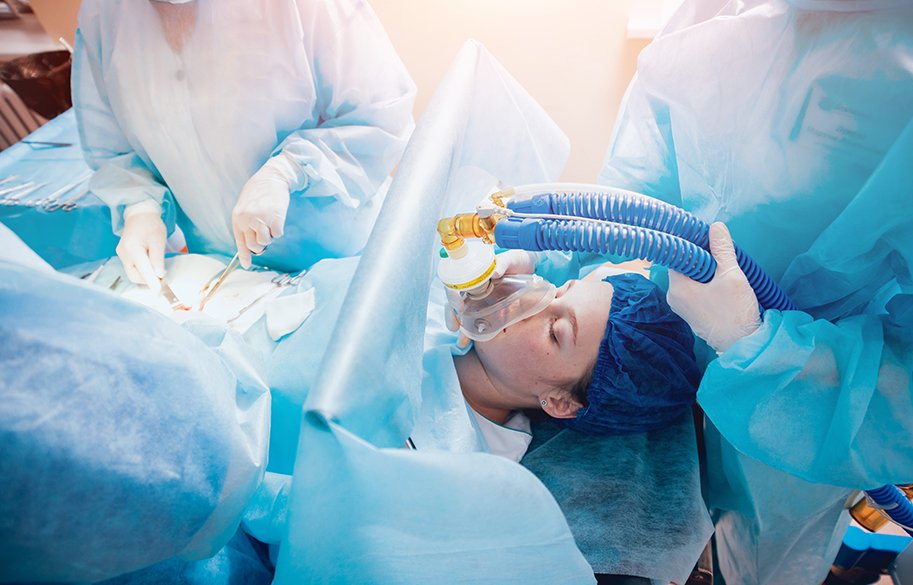
Here’s the part that gets lost in the celebration of Ether Day: solving pain did not solve surgery’s other enormous problem. Anesthesia arrived years before antiseptic surgical technique did. Surgeons kept operating in their ordinary street clothes, using instruments nobody had properly sterilized. They unknowingly infected patients who could now, for the first time, survive an operation without pain, only to die afterward from infections nobody yet understood how to prevent. Genuinely safe surgery needed both problems solved together, and that didn’t fully happen until decades further down the road.
What Seventy Years Actually Bought
By the time anesthesia and antiseptic technique had both matured into standard practice, surgery had transformed almost beyond recognition from where it started. Patients who once faced amputations fully conscious, held down by assistants and screaming through procedures measured in speed rather than precision, eventually got something closer to what a modern patient expects. Unconsciousness. Painlessness. A real chance of walking away from the table alive and infection-free.
None of that happened cleanly. It happened through self-experimentation, public humiliation, bitter rivalry, and at least one life cut tragically short by the fallout. The people who got surgery from screaming to silent paid for it in ways the operating room never fully repaid them.
Recent Podcast Episodes

Recent Adventures



Subscribe Today!
Subscribe
Your Ad Here!

Other Adventures You May Like

The Berners Street Hoax Buried One London Address in Unwanted Deliveries

Nils Olav, the Penguin the Norwegian Army Keeps Promoting
