The History of Lighthouses: The Keepers, the Shipwrecks, and the Engineering That Lit the World’s Coastlines
Before anyone built a lighthouse, sailors navigated by fire. Bonfires on hilltops, braziers on headlands, burning pitch in metal baskets on cliffs: for most of human history, the warning to stay away from rocks was just a flame somebody lit and hoped you could see. The problem with fire is that it does not project very far, and it goes out, and the person responsible for keeping it lit might fall asleep. Every major development in lighthouse history is basically the story of solving one of those three problems.
The First Lighthouse
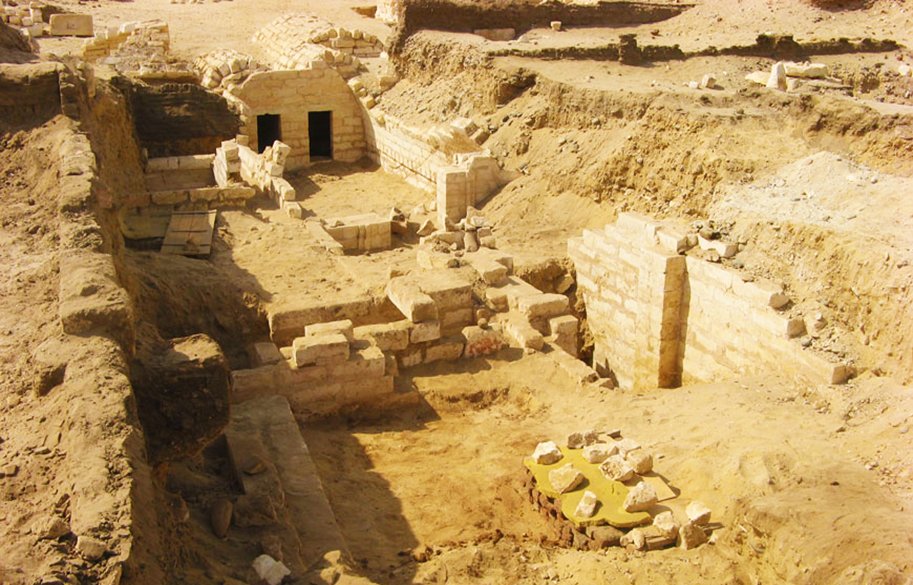
The Pharos of Alexandria, built around 280 BCE on a small island in Egypt’s harbor of Alexandria, was not just the first major lighthouse. It was, for over a thousand years, one of the tallest structures humanity had ever built. Sostratus of Cnidus constructed it around 280 BCE, possibly for Ptolemy I Soter, and completed it during the reign of Ptolemy II. The lighthouse may have been over 350 feet tall. A fire burned at the top. Mirrors amplified and directed the light.
The word pharos became the word for lighthouse in French, Spanish, Italian, Greek, Portuguese, and several other languages. The original did not survive. It was severely damaged by three earthquakes between 956 and 1303 CE and became an abandoned ruin. In 1477, Sultan Qaitbay used stones from the structure to build a citadel on the site. In 1994, a team of French divers found the remains on the harbor floor. Work continues.
The Romans and the Gap That Followed
The Romans understood the economic logic of lighthouses. Shipping needed protection, and protected shipping meant revenue. They built stone towers throughout their empire, including at the Cliffs of Dover in England around 40 CE, and the Tower of Hercules at A Coruña in Spain, which remains the oldest operational lighthouse in the world today at roughly 55 meters tall.
When the Roman Empire collapsed, most of this infrastructure went with it. Maintenance stopped. The towers fell into disuse. Maritime trade contracted. For several centuries in early medieval Europe, sailors were largely back to bonfires on headlands and hoping for the best.
The medieval period did produce some notable exceptions. In the Late Middle Ages, a tower was built by Edward the Black Prince at Cordouan near the Gironde estuary. Henri III asked architect Louis de Foix to build a new one in 1581. Construction took 27 years and the lighthouse was completed in 1611, with sumptuous king’s apartments, decorated pillars, and murals. It was a statement of French maritime power as much as a navigational aid.
Augustin Fresnel and the Lens That Changed Everything
By the early 19th century, the fundamental problem with lighthouses had shifted. Towers existed. Fuels had improved. The problem now was focusing the light. An open flame at the top of a tower sends light in all directions. Ships need the light aimed at them. Until the early 1800s, mirror systems attempted this and failed badly. Lighthouse keepers spent enormous effort maintaining mirror alignments that still delivered relatively weak, scattered beams.
In 1822, a French physicist named Augustin-Jean Fresnel solved this problem completely. The Fresnel lens is a collection of multiple glass prisms that bond nearly all the available light into a powerful beam. The lens projects an intense beam visible up to 28 miles away. The first Fresnel lens was lit on July 23, 1823, at the Cordouan Lighthouse at the mouth of the Gironde estuary in France, producing an intensity of light far surpassing anything previously seen, visible some 17 miles out to sea.
The Fresnel lens spread across every maritime nation within decades. Fresnel himself died of tuberculosis in 1827, never healthy enough to enjoy the full recognition his invention earned. His bust is displayed in every French lighthouse.

The Keepers
The lighthouse keeper is the figure most people associate with the institution, and for good reason. Somebody had to climb the tower every four hours through the night to trim the wick on the lamp. Somebody had to polish the lens and clean the windows and maintain the machinery that rotated the light. In remote postings, that somebody lived there alone for months at a time, or with a small family, in a stone building perched on a rock in the North Atlantic.
The first lighthouse keeper in America was George Worthylake, who received 50 pounds a year, equivalent to about $16,000 in today’s terms. He drowned, along with his wife and daughter, when returning to the island in 1718.
Female lighthouse keepers were more common than most people realize. Ida Lewis at Lime Rock Lighthouse in Newport, Rhode Island saved at least 18 people from drowning between 1858 and 1906 and became nationally famous. Her story is one of dozens like it. The job was essential because the failure consequence was a ship on rocks and crew members drowning. The keepers understood this. The consistency required was extraordinary.
Automation and What Came After
Souter Lighthouse in England, completed in 1871, became the first purpose-built structure for electric operation, employing a carbon arc lamp powered by a steam-driven magneto generator. Electric lighting spread through lighthouses over the following decades. Automation followed, as acetylene gas and later electric systems allowed lighthouses to operate without a permanent keeper on site.
The last staffed lighthouse in the United States, Boston Light, kept a keeper until 1998 as a historical tribute to the tradition. Most others had automated decades earlier. By 1900, nearly 1,000 lighthouses had been built in the United States. Today, modern satellite-based navigational systems have largely replaced the lighthouse as a primary navigational aid. Most lighthouses are now either automated or abandoned, some turned over to local governments and nonprofit organizations.
Recent Podcast Episodes

Recent Adventures


Subscribe Today!
Subscribe
Your Ad Here!

Other Adventures You May Like

Tell Fara: The Flood Layer Just Found Beneath Iraq’s Oldest Known Ruins
Minanbé: The Untouched Maya City Hidden So Well Archaeologists Had to Machete Through Miles of Jungle to Find It