
The Kola Superdeep Borehole: What Happened When the Soviets Drilled Toward the Center of the Earth
Somewhere online, you can still find the story. Soviet scientists drilled so deep into the Earth that they broke into hell itself. It’s called the Kola Superdeep Borehole. A heat-resistant microphone caught the screams of the damned. Horrified engineers shut the whole project down on the spot. None of that happened. The real story doesn’t need the fake one. Soviet scientists really did drill the deepest hole humans have ever made. What they actually found down there is strange enough on its own.
A Cold War Project With No Commercial Purpose
Soviet researchers started drilling on the Kola Peninsula in 1970, near the border with Norway. Oil and gas companies drill for profit. This project had a different goal entirely. Scientists wanted to study the continental crust at depths nobody had ever reached. They just wanted to understand what was actually down there.
They drilled in narrow stages rather than digging one giant pit. Specialized equipment pulled up rock samples and data as the hole crept deeper year after year. By the 1980s, the project had already broken every previous depth record. In 1989, the deepest branch, called SG-3, hit 12,262 meters. That’s 40,230 feet, or about 7.6 miles straight down. It remains the deepest artificial point humans have ever reached.
The Numbers Get Genuinely Wild
Stack Mount Everest inside that hole and the peak wouldn’t reach the surface. The borehole goes deeper than the Challenger Deep, the lowest known point in the entire ocean. And it’s still barely a scratch. The hole only penetrates about a third of the way through the Baltic continental crust, and roughly 0.19 percent of the way to Earth’s actual center. Reaching the center would require drilling more than 500 times deeper than the Soviets ever managed.
Temperatures at the bottom hit around 356 degrees Fahrenheit, hotter than the equipment could reliably handle. A free-falling object dropped into the shaft would take about 15 seconds just to hit bottom. Engineers pushed toward a 15-kilometer target anyway, trying repeatedly through 1992. They never beat the 1989 depth again.
What They Actually Found Down There
Real discoveries turned out to be plenty strange without any help from folklore. Researchers pulled up rock cores dated to roughly 2.7 billion years old, older than almost anything else ever recovered from the ground.
They found water too, trapped inside rock pores under extreme pressure, at a depth where nobody expected liquid water to exist at all. They found microscopic plankton fossils more than six miles down. The rock itself behaved in ways that didn’t match existing geological models, forcing scientists to rethink some long-standing assumptions about how the crust actually works.
Where the Screaming Story Actually Came From
The hell legend traces back to a Finnish newspaper report from 1995. It claimed Russian scientists lowered a heat-resistant microphone into the hole and recorded tormented screaming rising from below.
Investigators later traced the actual audio. The screams matched sound effects from a 1972 Italian horror film called Baron Blood. Someone looped and distorted the clip, and the fabricated recording spread fast through religious publications, tabloid TV, and eventually the early internet. No official Soviet documentation ever backed up the microphone claim in the first place.
Funding, Not Demons, Actually Ended It
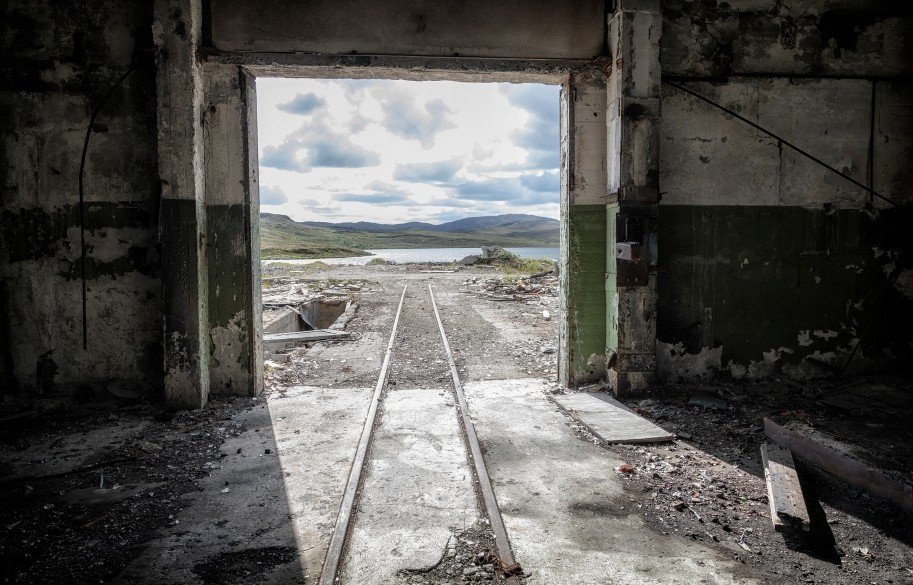
The real ending is far less dramatic than any of that. Drilling continued in fits and starts through the early 1990s. Then the Soviet Union collapsed, and the money that funded the project disappeared along with it. Work fully stopped in 1994. The site sat abandoned for years afterward, and by 2008 the whole facility had fallen into ruin. Today, a sealed wellhead marks the spot, sitting quietly among the wreckage of the buildings that once supported the drilling crews.
Nothing supernatural closed the Kola Superdeep Borehole. Bureaucratic collapse did, which somehow doesn’t make nearly as good a story.
Recent Podcast Episodes

Recent Adventures



Subscribe Today!
Subscribe
Your Ad Here!

Other Adventures You May Like

The Berners Street Hoax Buried One London Address in Unwanted Deliveries

Nils Olav, the Penguin the Norwegian Army Keeps Promoting
