
The Largest Settlements in Antarctica, and What They’re Actually For
Antarctica has no cities. It has no towns, either, not in any normal sense of the word. But it does have more than 70 research stations scattered across the continent. A handful of them get big enough, and strange enough, to feel like something close to actual settlements. None of them exist for the reasons you’d expect a town to exist. Every single one is there because of science, logistics, or, in a couple of very specific cases, geopolitics.
McMurdo Is Basically a Frontier Town Built on Ice
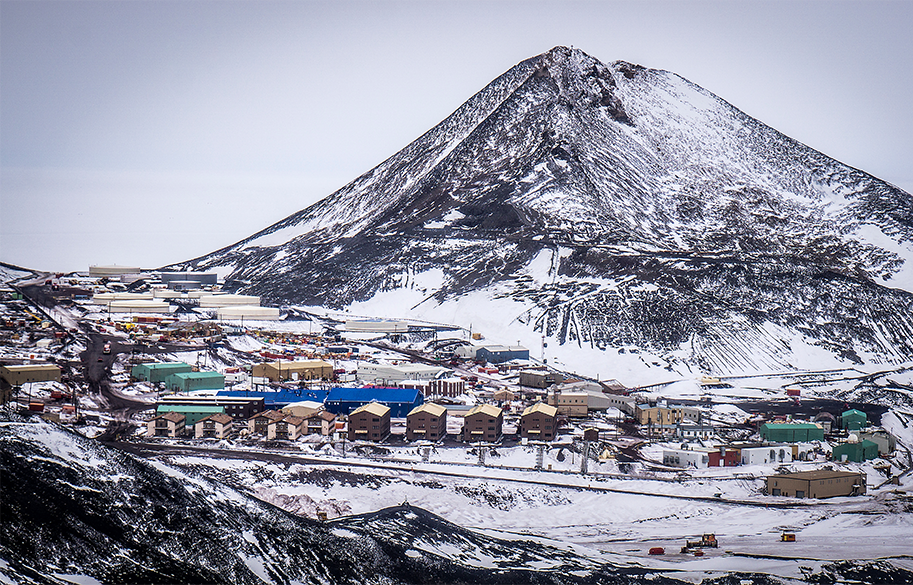
McMurdo Station, run by the United States on Ross Island, is the biggest by a wide margin. It holds up to 1,200 people during the austral summer. That number drops to somewhere around 150 once winter locks the continent down. Locals just call it MacTown.
And it genuinely feels like a small town, not a lab. McMurdo has three airfields, a fire department, a hospital, a radio station, a general store, a bar called Gallagher’s, and even a bowling alley. It used to have its own nuclear reactor too, nicknamed Nukey Poo, before officials removed it in 1972. So yes, Antarctica briefly ran on nuclear power, and the equipment had a nickname that sounds like a children’s cartoon.
Only Two Places on the Whole Continent Actually Have Families
Almost everyone in Antarctica is there temporarily, cycling through on research contracts. But two settlements break that pattern completely. Chile’s Villa Las Estrellas and Argentina’s Esperanza Base are the only two civilian communities on the entire continent, where people actually bring their kids.
Villa Las Estrellas sits on King George Island, attached to Chile‘s Frei Montalva base. It holds around 80 people in summer and 15 in winter, and since real families live there, it even has its own school. Here’s the detail that gets people every time, though. Chilean law requires long-term residents to have their appendix removed before they relocate. That’s because the base doesn’t have the surgical setup to handle an emergency appendectomy if something goes wrong. It’s not a myth. It’s an actual medical prerequisite for moving there.
Esperanza Base, over on the Antarctic Peninsula, works similarly, housing 60 to 100 people depending on the season, school included. In January 1978, it became the site of the first birth ever recorded in Antarctica, a boy named Emilio Palma. That birth wasn’t an accident, either. Argentina’s ruling government at the time reportedly arranged it deliberately, specifically to strengthen the country’s territorial claim over the Antarctic Peninsula. A few months later, in May, Esperanza produced the first girl born on the continent too. At least 11 children have now been born in Antarctica total, almost all of them at these two sites.
The Most Isolated Stations Exist for the Data Alone
Not every station is built around comfort or community. Russia’s Vostok Station sits near the Pole of Inaccessibility, the single point on the continent farthest from any coastline. It also holds the record for the coldest temperature ever recorded on Earth. Vostok also sits above Lake Vostok, a massive freshwater lake buried under kilometers of solid ice. Almost nobody visits. Getting there requires either a brutal overland traverse or aircraft flying in under close to perfect conditions.
Amundsen-Scott South Pole Station, run by the U.S., sits at the actual geographic South Pole, with around 150 people in summer and closer to 50 through winter. Britain’s Halley Station earned its own spot in scientific history when researchers there discovered the ozone hole back in 1985.
Recent Podcast Episodes

Recent Adventures



Subscribe Today!
Subscribe
Your Ad Here!

Other Adventures You May Like

The Berners Street Hoax Buried One London Address in Unwanted Deliveries

Nils Olav, the Penguin the Norwegian Army Keeps Promoting
