The Oldest Known Board Games and How to Play Them
Think board games are just a modern pastime? Think again! Long before our favorite games such as Monopoly and Scrabble, ancient people were gathering to play games. These games were tied to religion, strategy, and even ideas about fate and the afterlife. And while some rules have changed over the centuries, the thrill of strategy, chance, and friendly competition remains the same. So, let’s explore some of the oldest known board games, and how to play them.
Senet (Ancient Egypt, 3100 BC)
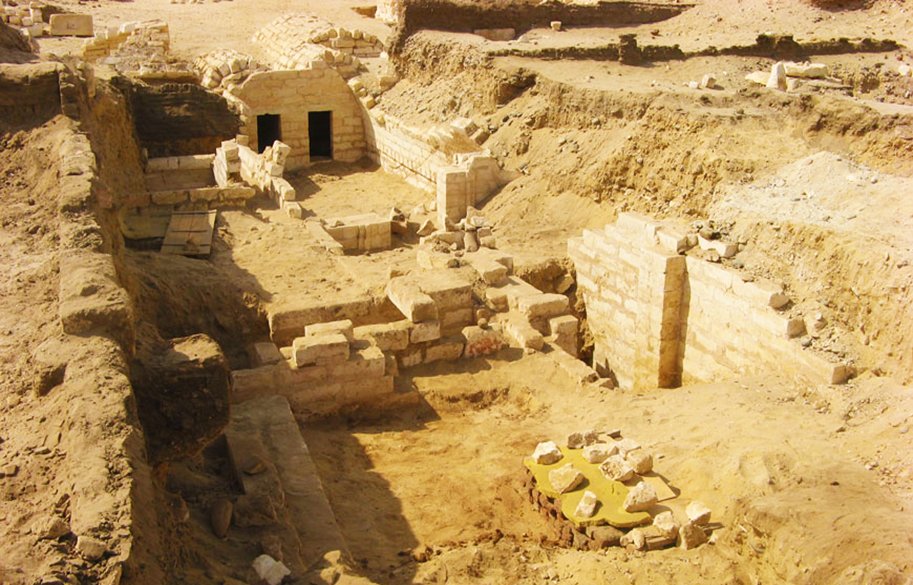
Let’s start with Senet, one of the oldest board games known to archaeologists. It dates back over 5,000 years to ancient Egypt. Senet boards were even found in Tutankhamun’s tomb, which goes to show it was a serious staple in Egyptian culture. The Egyptians believed that Senet wasn’t just a game but a spiritual journey through the afterlife. Also, players navigating through obstacles that symbolized different stages of the soul’s passage.
The board is a grid of 30 squares arranged in three rows of ten. Each player has five pieces, and they move by casting sticks (which acted like ancient dice). The goal is to move all your pieces off the board first. However, there’s a catch. Each square represents different powers and influences, so you can get sent back if you land in the wrong spot. The rules aren’t fully clear, but a lot of historians have made educated guesses. You can even find printable Senet boards and try it yourself. Just don’t expect to glide straight to victory—Senet’s all about patience and luck!
The Royal Game of Ur (Mesopotamia, 2600 BC)

This ancient game, found in the Royal Tombs of Ur in what’s now Iraq, is thought to be one of the first true “board games” with set rules. Made with beautiful stones and decorated with shell and lapis lazuli, this game was almost as much an art piece as a way to pass the time. The Royal Game of Ur was also considered a way to tell one’s future, with moves believed to foretell good fortune or disaster.
The Royal Game of Ur’s board has 20 squares, and it’s a two-player game. Each player has seven pieces and throws pyramid-shaped dice to determine their moves. The goal? Get all your pieces across the board and off the end before your opponent does. Along the way, you can bump opponents back to the start. It’s a bit like a combination of checkers and backgammon, with a sprinkle of ancient mysticism. Thanks to historian Irving Finkel’s work, you can find recreations of the game online and even downloadable rules if you’re up for a challenge.
Mehen (Ancient Egypt, 3000 BC)
Another treasure from ancient Egypt, Mehen, is often called the “snake game” because the board is a spiral that looks like a coiled snake. Played thousands of years ago, Mehen didn’t survive into later Egyptian history, so it’s a bit of a mystery as to exactly how it was played. But based on artifacts and illustrations, we know it was definitely a board game, and a pretty unique one at that.
Mehen’s rules are a bit fuzzy, but here’s what we know: it’s thought to have been a multiplayer game with pieces shaped like lions and marbles, which moved along the snake’s coils. Players likely aimed to get to the center or back out before anyone else, using a combination of skill and strategy. While historians have suggested a few rule sets, you’ll have to get creative if you want to revive this ancient game. But hey, who doesn’t want to play a game called “snake” with a touch of ancient Egyptian intrigue?
Hnefatafl (Viking Game, 400 AD)
Fast forward a bit to the Viking Age, and you’ll find Hnefatafl, a Scandinavian board game that’s part strategy, part battle. Think of it as a Viking version of chess, where one side (the defenders) has a king who’s trying to escape to the edge of the board, while the other side (the attackers) tries to capture him. Vikings took this game seriously, and it was popular enough to spread to other parts of Europe.
Hnefatafl is played on a square board with a cross pattern. The defenders (with fewer pieces) start in the center, while the attackers surround them. The goal for the king and his defenders is to reach a corner square; for the attackers, it’s to trap the king on all four sides. It’s a tense game that’s all about outsmarting your opponent. Rules for Hnefatafl vary by region, but modern versions with clear rules exist, so it’s easy to get started and embrace your inner Viking.
Go (Ancient China, 2000 BC)

Go, or “Weiqi,” is a board game that originated in China over 4,000 years ago and is still wildly popular today, especially in East Asia. Eve though Go might look simple, don’t let that fool you. It’s one of the most complex games ever created, with more possible moves than there are atoms in the universe. Players try to control as much territory on the board as possible, using black and white stones.
The board is a grid, typically 19×19, though smaller versions are also common. Players take turns placing stones on the intersections, aiming to capture territory by surrounding their opponent’s stones. The game ends when neither player can make a beneficial move, and whoever controls the most territory wins. The beauty of Go is in its simplicity and depth. It’s easy to learn but can take a lifetime to master.
Petteia (Ancient Greece, ~500 BC)
In ancient Greece, Petteia was the game of choice for strategists and warriors. The game was so central to Greek culture that even Plato mentioned it in his writings. Known as a “game of soldiers,” Petteia was likely used as both entertainment and training for strategic thinking. It’s similar to checkers, with pieces moved to capture an opponent by surrounding them.
The game board is a grid, and each player has a row of pieces on opposite sides. You move your pieces across the board, aiming to trap and capture your opponent’s pieces by flanking them on two sides. Although the exact rules are somewhat lost to time, modern reconstructions have turned it into a playable and fun game. If you’re into ancient Greek culture, this is a cool way to connect with history.
Recent Podcast Episodes

Recent Adventures


Subscribe Today!
Subscribe
Your Ad Here!

Other Adventures You May Like

Tell Fara: The Flood Layer Just Found Beneath Iraq’s Oldest Known Ruins
Minanbé: The Untouched Maya City Hidden So Well Archaeologists Had to Machete Through Miles of Jungle to Find It