
The Zong Massacre: The Slave Ship Insurance Case That Helped End the British Slave Trade
In 1783, an English court heard a dispute over an insurance claim. The claim concerned lost cargo aboard a ship called the Zong. The cargo in question was around 130 human beings. The crew had thrown them into the Atlantic Ocean while they were still alive. At no point did that trial concern itself with murder. It was a property case. That fact, more than anything else about it, is what eventually helped bring down the British slave trade.
The Voyage
The Zong left the coast of Africa on September 6, 1781, bound for Jamaica. A Liverpool merchant syndicate headed by James Gregson, a former mayor of the city, owned the ship. Luke Collingwood captained it.
The vessel carried somewhere between 442 and 470 enslaved African people. Sources disagree on the exact figure, which is itself telling about how carefully anyone bothered to count. Captains routinely overloaded ships beyond capacity, because more people aboard meant more profit at the other end.
Insurers valued each person at £30. The crossing went badly. Navigational errors sent the ship off course, and it overshot Jamaica entirely. Disease and malnutrition spread. Seven of the seventeen crew members died. So did more than fifty of the enslaved people aboard.
The Killings
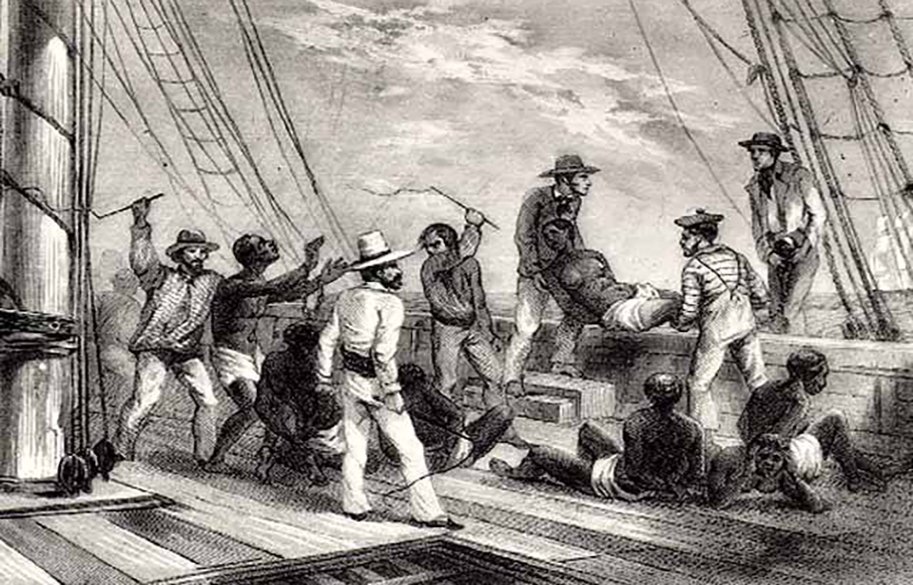
By late November 1781, Collingwood made a decision. Over roughly the following week, the crew threw around 130 enslaved people into the sea. The crew shackled some of them first. Ten more people jumped, choosing the water over whatever awaited them on that deck. Collingwood later characterized this as an act of defiance.
The justification offered afterward was that the ship lacked sufficient water for everyone aboard. Maritime law of the period drew a specific line. Cargo deliberately jettisoned to save a vessel in genuine peril could be claimed against insurance. Cargo that simply died of illness could not. That distinction is the entire reason those people went into the ocean rather than remaining aboard. We do not know their names. No record preserved them. When the Zong reached Jamaica in December, 208 enslaved people were still alive.
The Claim
Gregson and his syndicate filed an insurance claim for the people they had killed, seeking £30 each. The underwriter, Thomas Gilbert, refused to pay. His objection was not moral. He argued that Collingwood’s own negligence had caused the shortage. He also pointed to an inventory taken at Jamaica, which showed 420 gallons of water still aboard the ship.
The case went before a maritime court in Jamaica in 1782. The jury found for the ship’s owners and ordered the insurer to pay. Gilbert appealed, and the case moved to England. In March 1783, the Guildhall in London hosted the hearing. Lord Mansfield presided, one of the most powerful judges in the country. The case entered the legal record as Gregson v. Gilbert.
A Trial About Money
Here is what makes this case so difficult to read about, even now. Everyone involved openly acknowledged that the crew had killed those people. Nobody disputed it. The only question the court considered was whether the killings had been necessary enough to qualify for an insurance payout.
During the appeal, new evidence emerged. The crew’s navigational errors came out. So did testimony that rain had fallen before the crew threw the final group overboard. That detail undercut the entire claim of a desperate water shortage. Mansfield ordered a new trial. No record shows that it ever happened, and historians believe the syndicate simply dropped the claim.
But look closely at the reasoning. Mansfield ruled that necessity had not been proven in this instance. As historian Jeremy Krikler has pointed out, that implies something chilling. Had necessity been established, English law would have treated the killing of 130 people as a legitimate business loss. That was the state of the law in 1783.
The System That Made It Possible
The Zong was not an aberration. That’s the part worth understanding, and it’s why the case landed as hard as it did. Insurance underpinned the entire transatlantic slave trade. Merchants could not have financed voyages of that scale and risk without it. Policies covered enslaved people the same way they covered timber or sugar, with standard clauses, standard valuations, and standard exclusions. Death from illness fell on the owner. Deliberate jettison in an emergency fell on the underwriter.
Every party in that arrangement understood the incentive it created. A shipload of sick people represented a total loss. The same people thrown overboard under the right circumstances represented a recoverable one. Historians who study the period note that the Zong stands out not because the crew did something unthinkable, but because the paperwork surfaced. The dispute between Gregson and Gilbert forced the arithmetic into open court, where anyone could read it.
Equiano and Sharp
News of the case reached Olaudah Equiano, a formerly enslaved man living in London and active in the abolition movement. He was outraged, and he brought it directly to Granville Sharp.
Sharp was already the most prominent abolitionist in Britain. He had spent years trying to force the courts toward emancipation. He grasped immediately what the case actually was. To Sharp, the people aboard the Zong were not cargo or property. They were human persons, and what happened to them was wilful murder. Sharp was the first person to call it a massacre. That word choice mattered enormously. It reframed an insurance dispute as a mass killing, which is what it had always been.
He then tried to have the captain, crew, and owners prosecuted for murder. He wrote to the prime minister demanding a criminal trial. It went nowhere. Britain’s Solicitor General, John Lee, reportedly dismissed the idea outright. No one involved in the killings ever faced criminal charges. Not the captain, not a single crew member, not one of the owners.
What It Changed
The failure to prosecute anyone turned out to be the point. Sharp and Equiano publicized the case relentlessly, and its details did something arguments alone had not managed. The British public could grasp what the trial had exposed. A legal system had examined the deliberate killing of 130 people. It had concerned itself entirely with who owed money to whom.
The momentum built slowly after that, alongside sustained resistance from enslaved people themselves. In 1788, Parliament passed the first regulation of the trade, limiting how many people a ship could legally carry. The British slave trade became illegal in 1807. Slavery across the British Empire ended by law in 1833. That took 52 years from the massacre.
Recent Podcast Episodes

Recent Adventures



Subscribe Today!
Subscribe
Your Ad Here!

Other Adventures You May Like

The Berners Street Hoax Buried One London Address in Unwanted Deliveries

Nils Olav, the Penguin the Norwegian Army Keeps Promoting
