Was Homer Even a Real Person? The 2,000-Year-Old Mystery Behind the Odyssey
Right now, Christopher Nolan‘s new movie has Homer’s name splashed across posters worldwide. It’s credited alongside Nolan himself as a writer on the film. That’s a strange kind of credit to give someone, honestly, since nobody actually knows for certain that Homer existed at all. That’s not a fringe theory. It’s one of the oldest, most genuinely unresolved questions in the history of literature.
Seven Cities, One Blind Bard, Zero Proof
Ancient Greeks believed Homer was a real man, a traveling blind poet who composed both the Iliad and the Odyssey. Even that detail is shakier than it sounds. His poems are full of strikingly vivid visual imagery, which is odd for someone supposedly blind from birth. Some scholars think the whole “blind” tradition may have started as wordplay on his name itself. Nobody actually recorded it as biographical fact.
Even his birthplace was up for debate in antiquity. An old epigram lists seven separate cities that each claimed him as their own: Smyrna, Chios, Colophon, Ithaca, Pylos, Argos, and Athens. Seven cities, all convinced they had the real story, all disagreeing with each other completely.
The Math Doesn’t Quite Work
Here’s the detail that really unsettles historians. The Greek historian Herodotus wrote that he believed Homer lived roughly 400 years before his own time. That would place Homer somewhere around the 9th century BC. Most modern scholars lean toward the 8th century BC instead. But the very first surviving historical reference to Homer by name doesn’t show up until the late 7th century BC. That’s a full one to two centuries after he supposedly lived and wrote two of the most important poems in Western literature. For someone that historically significant, that’s a genuinely long silence.
When Scholars Started Officially Doubting Him
Serious skepticism about Homer’s existence isn’t a modern internet theory. A 17th-century French critic named François Hédelin was already dismissing the idea of a single poet. He argued the epics looked stitched together from separate ballads. The debate really caught fire in 1795, when German scholar Friedrich August Wolf published a book making a bold claim. The Iliad and Odyssey, Wolf argued, were assembled gradually over generations, from many shorter songs by different poets, with a sense of unity layered on top much later.
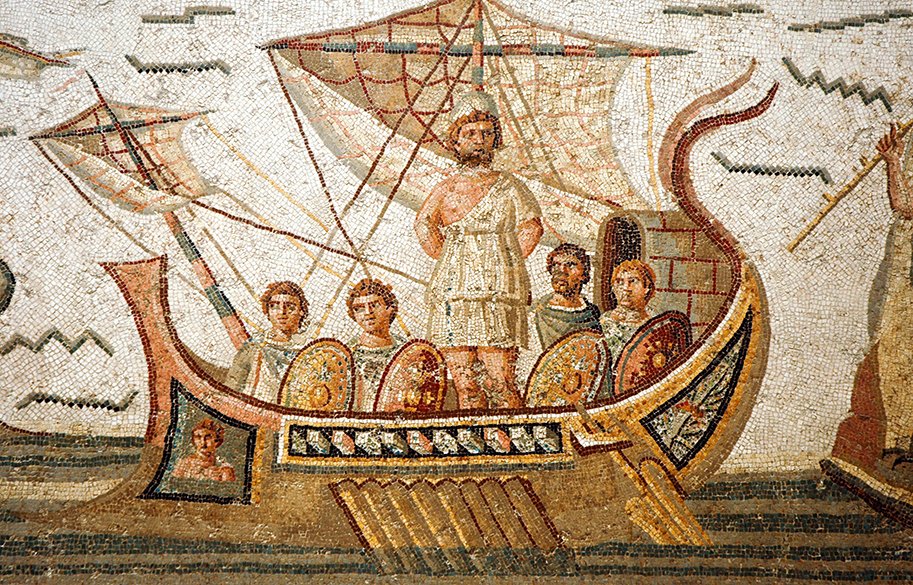
That argument split scholars into two camps that argued for over a century. Analysts hunted for inconsistencies, repeated lines, and shifts in style, treating them as fingerprints of multiple different authors. Unitarians pushed back, pointing to the poems’ overall structural coherence as proof of one guiding creative mind.
The Theory That Actually Reframed Everything
In the 20th century, researcher Milman Parry’s work on oral composition changed the conversation completely. His research suggested something specific. If Homer existed as one person at all, he was likely a master oral performer. He took centuries of already-circulating traditional material and shaped it into something considerably larger and more unified than anything that came before him. Not necessarily an inventor from scratch. More like the most gifted synthesizer a very old storytelling tradition ever produced.
Some geographic details in the poems back this up. Certain descriptions are oddly specific, like exactly how a mountain peak appears from the plain near Troy, or which birds gather at a particular river mouth in Ionia. Those details suggest whoever wrote at least parts of these poems had actually walked that ground themselves. One historian has even argued that certain elements inside the poems trace back roughly a thousand years earlier than Homer’s supposed lifetime. If that’s right, the material itself may be almost unimaginably older than the man credited with writing it down.
Recent Podcast Episodes

Recent Adventures


Subscribe Today!
Subscribe
Your Ad Here!

Other Adventures You May Like

Minanbé: The Untouched Maya City Hidden So Well Archaeologists Had to Machete Through Miles of Jungle to Find It
The Iliad in the Mummy Wrappings: What a 1,600-Year-Old Fragment of Homer Was Doing Inside an Egyptian Burial