
Mortality’s Mark: A Global Tour of Memento Mori
There’s something deeply peculiar about the way we humans grapple with death. One of the oldest, and let’s be honest, most haunting of these traditions is the concept of memento mori—a Latin phrase that translates to “remember that you must die.” It’s not a curse or a threat, really. Instead, it’s a blunt, unsparing reminder.
These reminders are scattered throughout the annals of history, if you know where to look. They are carved into the limestone of cathedrals, built into the very ground of cemeteries, and meticulously etched into jewelry. Sometimes, they are even scratched into the cobblestones beneath our feet. Each of these places, spread across continents and through different eras, offers a unique window. They show how people understood life—and the inescapable reality of its ending.
So, let’s take a journey, shall we?
The Capuchin Crypts of Rome, Italy

If there is a single place that serves as the ultimate embodiment of memento mori, it has to be the Capuchin Crypts in Rome. Tucked beneath the bustling streets, and the church of Santa Maria della Concezione dei Cappuccini, the walls are not adorned with the usual frescoes or gilded mosaics. Instead, they are decorated with bones. Skulls, femurs, and spines have been carefully arranged into archways, chandeliers, and entire rooms. Here, the remains of over 3,000 Capuchin friars are artfully placed. They form patterns that transform the stark reality of death into art. It’s strangely beautiful, if unsettling.
The friars who arranged these remains weren’t looking to give tourists the heebie-jeebies. Their message was simple and stark: “What you are, we were. What we are, you will be.” Finally, it makes you consider your place in the grand scheme of things.
Sedlec Ossuary, Kutná Hora, Czech Republic

Known colloquially as the “Bone Church,” this small chapel, about an hour’s drive from Prague, is another jaw-dropping example of a memento mori site. Inside, you’ll find a massive chandelier made of every single bone in the human body. A Schwarzenberg family coat of arms is assembled from femurs and skulls. Furthermore, garlands of bones drape across the ceilings like bizarrely festive ribbons.
This ossuary holds the remains of an estimated 40,000 people. Many were victims of the Black Plague or the Hussite Wars. Their bones were arranged in the 19th century by a local woodcarver named František Rint. He was tasked with the unenviable job of putting the mountainous pile of human remains “in order.”
The Skull Tower of Niš, Serbia
Not all memento mori are born from a spiritual or artistic impulse. Some are deeply political. The Skull Tower of Niš, or Ćele Kula, in Serbia, is one of the most brutal and unflinching examples. In 1809, during a failed Serbian uprising against Ottoman rule, a Serbian commander named Stevan Sinđelić chose to detonate a gunpowder magazine. He sacrificed himself and his troops rather than facing capture. To instill fear and send an unequivocal message to other rebels, the Ottoman commander ordered a tower to be built out of the skulls of the fallen Serbs—952 in total.
Time and history have taken their toll. So, many of the skulls are now gone, claimed by weather, wear, or families who retrieved the remains of their loved ones. But the tower still stands. Now preserved within a small chapel.
New England’s Puritan Gravestones
Hopping across the Atlantic, you’ll find some of America’s earliest forms of memento mori carved directly into the headstones of colonial New England. If you wander through old cemeteries in Massachusetts, like the Granary Burying Ground in Boston, or through the ancient plots in Connecticut, you’ll notice a distinct, recurring symbol: the winged skull.

These weren’t just some creepy Goth decorations. Puritan settlers, with their austere and severe theology, wanted the living to look at a grave and be forcefully reminded that life was fleeting and a serious business. You’ll often see phrases like “Fugit Hora” (the hour flies) and “Prepare for Death” chiseled beneath those haunting skulls.
The Catacombs of Paris, France
Few places in the world capture the popular imagination quite like the Paris Catacombs. Below the city’s manicured parks and bustling boulevards lies a labyrinth of tunnels holding the bones of more than six million people. In the late 18th century, with Paris’s cemeteries dangerously overflowing, a city official made the grim, practical decision to move the remains underground. Instead of just piling them into anonymous heaps, workers began stacking the bones and skulls into geometric patterns.
Today, you can descend into the cool, dimly lit passages, walking along walls of neatly arranged femurs and skulls. The journey is punctuated by inscriptions reminding you of their purpose: “Arrête! C’est ici l’empire de la Mort” (“Stop! This is the Empire of the Dead”).

Japanese Zen Gardens and Temples
In Japan, memento mori often takes on a more subtle, contemplative form, deeply influenced by Buddhist philosophy. Zen gardens, like the famous Ryōan-ji in Kyoto, with their raked sand and carefully placed rocks, are meant to be contemplated, not just looked at. The impermanence of the raked sand, which can be rearranged in a moment, and the constant cycle of moss growing and decaying on the rocks, are silent, gentle reminders of the impermanence of all things. And that also includes ourselves.
The Día de los Muertos Shrines of Mexico
While not a permanent structure like a crypt or tower, the temporary ofrendas (altars) of Mexico’s Día de los Muertos (Day of the Dead) are one of the most vibrant and life-affirming forms of memento mori. Instead of fearing death, Mexican culture embraces it as a natural part of the cycle of life. Families build intricate altars in their homes or at cemeteries, laden with the favorite foods, drinks, but also the pictures of their deceased loved ones. Skulls, known as calaveras, are not grim symbols of death. Rather, they are playful, colorful representations of the departed.
The Egyptian Mummies and Tombs

Finally, let’s consider the grandest form of memento mori in human history: the ancient Egyptian tombs and mummies. The entire culture was built on the premise of death and the afterlife. The pyramids, the Valley of the Kings, and the practice of mummification were all part of this massive, elaborate project. In the end, the purpose wasn’t to mourn death. Instead, it was to master it. To ensure that the spirit had a place to go and a body to return to.
Recent Podcast Episodes

Recent Adventures

Subscribe Today!
Subscribe
Your Ad Here!

Other Adventures You May Like
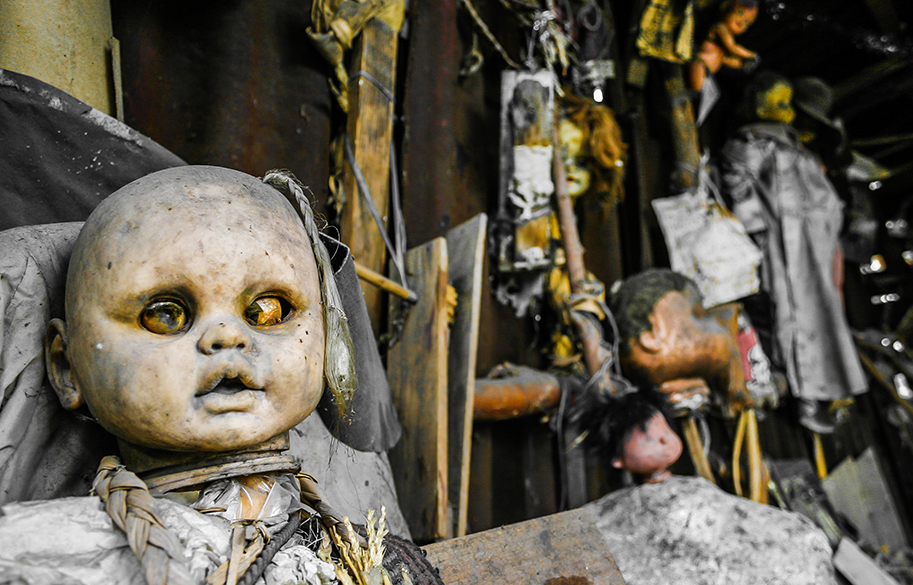
Xochimilco’s Island of the Dolls: Mexico’s Most Unsettling Tourist Attraction

How Used Cars Help Travelers Explore More Without Overspending
