
Rising Star Cave: The South African Chamber Where Cavers Discovered an Entirely New Human Species
This discovery almost didn’t happen for a genuinely strange reason. It wasn’t hidden well enough, exactly. It was hidden behind a gap in the rock so narrow that virtually nobody on the planet could physically fit through it. The scientist running the eventual excavation had to recruit his team based on body size rather than credentials. That’s not a metaphor. He put out an actual casting call.
An Accidental Crack Nobody Had Ever Noticed
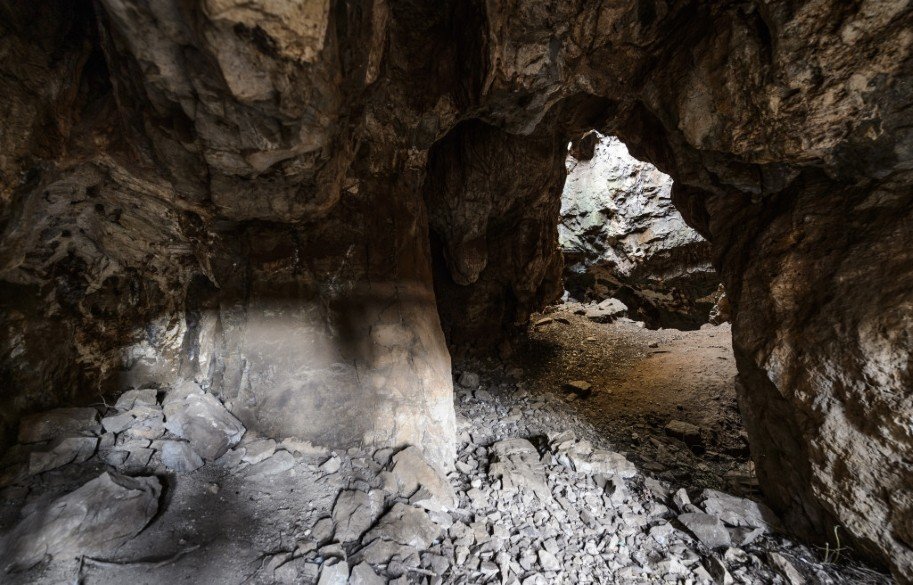
On the night of September 13, 2013, recreational cavers Steven Tucker and Rick Hunter were exploring South Africa’s Rising Star cave system. Tucker had visited the site more than 20 times before. Stepping aside to let Hunter pass on a different route, Tucker squeezed into a crack barely seven inches wide. He’d apparently walked past it dozens of times without ever noticing it existed. He came out the other side into a chamber lined with stalactites. His headlamp caught a bone. Then more bones. Then half a skull.
Tucker and Hunter contacted Lee Berger, a research professor at the University of the Witwatersrand in Johannesburg. Berger’s own reaction, once he saw the images, was blunt. He said he was staggered, looking at something that, by every rule he knew, shouldn’t exist.
Recruiting a Team Small Enough to Actually Get There
The chamber holding the bones, later named Dinaledi, sat at the bottom of a roughly four-story vertical drop. Reaching it meant fitting through a slot just 7.5 inches wide at its narrowest point, about the length of a pencil. Most working archaeologists, Berger included at the time, simply couldn’t fit through it.
So he put out a public call for what he described as “underground astronauts.” He specifically sought scientists with real caving experience, who were also small and slim enough to physically squeeze through the Chute. Six women answered and made up the excavation team. They were photographed in matching bright blue coveralls, in an image that became genuinely iconic once the story broke. While they worked roughly a hundred feet underground, Berger coordinated from a surface command center. He watched through a miles-long cabling system rigged for cameras and an intercom. He later compared the experience to watching the first moon landing. It was grainy footage of people doing something nobody had ever managed to see before. Eventually, Berger put himself on a strict diet, lost 55 pounds, and made the descent into the chamber himself.
What They Actually Found Down There
Across multiple expeditions, the team recovered more than 1,500 bone fragments. They represented at least 15 individuals, ranging from infants to the elderly. The species, named Homo naledi, had a brain only about a third the size of a modern human’s. Its body looked more chimpanzee-like in some respects, paired unexpectedly with hands and feet that looked remarkably human. Humans aren’t believed to have evolved directly from Homo naledi. It’s considered more of a distant cousin than a direct ancestor. With nearly every bone in the body represented multiple times over, it’s become one of the best-documented fossil hominins ever found, cousin or not.
Archaeologists Marina Elliott and Becca Peixotto were among those who actually did the hands-on excavation work inside Dinaledi. They spent hours at a time in a space barely large enough to move through. Keneiloe Molopyane, a forensic scientist and archaeologist on the broader team, is known to colleagues as Bones. She later helped lead follow-up work at the site as well. None of them were chosen because they held the most senior titles. They were chosen because they could physically do a job almost nobody else on the project could attempt.
The discovery went public in 2015, unveiled at the Cradle of Humankind. That’s the same UNESCO-listed region of South Africa where the cave system sits. It made global headlines almost immediately, helped along by genuinely striking photographs of the excavation team in their matching blue coveralls. Few paleoanthropological discoveries in recent memory have combined that level of scientific significance with such an immediately visual, almost cinematic backstory.
A Claim That’s Forcing Scientists to Argue About What Brains Are Actually For
Here’s where the story gets genuinely audacious, and genuinely contested. Berger’s team has argued that Homo naledi deliberately buried its dead roughly 240,000 to 250,000 years ago. They’ve also proposed the species may have deliberately used fire, and possibly even carved geometric wall engravings near the proposed burial sites. If accurate, that would push back the earliest known evidence of intentional burial by roughly 100,000 to 150,000 years. That would apply to any hominin species, including ones with brains several times larger than Homo naledi’s.
Burial and mortuary behavior like this has traditionally been considered a hallmark of large-brained intelligence, something scientists mostly associated with Homo sapiens alone. A species with a brain closer to a chimpanzee’s engaging in that kind of ritual would upend something. It would challenge a long-standing assumption connecting brain size directly to symbolic, complex behavior.
It’s worth being honest about where this specific claim actually stands. Berger’s team published the burial and engraving research as preprints rather than through standard peer review at first. That drew real, serious skepticism from other paleoanthropologists. Some of that skepticism has softened over time. At least one reviewer who was initially doubtful has since said additional evidence made the case considerably more persuasive. But this remains active, unsettled scientific debate, not a closed case. The original discovery of Homo naledi itself is well established and uncontested. The burial claims are still being argued out in real time.
Recent Podcast Episodes

Recent Adventures



Subscribe Today!
Subscribe
Your Ad Here!

Other Adventures You May Like

The Berners Street Hoax Buried One London Address in Unwanted Deliveries

Nils Olav, the Penguin the Norwegian Army Keeps Promoting
