The Nazlet Khater Skeleton: A Quarryman 35,000 Years Old
When people think of ancient Egypt, it’s always the pyramids, the pharaohs, the mummies wrapped in gold. But Egypt’s story goes way, way further back than all that. One of the most fascinating glimpses we’ve gotten into that deep past came out of a quarry in the 1980s: the Nazlet Khater skeleton. Not a king. Not a priest. Just a quarry worker who lived 35,000 years ago—and somehow ended up one of the most important finds in African archaeology.
Found in the Rock
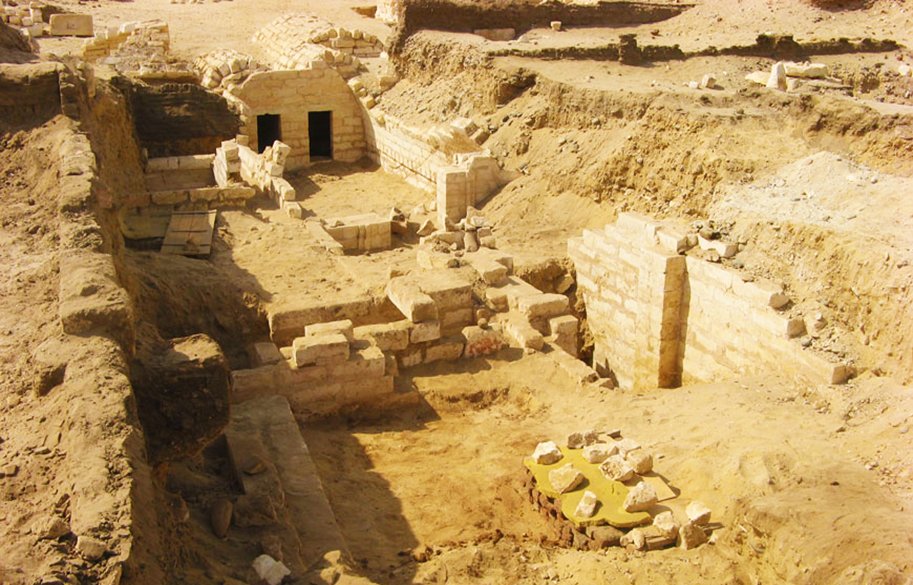
Archaeologists were digging at a site in Upper Egypt called Nazlet Khater, basically an old stone quarry. Chert, to be exact—the kind of stone you can chip into blades and scrapers. And there, buried in the quarry itself, they stumbled across something jaw-dropping: the nearly complete skeleton of a man.
That might not sound as flashy as a golden sarcophagus, but here’s the thing—complete skeletons that old are insanely rare. And this one turned out to be a time capsule from a part of human history we barely knew anything about.
Meet the Quarryman
So who was this guy? From the bones, scientists figured he was in his late twenties or early thirties—middle-aged by Ice Age standards. He stood about 5’3”, short to us, but solid. His skeleton shows he was muscular, the kind of strength that comes from hauling stone and swinging tools all day.
His teeth were ground down, probably from eating rough, gritty food mixed with whatever dust got into his meals. No luxuries here. No royal banquets. Just the daily grind of survival.
And yet, because his life wasn’t glamorous, he tells us something the pharaohs never could—what it was like to just be an ordinary human back then.

Why He’s a Big Deal
The Nazlet Khater man lived about 35,000 years ago, which makes him one of the oldest known modern humans in Africa. And here’s the kicker: his skull looked mostly modern, but with a few older, more “archaic” features mixed in. That blew open debates about how diverse early humans were, and whether the neat “timeline” of evolution was a lot messier than we thought.
So yeah—this quarry worker may not have ruled a kingdom, but he changed the way we think about human history.
Tools of His Trade
Around him, archaeologists found tools—blades, scrapers, and signs of mining activity. He wasn’t just getting by. He was part of a community that knew how to organize work, extract resources, and build what they needed. It’s kind of wild to imagine: 35,000 years ago, no cities, no writing, no farming—and yet here were people already quarrying stone and leaving behind the fingerprints of technology.
We’ll never know this man’s name. We’ll never know what language he spoke, what songs his people sang, or what he believed about life and death. But we know this: he lived, he worked, and he carried the weight of his world on his shoulders, just like we all do. And maybe that’s why his story hits so hard. He wasn’t a pharaoh. He wasn’t a legend. He was ordinary. And somehow, 35,000 years later, we still remember him.
Recent Podcast Episodes

Recent Adventures


Subscribe Today!
Subscribe
Your Ad Here!

Other Adventures You May Like

Tell Fara: The Flood Layer Just Found Beneath Iraq’s Oldest Known Ruins
Minanbé: The Untouched Maya City Hidden So Well Archaeologists Had to Machete Through Miles of Jungle to Find It