
The Strangest “Good Luck” Charms from Around the World
We humans are particularly sensitive to the concept of luck. For all our science and technology, deep down, most of us are still operating with the same instincts as a medieval peasant. We knock on wood, cross our fingers, and avoid stepping on cracks, just in case. We tell ourselves we’re rational, but we’d rather carry a ridiculous object around than admit we have zero control over the chaos of life. So, it’s no surprise that every culture has its own version of these charms — bits of string, lumps of metal, bones, teeth, carvings, coins, stones. Some are ancient, some are newly invented. And some are so deeply ingrained we don’t even question why we’re still doing it. So, here are some of the strangest good luck charms from around the world.
The Rabbit’s Foot
Let’s just acknowledge the obvious: carrying a severed animal limb for luck is objectively bizarre. But the rabbit’s foot (specifically the left hind foot, according to tradition) has been a staple of Western superstitions for centuries.
Its origins are tangled in African-American hoodoo, with roots even further back in West African folklore. Rabbits, being clever and fast and very good at not dying, were seen as lucky. Carrying a piece of one was supposed to transfer that luck to you. Over time, this mixed with European traditions, picked up a bit of cemetery lore (some versions insist the rabbit must be killed at a crossroads or by a red-haired man), and eventually became mass-produced keychains dyed neon colors, and sold on Temu.

Maneki Neko
If you’ve ever eaten in a Japanese restaurant or wandered through a Chinatown, you’ve seen the Maneki Neko, the little ceramic cat, one paw raised in eternal greeting. It’s not waving; it’s beckoning. In Japan, that gesture means “come here.” The raised left paw is for attracting customers, and the right paw is for money.
The colors matter too: white for purity, black for protection, gold for wealth, and so on. Sometimes they hold coins. Sometimes they just look slightly smug. Legend says this all started with a cat saving a wandering samurai by beckoning him away from a lightning strike. The grateful samurai donated money to the temple where the cat lived. So, the cat became a symbol of good fortune.
Nazar Boncuğu
In Turkey, Greece, and much of the Middle East, you’ll find blue glass eyes everywhere — hanging over doors, strung on jewelry, glued to baby carriages. These are nazar boncuğu, charms designed to protect against the evil eye: the belief that jealousy or envy can manifest as literal bad luck or harm.
The concept is ancient. The solution is simple: fight eye with eye. The blue bead reflects or absorbs the bad energy. If it cracks? Good news. It means it took the hit so you didn’t have to. Buy a new one and carry on.
Red Strings
The red string bracelet tied around the left wrist pops up in Jewish mysticism, particularly Kabbalah. It’s worn to protect against the evil eye and general misfortune, especially envy — that old universal curse. Traditionally, the string is wound seven times around the wrist and blessed at Rachel’s Tomb in Bethlehem.
In modern times, this practice got hijacked by social media, and now you can buy “authentic” versions online with free shipping and a vague promise of cosmic protection. Still, the tradition holds deep roots for many, and for those who believe, it’s less about fashion and more about centuries of belief stitched into a simple thread.
Laughing Buddha
Budai, often mistaken for Buddha himself, is that rotund, smiling figure you’ll find in restaurants and homes across East Asia. The legend says rubbing his big belly brings good fortune, wealth, and happiness.
Why? Because in traditional Chinese symbolism, a big belly equals abundance. Budai’s oversized sack, from which he pulls gifts and food, adds to the vibe of generosity and good luck. Over time, this cheerful figure got conflated with broader Buddhist iconography, even though he’s technically a folkloric monk, not Siddhartha Gautama. Either way, he’s living his best life.
Fish Scales in Wallets
In parts of Poland, the Czech Republic, and Slovakia, it’s traditional to keep a fish scale from the Christmas carp in your wallet all year. Why? Because fish are symbols of prosperity and endurance, and the scale is supposed to help money “swim” into your life. Yes, people still do this. Yes, it’s weirdly charming. And yes, somewhere out there is a grandmother slipping a slimy little scale between her grandchild’s debit cards and insisting this is how you stay afloat financially.
Hamsa Hand
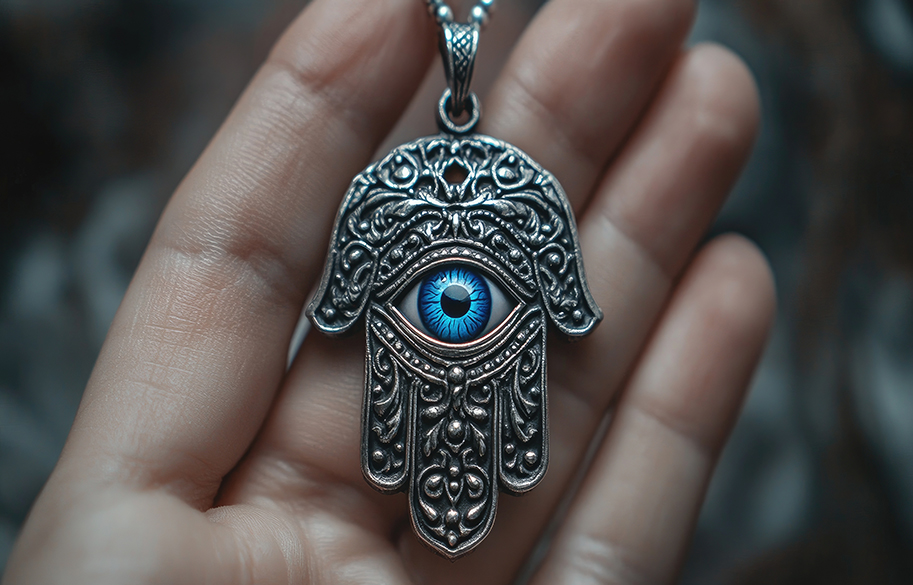
The Hamsa Hand (also called the Hand of Fatima or the Hand of Miriam, depending on who you ask) is one of those symbols that’s spread across so many cultures it’s impossible to pin down a single origin. Jewish, Muslim, Christian, Pagan — everyone’s claimed it at some point. Typically, it’s a stylized hand, sometimes with an eye in the center, meant to ward off evil, especially envy and misfortune. Facing up, it protects. Facing down, it blesses. It’s worn as jewelry, hung on walls, tattooed on skin.
Cornicello
In Southern Italy, you might spot people wearing little red horn-shaped charms called cornicelli. They’re symbols of luck, protection, and fertility, dating back to ancient Roman and Etruscan times. The horn shape is tied to animal horns, which symbolized strength, virility, and protection against the evil eye. They’re often paired with religious icons on keychains or necklaces — a strange mash-up of pagan superstition and Catholic tradition. Think of it as spiritual multitasking.
Recent Podcast Episodes

Recent Adventures



Subscribe Today!
Subscribe
Your Ad Here!

Other Adventures You May Like

The Will-o’-the-Wisp: The Ghostly Light That Has Lured Travelers to Their Deaths Across Every Culture

The Japanese Art of Kintsugi: Why Broken Things Are Worth Repairing With Gold
