

The Baiji Dolphin: How China’s “Goddess of the Yangtze” Went Extinct While the World Watched
For roughly 20 million years, a nearly-blind white dolphin swam the length of the Yangtze River, navigating almost entirely by sound. Locals called it the Goddess of the Yangtze. It shows up in a Chinese dictionary from around 200 BC. Then, sometime in the early 2000s, while conservationists were actively trying to save it, it…
Read More 
Christmas Island’s Red Crab Migration: When 50 Million Crabs Take Over an Entire Island
Every year, around October or November, the first real rain of the wet season hits Christmas Island, and something switches on. Somewhere between 40 and 50 million bright red crabs walk out of the island’s interior forests. All at the same time, they march toward the ocean. Roads disappear under a moving red carpet. Cars…
Read More 
The Antigravity Machine Conspiracy: What NASA Actually Researched and Why the Internet Ran With It
In 2025, a former NASA engineer named Charles Buhler announced he had built something he called a propellant-less propulsion drive, powered by what he described as a “New Force.” He claimed his device had generated enough thrust to overcome Earth‘s gravity using electrostatics alone. The claim spread fast. Headlines called it a discovery that could…
Read More 
The Blue People of Kentucky: The Family Whose Skin Was Genuinely Blue for Generations
In 1820, a French orphan named Martin Fugate arrived at Troublesome Creek in eastern Kentucky and claimed a land grant on its banks. He married a local woman named Elizabeth Smith. She had red hair and skin described as pale as the mountain laurel that blooms around the creek hollows each spring. He had blue…
Read More 
Why Onions Make You Cry and the Genetic Trick Scientists Used to Stop It
Most people’s understanding of why onions make you cry goes something like this: they release a gas, the gas irritates your eyes, you cry. That is technically correct and explains almost nothing. The actual mechanism took scientists until 2002 to figure out, and it is considerably stranger than the short version suggests. It Is a…
Read More 
Cymatics: What Sound Actually Looks Like When You Can See It
There is a simple experiment you can do right now. Fill a plate or a shallow pan with fine sand. Place it on a speaker or hold it over a vibrating surface. Play a single sustained tone. Watch what happens to the sand. It moves. It organizes. And it arranges itself into a precise geometric…
Read More 
The Last Dodo: What We Actually Know About How It Went Extinct
The dodo is one of the most famous animals in history, which makes it genuinely surprising how little we actually know about it. We have no complete skeleton from a single individual. The majority of dodo bones in museum collections are composites assembled from multiple different birds. Every image of the dodo in popular culture…
Read More 
Why Flamingos Are Pink (And What Happens When They’re Not)
Flamingos are not born pink. Chicks come out gray or white and stay that way for months, sometimes years. The pink arrives later, slowly, as a direct result of what they eat. Stop feeding them the right things and they turn pale. Feed them too much of the wrong thing and they can turn orange.…
Read More 
The Coelacanth: Scientists Declared It Extinct in 1938 and Found One Alive the Same Year
On December 22, 1938, a 32-year-old museum curator named Marjorie Courtenay-Latimer took a taxi to the docks at East London, a port on South Africa’s eastern cape, to look through a trawler captain’s catch. She had asked the local fishermen to call her if they spotted anything unusual, and Captain Hendrik Goosen had spotted something…
Read More 
Why the Mantis Shrimp Can See Colors That Simply Do Not Exist for Human Eyes
So, the mantis shrimp vision story has two chapters and most people who have heard of it only know the first one. The first chapter is the internet version: mantis shrimp have 16 photoreceptors, humans only have 3, therefore mantis shrimp see colors we cannot imagine. This is true in some ways and misleading in…
Read More 
Why Humans Are the Only Animals That Cry Emotional Tears and What That Might Tell Us About How We Evolved
Every mammal has tear glands. Dogs have them, cats have them, elephants have them. These glands produce continuous basal tears to keep the eye surface moist, and most animals also produce reflex tears when something irritates the eye. That part is completely normal across the animal kingdom. No animal other than humans produces tears in…
Read More 
The Science of Yawning: It Is Contagious, It Cools the Brain, and It Is Still Not Fully Understood
You are probably going to yawn while reading this. Not because you are tired or bored, but because I have now planted the idea of yawning in your brain and your brain, annoyingly, does not fully distinguish between seeing something, reading about something, and doing it. The fact that you might yawn while reading an…
Read More 
The Mimic Octopus Can Impersonate Over 15 Different Species and Scientists Are Still Finding New Ones
There is an octopus that lives in muddy river mouths off the coast of Indonesia and the broader Indo-Pacific. When a predator shows up, it does not hide. It does not squirt ink. It looks at the predator, makes a quick assessment, and turns itself into a completely different animal. Not always the same animal.…
Read More 
The Stomach That Proved Medicine Wrong: How Barry Marshall Drank Bacteria and Won a Nobel Prize
On a Tuesday morning in July 1984, a 32-year-old doctor at Fremantle Hospital in Australia asked his lab technician to prepare him a drink. The technician scraped the contents of two petri dishes full of bacteria into a beaker of beef broth. Marshall swallowed the murky brown liquid quickly, like a shot. He did not…
Read More 
Fire in the Mouth: The History of Spicy Food, the Science of Why It Burns, and Why Half the World Can’t Get Enough of It
Here is the first thing to understand about spicy food: it does not actually burn you. When capsaicin, the compound in chili peppers that creates the heat sensation, contacts your mouth, it binds to a receptor called TRPV1, which your body uses to detect genuinely dangerous heat, meaning temperatures above about 109 degrees Fahrenheit. The…
Read More 
The Weirdest Weather Phenomena on Earth: From Fire Tornadoes to Ball Lightning to Raining Fish
I want to start by saying that raining fish is real. It has been documented across multiple countries over multiple centuries, people have collected the fish and eaten them, and scientists have a reasonably solid explanation for how it happens. This is not folklore or exaggeration. The weather on this planet is deeply strange. Most…
Read More 
The Most Powerful Earthquakes Ever Recorded and the Terrifying Science Behind Them
The earthquake magnitude scale does not work the way most people think it does. It is not linear. Each whole number increase represents roughly 32 times more energy release than the number below it. A magnitude 9 earthquake releases not twice but about 1,000 times more energy than a magnitude 7. This means that the…
Read More 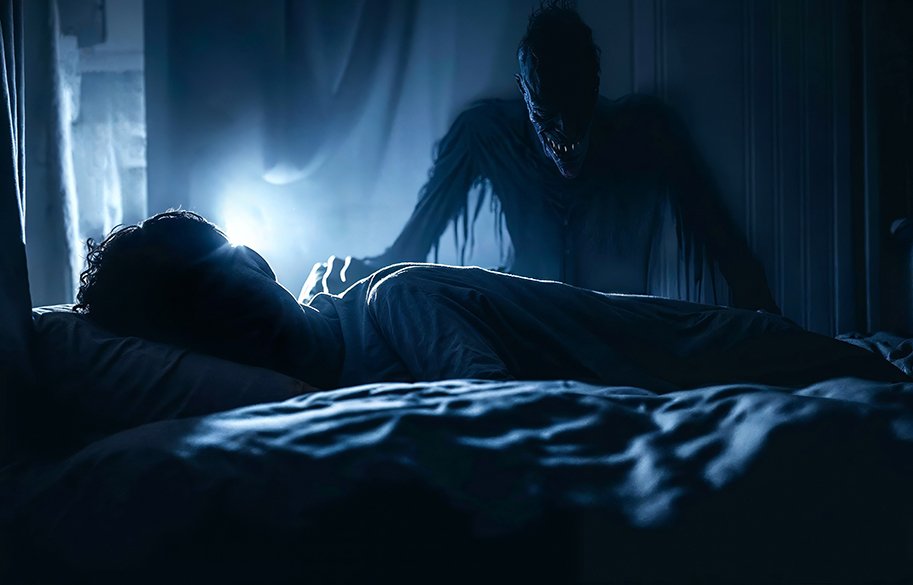
Sleep Paralysis Around the World: Why Every Culture Has a Different Monster for the Exact Same Neurological Event
Sleep paralysis is a well-understood neurological event. It happens when your brain wakes up before your body does. During REM sleep, your brain paralyzes your muscles so you do not act out your dreams. Sometimes consciousness returns before the paralysis lifts. You are awake, you cannot move, and your brain is still partially in dream…
Read More 
How Salmon Know Where They Were Born: The Navigation Mystery That Science Has Been Unpicking for Decades
A salmon hatches in a specific freshwater stream. It spends weeks or months there as a juvenile. Then it migrates down to the ocean, where it roams freely for two to four years, covering thousands of miles of open Pacific or Atlantic with no visible landmarks, no GPS, no trail back. Then it finds its…
Read More 
The Vanilla Industry: Why Real Vanilla Costs More Than Silver and the Hand-Pollination System That Makes It Possible
In June 2018, a pound of vanilla cost around $230. Silver cost about $240 a pound. Vanilla was not quite more expensive than silver that particular month, but it was close enough that financial news outlets were writing about it. For most of the preceding year it had been higher. In 2017, after Tropical Cyclone…
Read More 
The Attention Economy: How Smartphones Were Engineered to Be Addictive, Who Designed the Systems, and What They’ve Said About It Since
I want to start with a quote because it is the one that stopped me cold when I first read it, and I think it sets up everything that follows better than any framing I could write. “Behind every screen on your phone, there are generally a thousand engineers that have worked to try to…
Read More 
Olo: The New Color Scientists Just Created That Your Eyes Have Never Seen Before
In April 2025, five people saw a color that no human had ever seen before. They described it as a blue-green of unprecedented saturation, a profoundly saturated teal, the most intensely vivid peacock green imaginable. One participant said it made every natural color look pale by comparison. The color is called olo. A team of…
Read More 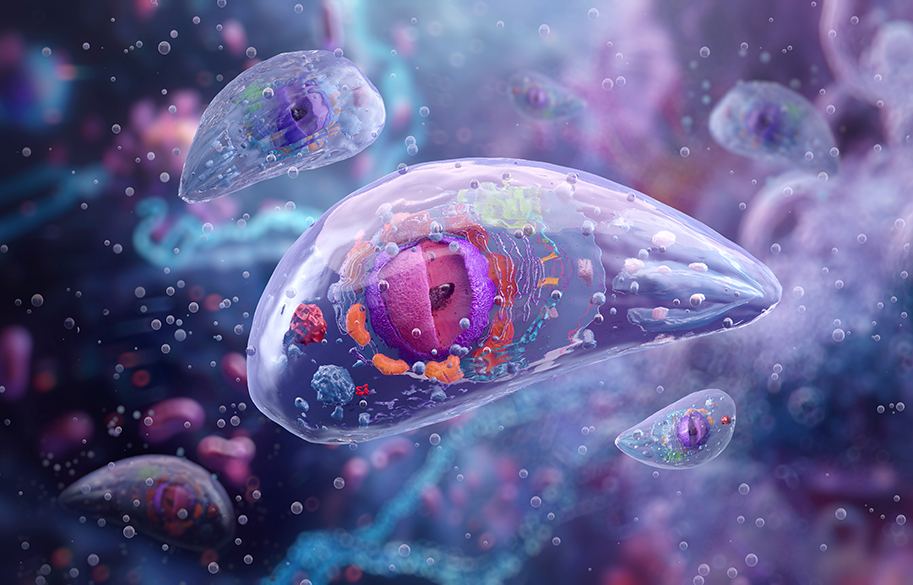
Toxoplasma Gondii: The Cat Parasite Living in 30% of Human Brains (And What It Might Be Doing to Us)
Toxoplasma gondii is a single-celled parasite that infects warm-blooded mammals worldwide. Estimates vary by region, but roughly 30 percent of the global human population carries a latent infection, with some regions running significantly higher. In the US it sits around 10 to 30 percent. In Brazil the seroprevalence reaches 92 percent. In France it runs…
Read More 
Rogue Waves: The 100-Foot Walls of Water Scientists Didn’t Believe Existed Until One Was Caught on Camera
Sailors had been reporting them for centuries. Walls of water appearing from nowhere in otherwise manageable seas, three or four times the height of surrounding waves, hitting ships without warning, and then disappearing as if they had never existed. The reports were consistent across different oceans, different eras, different nationalities of sailors who had no…
Read More 
The Thucydides Trap: The Ancient Greek Idea That Might Explain Every Major War in Modern History
There is a concept in international relations that I keep coming back to because it is one of those ideas that, once you have it, makes you look at history completely differently. It comes from a Greek historian who died around 400 BCE. It gets applied to wars that happened 2,000 years after his death.…
Read More