Sleep Paralysis Around the World: Why Every Culture Has a Different Monster for the Exact Same Neurological Event
Sleep paralysis is a well-understood neurological event. It happens when your brain wakes up before your body does. During REM sleep, your brain paralyzes your muscles so you do not act out your dreams. Sometimes consciousness returns before the paralysis lifts. You are awake, you cannot move, and your brain is still partially in dream mode, generating vivid hallucinations that layer over your actual surroundings. It typically lasts between a few seconds and two minutes. About 8 percent of the general population experiences it at some point. Among students, the figure runs closer to 28 percent.
The interesting part is what people see when it happens. Across cultures with no documented contact with each other, people report the same four entities with remarkable consistency: a crushing presence on the chest that is usually female, a tall dark male figure watching from across the room, shadowy figures at the periphery, and a general sense of a malevolent presence just outside the field of vision. The same hallucinations, independently, across every century of recorded history, on every inhabited continent.
Different cultures named them differently. The neurology underneath is identical.
What Your Brain Is Actually Doing
During a sleep paralysis episode, the amygdala, which is your brain’s threat-detection center, fires at maximum capacity. You are paralyzed and partially hallucinating and your brain knows something is wrong. It generates threat responses. It searches for an explanation. And then it draws from whatever cultural framework you have available to create a figure that explains the threat.
This is why people who grew up watching Japanese horror films about long-haired female ghosts tend to see long-haired female ghosts. People raised in West African traditions tend to see spirits consistent with those traditions. People in 16th-century Europe saw witches. And people today in the United States sometimes see gray aliens, a cultural import from the sci-fi tradition that arrived in mainstream consciousness around the 1940s and 1950s. The experience is identical. The costume changes.
The word haggard, incidentally, comes from this experience. It means ridden by the hag, referring to the state of someone who had been visited by the Old Hag and woke exhausted and disturbed. English has been carrying a sleep paralysis reference in plain sight for centuries.
The Roster of Monsters
The Old Hag is the most cross-culturally consistent figure. In Newfoundland, where the term “Old Hag Syndrome” became a recognized descriptor in the medical literature, she is a malevolent crone who sits on the chest and steals breath. In Scandinavia, the same figure appears as the mara, a spirit that rides sleeping humans. The English word nightmare comes from this: night plus mara. In Germany the same figure is the Hexendrücken, the witch presser. In France, the cauchemar. So, in each culture, the figure developed independently, but the description is consistent: heavy, female, sitting on the chest, interfering with breathing.
Japan calls it kanashibari, which translates roughly as “bound by metal chains.” The figure there tends toward vengeful female spirits called yurei, fitting the Japanese supernatural tradition. What is interesting about Japan is that kanashibari has been culturally familiar for long enough that Japanese people report it more frequently than Western populations, possibly because there is existing cultural vocabulary for the experience that makes it easier to discuss and report rather than dismiss as a strange dream.
In Egypt, the figure is typically a jinn. In Pakistan and India, a churail or djinn. Then, in West Africa, supernatural attack from enemies or witches. In the Philippines, it is called bangungot and is considered potentially deadly. In Brazil, the Pisadeira is a crone who steps on people who sleep on a full stomach lying flat on their back. Mexico has a phrase for it: se me subió el muerto, meaning “the dead climbed on top of me.”
All of these are the same event. The brain runs the same threat response, generates roughly the same sensory experience, and then the cultural overlay provides the specific costume.
The Hmong Death Connection
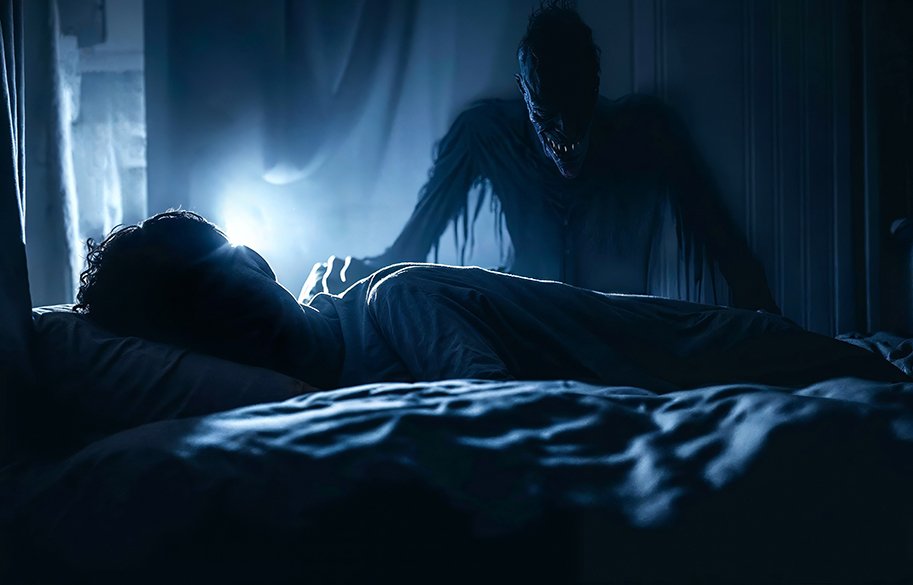
In the 1970s and 1980s, researchers noticed an unusual pattern among Hmong refugees who had fled Southeast Asia to the United States. Young, healthy Hmong men were dying in their sleep at rates that could not be explained by conventional medicine. The deaths clustered at night. Survivors of close calls described a crushing presence on the chest, inability to move, and extreme terror.
In Hmong folklore, this is the dab tsog, a spirit that attacks sleepers. Some researchers have suggested that Hmong men, culturally primed to believe the dab tsog could kill, experienced sleep paralysis episodes of such extreme terror that the cardiac stress contributed to fatal arrhythmias. The evidence for this is debated and inconclusive. What is not debated is that the deaths happened and that a neurological event interpreted through a specific cultural lens produced physiological consequences serious enough to kill people. At minimum, the example illustrates how the interpretation of a neurological event is not neutral or separate from its physical effects.
Why the Figures Are So Consistent
The cross-cultural consistency of the hallucinations is the thing that genuinely puzzles researchers. If sleep paralysis hallucinations were generated randomly from individual neurology and personal experience, you would expect enormous variety. Some people would see their high school teachers. Some would see crowds or storms or household objects gone wrong. You would not expect 8 percent of the global population, independently, to keep generating variations on the same four figures.
The current best explanation involves the specific brain structures involved. The temporo-parietal junction, which handles the integration of sensory information about the body’s position and boundaries, malfunctions during sleep paralysis in ways that generate the sense of a presence in the room. The amygdala, at maximum activation, shapes that presence as threatening. The visual cortex, still partially in dream mode, gives it form. The paralysis itself, and the interference with breathing, explains the chest-pressing figure specifically, because the brain is generating an explanation for the physical sensation of being unable to breathe or move.
The specific figures that result are not random. They are constrained by the neurology of the event. The cultural overlay fills in the details.
Recent Podcast Episodes

Recent Adventures



Subscribe Today!
Subscribe
Your Ad Here!

Other Adventures You May Like
Kitty Genovese and the “38 Witnesses” Story That Turned Out to Be Wrong
The Rohonc Codex: The Other Undeciphered Manuscript Nobody Can Crack