Meet the “Glitter Worm” and the “Elven Abyss Tunicate,” Two Real Deep-Sea Species Just Named
Somewhere off the coast of California, there’s a worm that glitters. Thousands of feet down off the coast of Western Australia, there’s a sea creature that hunts like a Venus flytrap. Scientists named it after an Elvish word from Lord of the Rings. Both are completely real. Both got officially named in the past year. And honestly, both sound too good to be made up.
The Worm That Shouldn’t Be This Adaptable
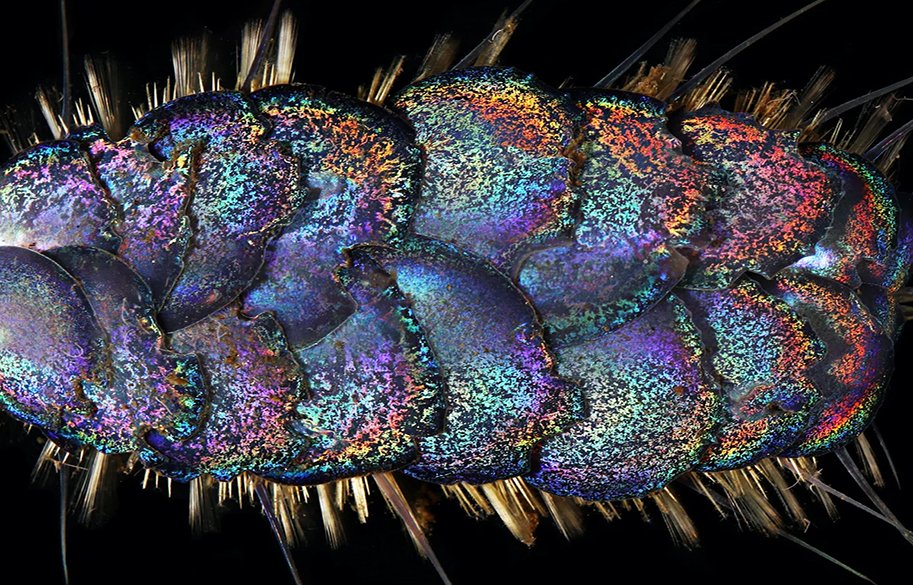
Meet Photinopolynoe iskrae, known more casually as Iskra’s glitter worm. Graduate students Avery Hiley and Kiirah Green led the research at Scripps Institution of Oceanography, working alongside professor Greg Rouse. Together they found it living in the deep water off California. Its body carries shimmering, iridescent scales, which is exactly where the name comes from.
Here’s what actually makes it scientifically interesting, though. This worm doesn’t just survive in one kind of extreme environment. It turns up thriving in whale falls, the carcasses of dead whales that sink to the ocean floor and become their own tiny ecosystems. It turns up in wood falls too, sunken logs that similarly become little islands of life in the deep. Then there are the methane seeps, spots where gas bubbles up from beneath the seafloor and supports an entirely different, chemistry-based food chain. Most deep-sea species specialize in one of these habitats. This one seems comfortable moving between all three.
A Sea Squirt That Actually Hunts
Tunicates, or sea squirts, have a pretty settled reputation in the ocean. Most of them anchor themselves to something solid. They spend their lives passively filtering tiny particles out of the water that drifts past. It’s not a dramatic lifestyle.
Kaikoja undume did not get that memo. Researchers collected specimens of this species from between 6,500 and 13,100 feet down, off northern Western Australia. What they found was genuinely unusual: a tunicate that actively hunts. Its feeding structure works almost exactly like a Venus flytrap. A large siphon sits open, waiting. When small prey drifts close enough, the structure snaps shut around it. Digestion follows. In a family of animals famous for doing basically nothing, this one turned out to be a predator.
Scientists gave it the name undume, drawn from the Elvish language J.R.R. Tolkien invented for his Middle-earth novels. They chose it specifically because of how mysterious and otherworldly the creature looks in its deep-sea habitat. Peter Mandre, then a graduate student at Scripps, and professor Greg Rouse formally described the species in a study published in December 2025.
Neither of These Discoveries Happened by Accident
Both animals came out of the same broader effort. Researchers collected the specimens using a robotic submersible called SuBastian. It launches from the research vessel Falkor, which the Schmidt Ocean Institute operates specifically for deep-sea exploration work. Both species then made the World Register of Marine Species’s Top 10 New Species list for 2025, which comes out every year on Taxonomist Appreciation Day.
They weren’t the only playfully named animals on that list, either. The same 2025 roundup included a supergiant isopod named after Darth Vader and a deep-sea squid nicknamed for Moby Dick. Marine taxonomists, it turns out, have developed a genuine soft spot for naming newly discovered creatures after pop culture. Dry Latin description alone just doesn’t cut it for them anymore.
Recent Podcast Episodes

Recent Adventures


Subscribe Today!
Subscribe
Your Ad Here!

Other Adventures You May Like

The Mount Washington Cog Railway Has Been Climbing New Hampshire’s Tallest Peak Since 1869

Kitty Genovese and the “38 Witnesses” Story That Turned Out to Be Wrong