The Sweating Sickness: The Tudor Epidemic That Killed Within Hours and Then Vanished Forever
A person could wake up feeling completely healthy and be dead before dinner. That was the defining horror of the sweating sickness. This disease terrorized England on and off for 66 years, killed with genuinely alarming speed, and then, in 1551, simply stopped happening. Nobody ever figured out what it actually was.

Born Alongside a Dynasty
The timing alone is eerie. The first confirmed outbreak struck in the summer of 1485, right around the Battle of Bosworth Field, the fight that ended the Wars of the Roses and put Henry Tudor on the throne as Henry VII. According to several contemporary accounts, Lord Stanley excused himself and his men from the battle, claiming they had come down with the sweat. He then switched sides from Richard III to Henry Tudor anyway. Historians still debate whether that was genuine illness or a remarkably convenient excuse. Either way, the disease that would come to define the Tudor era arrived at almost the exact moment the Tudor era began.
What It Actually Did to a Body
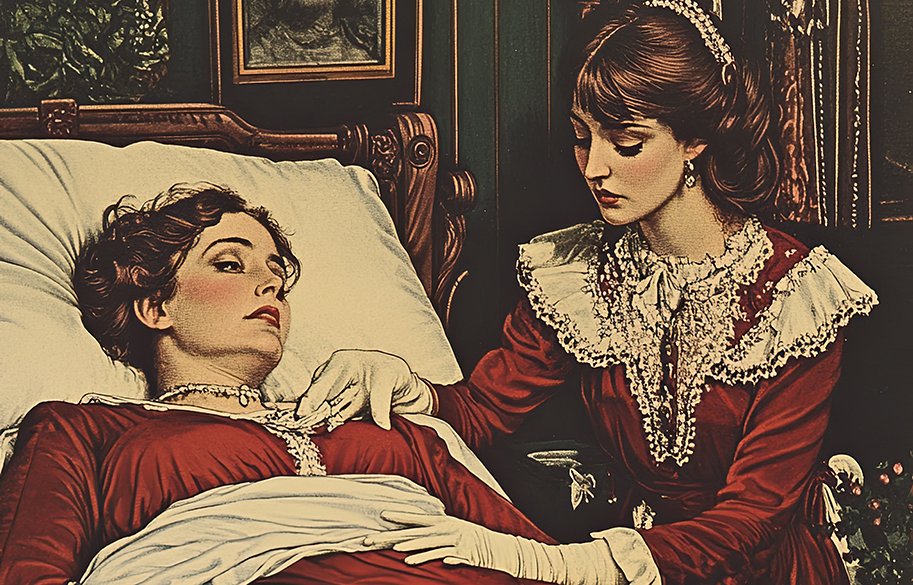
Victims described the onset as sudden and almost without warning. First came a wave of dread, then cold shivering, headache, and deep aches through the neck, shoulders, and limbs. That phase lasted anywhere from half an hour to three hours. Then the body flipped hard in the other direction: intense heat, profuse drenching sweat, a racing heartbeat, and in many cases delirium. Death or recovery typically arrived within eight to ten hours of the first symptom. There was very little middle ground and very little time to figure out which way things were going.
The disease returned in major waves in 1485, 1508, 1517, 1528, and 1551, spanning 66 years. It killed somewhere between 30 and 50 percent of the people it infected, a genuinely brutal mortality rate for an illness nobody could reliably identify while it was happening. It hit England the hardest and spread into continental Europe at points. Even within the British Isles it behaved strangely, largely sparing Scotland and Wales while devastating English towns.
The Disease That May Have Reshaped the Royal Family
The sweating sickness likely did more than terrify Tudor England. It may have altered the entire line of succession. Arthur Tudor, Henry VIII‘s older brother and the original heir to the throne, died in 1502 from an illness historians believe was probably the sweat. Arthur’s death moved his younger brother into position as heir. That single shift set up the reign of Henry VIII, his split from the Catholic Church, and the entire chain of events that followed. A disease nobody could name may have quietly rerouted the history of the English monarchy.
Henry VIII himself reportedly lived in genuine terror of it. He fled London repeatedly whenever rumors of an outbreak circulated nearby, moving his court from house to house to stay ahead of wherever the sweat seemed to be striking next.
Why It Just Stopped
After the fifth major outbreak in 1551, the sweating sickness never returned to England again. It remains one of the genuine unsolved mysteries in the history of epidemic disease. Modern researchers have never definitively identified the pathogen responsible. The leading current hypothesis points to an unknown hantavirus, a family of viruses rodents carry that can cause severe respiratory illness in humans. Tudor London’s rodent-heavy conditions and the disease’s symptom pattern both line up reasonably well with that theory. Researchers considered relapsing fever too, but mostly ruled it out, since accounts of the sweat rarely describe the distinctive rash that condition usually produces.
Other researchers have proposed a different explanation entirely: that the disease didn’t vanish so much as evolve into something milder. Diseases like syphilis and measles both grew significantly less lethal over time as human populations built up immunity. Some historians think the sweat may have followed a similar path, fading into something so mild and generic it simply stopped standing out from ordinary seasonal illness.
Nearly 500 years later, with the full toolkit of modern virology and epidemiology available, nobody has conclusively solved it. This disease helped usher in the Tudor dynasty. It may have altered the royal succession. It killed with a speed that terrified an entire kingdom. Then it disappeared just as suddenly as it arrived, and took its own explanation with it.
Recent Podcast Episodes

Recent Adventures



Subscribe Today!
Subscribe
Your Ad Here!

Other Adventures You May Like
Kitty Genovese and the “38 Witnesses” Story That Turned Out to Be Wrong
The Rohonc Codex: The Other Undeciphered Manuscript Nobody Can Crack